ISLAMABAD: Pakistan will start receiving cheap oil from Russia once the commercial details of the deal between the two countries are finalized in March, Minister of State for Petroleum Dr. Musadik Malik confirmed on Thursday.
Last week, Russia conceptually agreed to supply crude oil and oil products to Pakistan and signed several memoranda of understanding with Pakistan’s energy ministry. Following the signing of the deals, Pakistan said it wanted to import about 30 to 35 percent of its total crude oil requirement from Russia.
On Tuesday, US State Department Spokesperson Ned Price said “now is not the time” to bolster economic ties with Russia, as the West continues to find ways to curtail Moscow’s finances due to its invasion of Ukraine.
However, Malik reiterated that the South Asian country will go ahead with the deal, as prospects of a default loom large with the country’s foreign exchange reserves declining rapidly and its external financing requirements rising.
“Once the agreement is finalized by March, Pakistan will be able to receive cheap oil from Russia by the end of April,” Malik said during a press conference.”
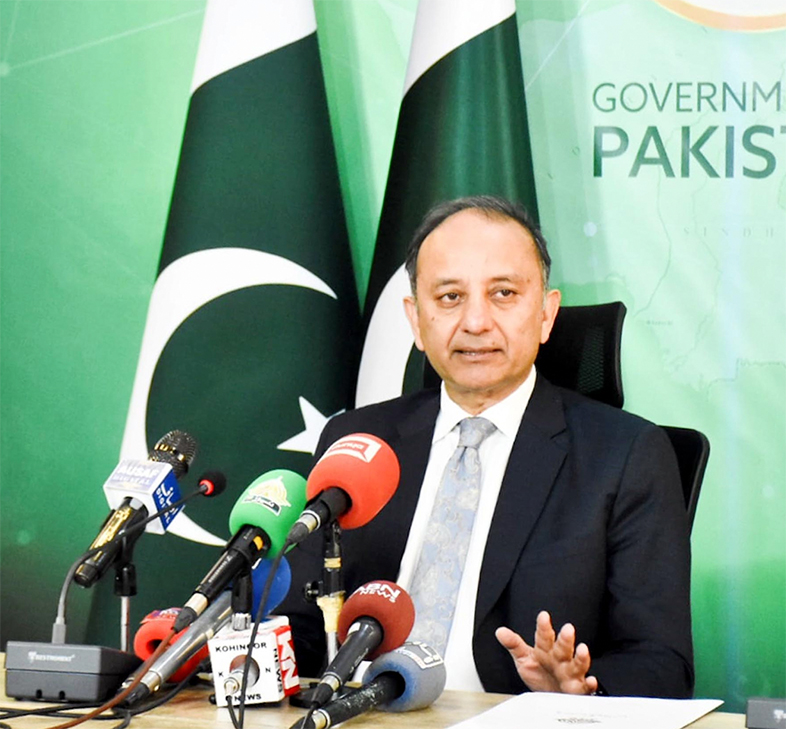
Pakistan's Minister of State for Petroleum, Dr. Musadik Malik, addresses a press conference in Islamabad, Pakistan, on January 26, 2022. (Photo courtesy: PID)
He added that once the deal’s terms are finalized, it would take a further 25 days for ships containing oil cargo to arrive in Pakistan from Russia after fulfilling business obligations.
Malik added that from next winter, Pakistan would also reach gas agreements with Russia to overcome gas shortages. “We will sign long-term gas contracts with Russia in the future,” he said.
Malik said the Shehbaz-Sharif-led government was moving forward to welcoming more foreign investments in the country to reform the economy. “We are also moving toward closing the gap between the dollar and the rupee,” he said.
The minister, without providing any details, said Pakistan would see investment to the tune of $10 to $14 billion in its oil refineries in the near future.
“Pakistani oil refineries will receive a foreign investment of $10 to $14 billion very soon, but as of now, I cannot provide further details as it would be premature to do so,” he said.
Pakistan’s energy procurements from international markets constitute the largest portion of its import bill, putting immense pressure on rapidly depleting forex reserves that plummeted to $4.3 billion earlier this month. Islamabad has also faced problems in recent months in buying liquefied natural gas (LNG) from the global market due to spot prices that largely remain out of its reach since the invasion of Ukraine.
Local news outlets have also reported that oil supplies have remained tenuous due to issues with clearing import payments.
Historically Pakistan has had no major commercial relations with Moscow, unlike neighboring India, and as a traditional US ally, it had also been hesitant to do trade or any business with Moscow in the past.
It currently depends on oil from Gulf countries, which often extend facilities such as deferred payments and can supply with lower transport costs, given Pakistan’s relative proximity.