

Germany's SAP says Middle East needs Pakistani IT professionals for its digital transformation

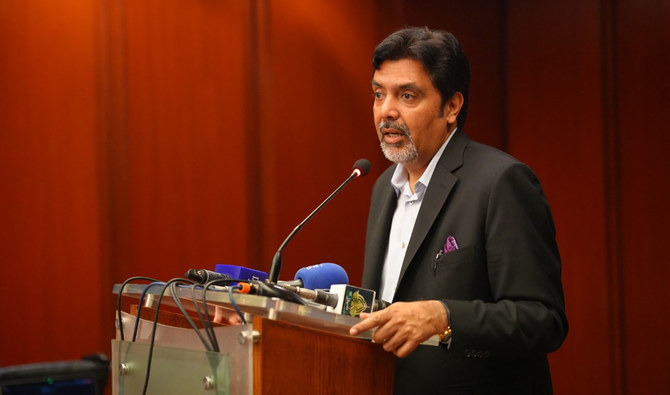
Saquib Ahmad, Country Managing Director of SAP Pakistan is speaking at an event in Karachi on January 25, 2023 - (AN Photo)
Short Url
Updated 26 January 2023
Follow

Germany's SAP says Middle East needs Pakistani IT professionals for its digital transformation

  • Pakistan’s IT exports during first half of current fiscal increased by 2% to $1.3 billion, contributing 38% to overall services’ exports
  • Pakistan MD for SAP says Pakistan could tap the huge demand for software and services development across Middle East companies

KARACHI: Middle Eastern countries— especially Saudi Arabia— where digital transformation is gaining ground, want Pakistan’s IT professionals and software developers to aid them in the process, a leading German software company said on Wednesday.

SAP is a German IT solutions and enterprise application software provider. The company is already operating in Saudi Arabia, United Arab Emirates, Oman, Kuwait, Bahrain, Qatar, Pakistan, and Egypt. SAP also has a regional training and development institute located in Dubai.

Saquib Ahmad, country managing director of SAP Pakistan, said Pakistanis are “very hardworking people” who are well-versed in Islam and understand the educational system of Saudi Arabia and other gulf countries quite well. 

“Middle Eastern countries, especially Saudi Arabia, want Pakistani consultants for the SAP transformation of services,” Ahmad told Arab News at an event held to highlight the role of cloud migration and digital transformation. 

“We have got great consultants that are right now preforming and deploying these services overall in the Middle Eastern countries – we are pretty sure that with time, these IT services’ exports will increase,” he added. 

Pakistan’s IT exports during the first half of the current fiscal year (FY23), have increased by 2 percent to $1.3 billion, contributing 38 percent to the overall services’ export, according to research by Arif Habib, a leading Pakistani securities brokerage, investment banking, and research firm. 

Responding to a question on demand for products and services, Ahmad said there was a huge demand for software and services development across all companies. 

“They [companies] are looking for good software programmers who can help change the program according to the local needs,” he said. Ahmad said Pakistani IT consultants have the capability to provide their services in the best possible manner, adding that they were well-trained in their craft as well. 

“This is what we can do to help IT services boost exports to Middle Eastern countries and especially, to Saudi Arabia,” Ahmad explained. 

Speaking about cloud migration, the SAP official said it was essential to ensure digital transformation and manage applications and data in the most cost-effective, efficient, and secure IT environment. 

Pakistan is experiencing an increasing trend of cloud adoption due to its cost optimization and effective solutions for different sectors, he said. 

“The usage of technology by companies changed in the post-COVID-19 situation,” Ahmad explained. “It has now strengthened, making cloud computing the need of the hour.” 

He said the management of various companies have control over the cost and scope of work whenever such companies opt for a cloud solution. However, he pointed out that the change of management poses a great hurdle in the task. 

“Change of management is the biggest hurdle for digital transformation. Employees feel insecure about their jobs and, hence, are reluctant toward digital change,” he noted. “This needs to change as digital transformation is the future.”

Ahmad also announced free-of-cost training for students of several educational institutes as a means to digitally strengthen Pakistan’s economy.


ADB, Pakistan sign over $300 million agreements to undertake climate resilience initiatives

Updated 11 sec ago
Follow

ADB, Pakistan sign over $300 million agreements to undertake climate resilience initiatives

  • Pakistan ranks among nations most vulnerable to climate change and has seen erratic changes in weather patterns
  • The projects in Sindh and Punjab will restore nature-based coastal defenses and enhance agricultural productivity

ISLAMABAD: The Pakistani government and the Asian Development Bank (ADB) have signed more than $300 million agreements to undertake two major climate resilience initiatives, Pakistan’s Press Information Department (PID) said on Tuesday.

The projects include the Sindh Coastal Resilience Sector Project (SCRP), valued at Rs50.5 billion ($180.5 million), and the Punjab Climate-Resilient and Low-Carbon Agriculture Mechanization Project (PCRLCAMP), totaling Rs34.7 billion ($124 million).

Pakistan ranks among nations most vulnerable to climate change and has seen erratic changes in its weather patterns. In 2022, monsoon floods killed over 1,700 people, displaced another 33 million and caused over $30 billion losses, while another 1,037 people were killed in floods this year.

The South Asian country is ramping up climate resilience efforts, with support from the ADB and World Bank, and investing in climate-resilient infrastructure, particularly in vulnerable areas.

“Both sides expressed their commitment to effectively utilize the financing for successful and timely completion of the two initiatives,” the PID said in a statement.

The Sindh Coastal Resilience Project (SCRP) will promote integrated water resources and flood risk management, restore nature-based coastal defenses, and strengthen institutional and community capacity for strategic action planning, directly benefiting over 3.8 million people in Thatta, Sujawal, and Badin districts, according to ADB.

The Punjab project will enhance agricultural productivity and climate resilience across 30 districts, improving small farmers’ access to climate-smart machinery, introducing circular agriculture practices to reduce residue burning, establishing testing and training facilities, and empowering 15,000 women through skills development and livelihood diversification.

Earlier this month, the ADB also approved $381 million in financing for Pakistan’s Punjab province to modernize agriculture and strengthen education and health services, including concessional loans and grants for farm mechanization, Science, Technology, Engineering and Mathematics (STEM) education, and nursing sector reforms.