


DAVOS: The chief executive of the body overseeing the expansion of the Saudi capital is confident that the rights to host the World Expo in 2030 will go to Riyadh, which he described as “probably the most exciting place to be in the world today.
“It’s very exciting time in the city of Riyadh,” Fahd Al-Rasheed said on “Frankly Speaking,” Arab News’ current affairs talk show that dives deep into regional headlines to speak with leading policymakers and business leaders.
Spelling out the advantages of the Saudi capital has as the Expo 2030 host over its rivals — Odessa, Rome and Busan — he said: “Riyadh is a global city, the 40th largest city economy in the world, with 8 million residents, a third of which are not Saudi. We have over 30 projects in the city. So, I think the world would really enjoy a different experience seeing Riyadh, getting to know its people, enjoying our hospitality and friendliness.”
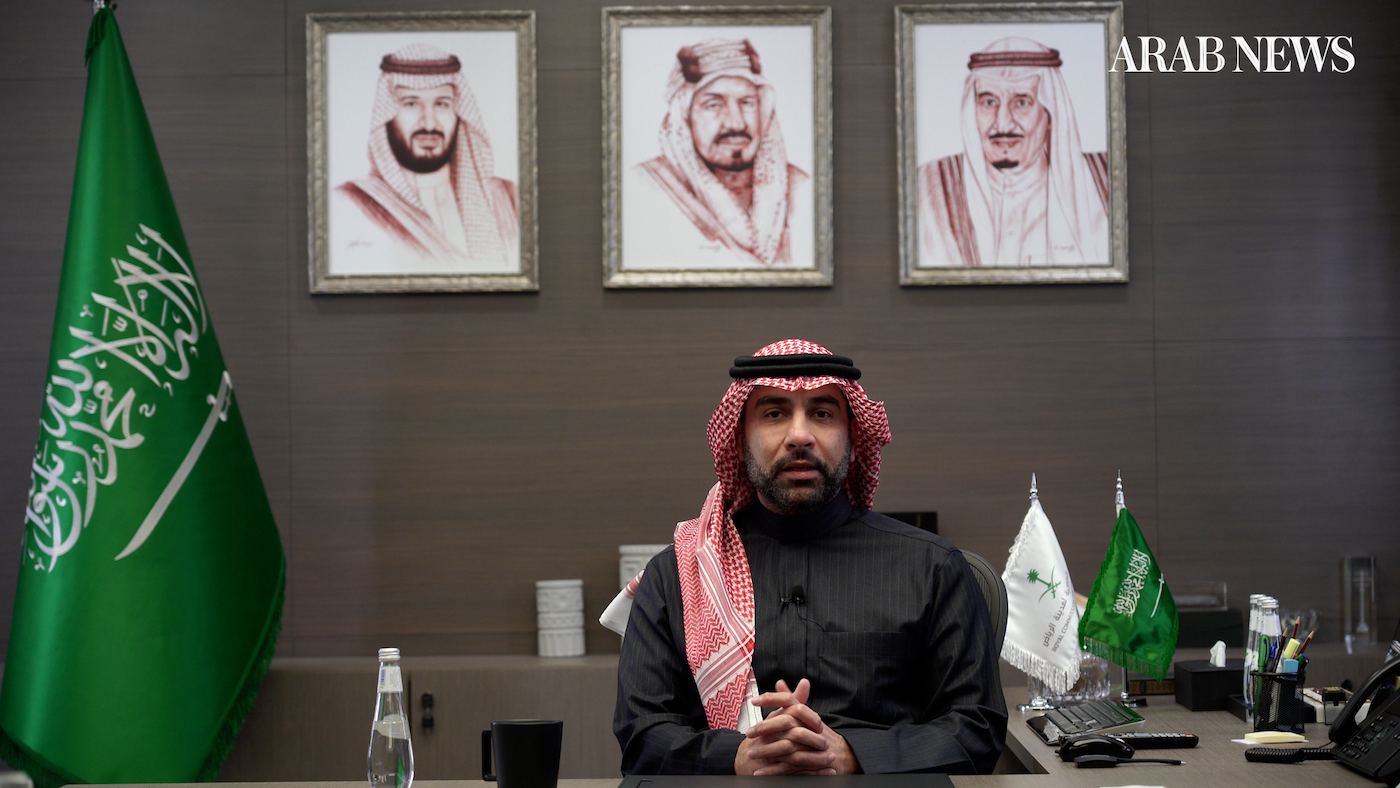
CEO of the Royal Commission of Riyadh City Fahd Al-Rasheed.
As CEO of the Royal Commission of Riyadh City, Al-Rasheed’s targets include doubling the city’s population by 2040 and placing the capital among the world’s biggest city economies. “We are developing and putting the final touches on the Riyadh Strategy, which will be announced in a few months after we get the right approvals from the government,” he said. “We’re very excited. We will start by basically pushing the economic engine of the city even further, improving livability and increasing the competitiveness of the city.”
Al-Rasheed spoke to “Frankly Speaking” as he returned from a series of engagements during the World Economic Forum Annual Meeting in Davos. Asked about any learnings from the summit that might help enhance Riyadh’s Expo bid, he said: “The feedback that we received was incredible. We have friends all around the world, whether at the state government level, on corporates, and on civil society and other sectors. And so, we feel that there is huge support for our bid and huge interest.”
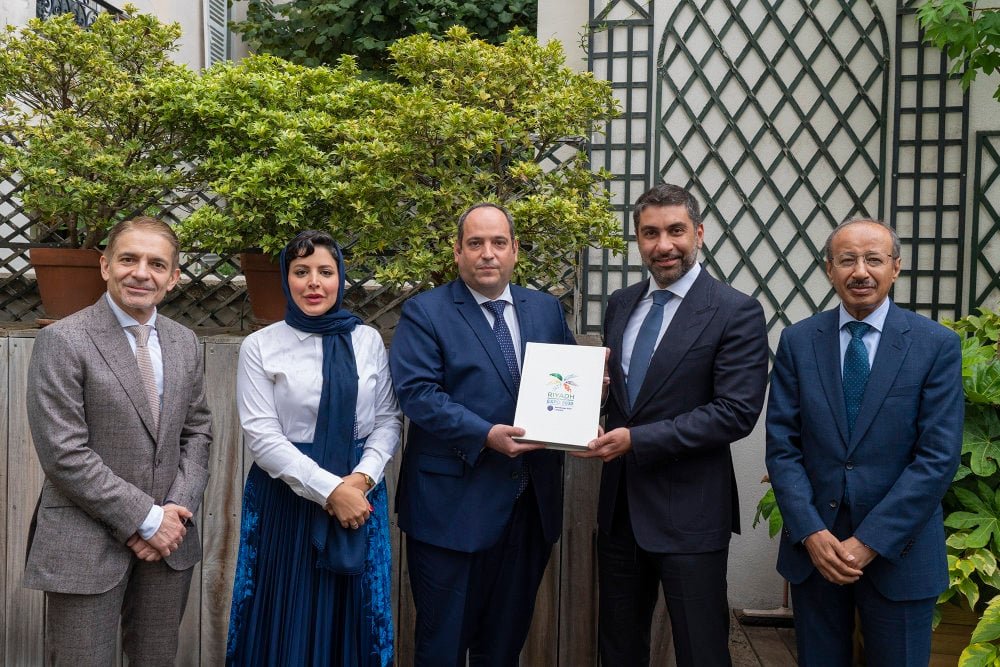
A copy of Saudi Arabia’s “candidature dossier” to organize World Expo 2030 in Riyadh was formally handed over by RCRC CEO Fahd Al-Rasheed to Dimitri Kerkentzes, BIE secretary general, on Sept. 7. (Supplied)
With regard to the bids by Odessa, Rome and Busan, Al-Rasheed acknowledged that they “all have their own cases” and that he has “the utmost respect for their teams’ efforts and their bids.”
Nevertheless, he said: “It’s not about that. We believe Expo 2030 should be about something different. It shouldn’t be just about the site. It shouldn’t be just about experiences within the site. The Expo is moving onto a new level of engagement. We want this Expo to be a global conversation about the future — about how we can manage the challenges and opportunities that the future brings. We want to work with the world.”
Al-Rasheed added: “It’s really a global partnership. That’s why our bid has a theme of ‘Together for a foresighted tomorrow,’ and we are focused on three sub-themes. The first is a different tomorrow. We need to project 2050 and all the challenges it will bring about in terms of technology, but also how to embrace them. The second is climate action. We believe that this is a very important element of tomorrow, and we need to actually address it jointly, not at the level of the state, but at the level of the individual. And third, we believe in prosperity for all, giving everybody in the world the same opportunity.”
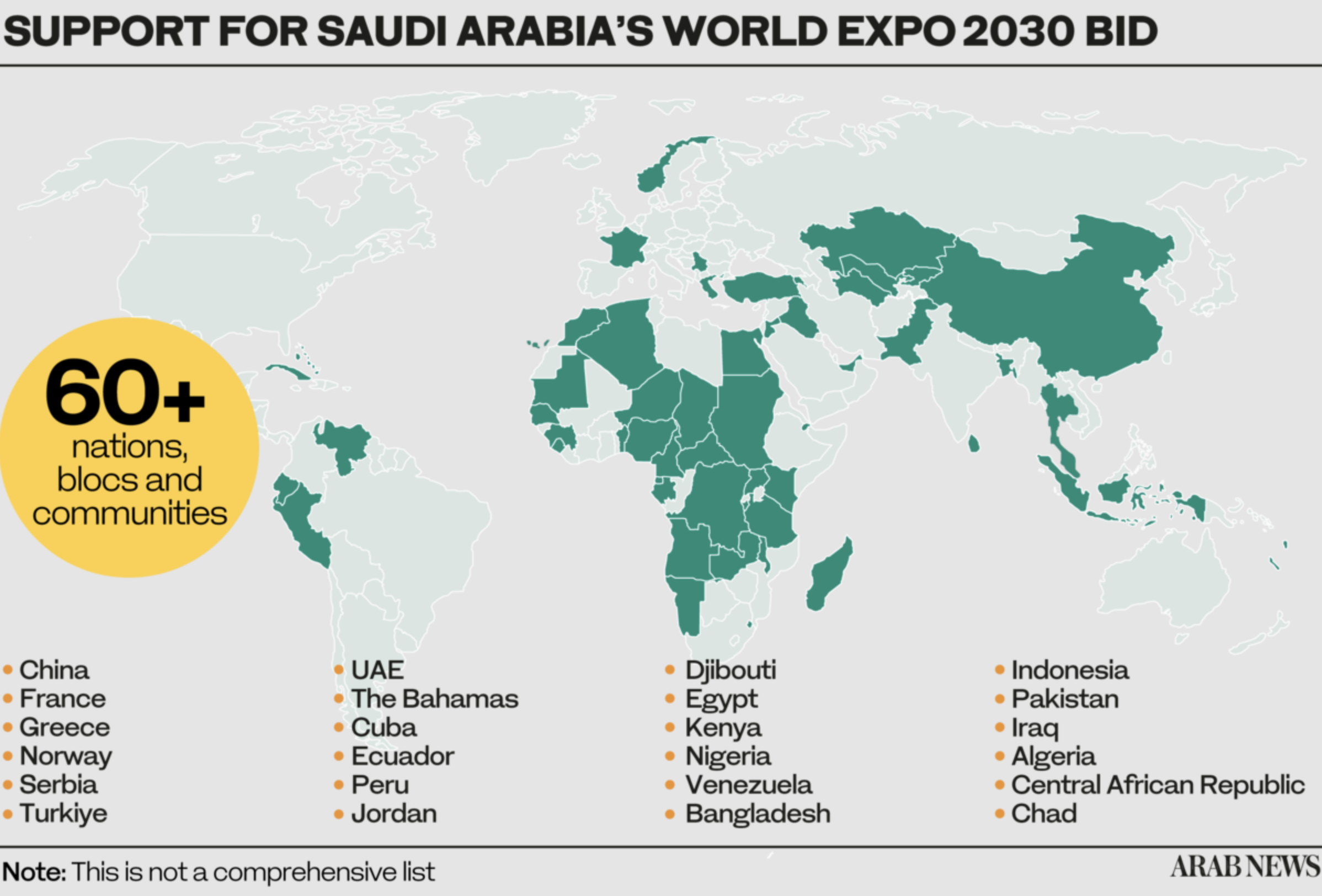
Should Riyadh win the Expo 2030 bid, authorities will aim to receive 30 million visitors over a period of six months. The question naturally arises as to whether the city will have enough hotel rooms, taxis and the other facilities needed to host such an event in just seven years. As per Al-Rasheed, the answer in short order is: “Riyadh is ready, ready today.”
He told “Frankly Speaking” host Katie Jensen: “The Riyadh Season, held last year, hosted 20 million people.
“So, we feel that the infrastructure we have in the city of Riyadh, again, a city for 8 million people, is significant and is adequate even for hosting the Expo. Today we have a metro and public transport network that we will open in 2023, and we have all of the facilities required for the Expo bid. On top of that, we’re building one of the largest airports in the world, so we feel quite ready with all of the elements required for the technical elements of the bid.”
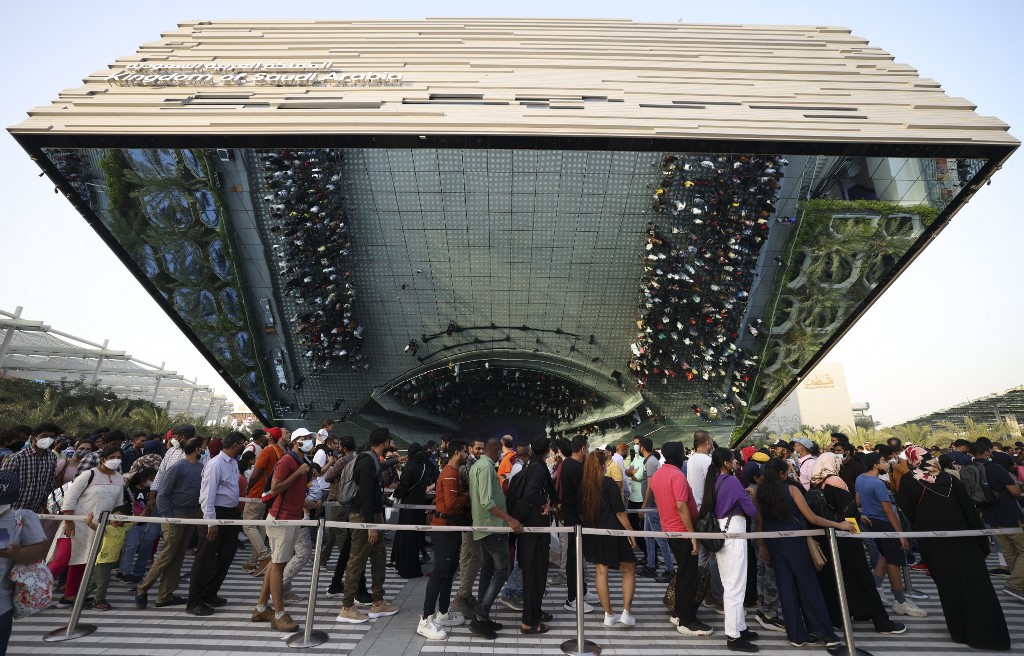
Visitors queue outside the Saudi Pavilion on the last day of Expo 2020 in Dubai. (File/AFP)
The Middle East, of course, was the site of Expo 2020, held in the UAE’s commercial capital from October 2021 to March 2022. “There are lots of lessons learned,” Al-Rasheed said when asked to share his thoughts on how Dubai fared. “They set the bar very high, which is great. We’ve learned from their experience, and we’ll incorporate a lot of the learning into our bid and into our project.”
As far as Riyadh’s bid is concerned, Al-Rasheed said: “Our effort is going to be focused not just on the physical visits. Yes, we’ll have 40 million visitors on site. They will have a great curated experience between all of the different pavilions. But we really believe that more people should be engaged. That’s why we made the commitment to invest in the metaverse and bring the Expo to the world. There will be 1 billion visitors in our metaverse, and that will make it the largest participation in the Expo ever.”
Disclosing that some financial assistance would be offered for the construction of pavilions, he said: “We are committed to supporting developing countries in the development of their pavilions, whether it’s financially or even with curating their experiences. We believe that this is a very important element of the Expo, that all of the pavilions should have a minimum level of quality. Our commitment to the world is that you don’t come to the Expo just to see Saudi Arabia and explore Riyadh, but you come to Riyadh to see the world.”
Appearing on “Frankly Speaking” late last year, Simon Anholt, founder of the Good Country Index, said research had shown that events like the World Cup in Qatar do not have a significant impact on a nation’s brand. Al-Rasheed, however, disagrees with the conclusion.
“First and foremost, I want to congratulate our friends in Qatar,” he said. “They did a great job and the whole world was talking about the World Cup experience that they had, and I didn’t get to go. But the people who did said it was an amazing experience.”
Explaining why he thinks countries and cities that are building their brand benefit significantly from hosting a big event, Al-Rasheed said: “If you are already a very well-known city that has millions and millions of visitors like Paris, for example, probably it’s less of an impact on your brand. But the city of Riyadh, now with the country opening to tourism, would benefit significantly, even on a brand basis, from hosting a big event like the Expo. On top of that, there is the socioeconomic benefit of jobs and investment in the site both during and after the hosting of the Expo.”
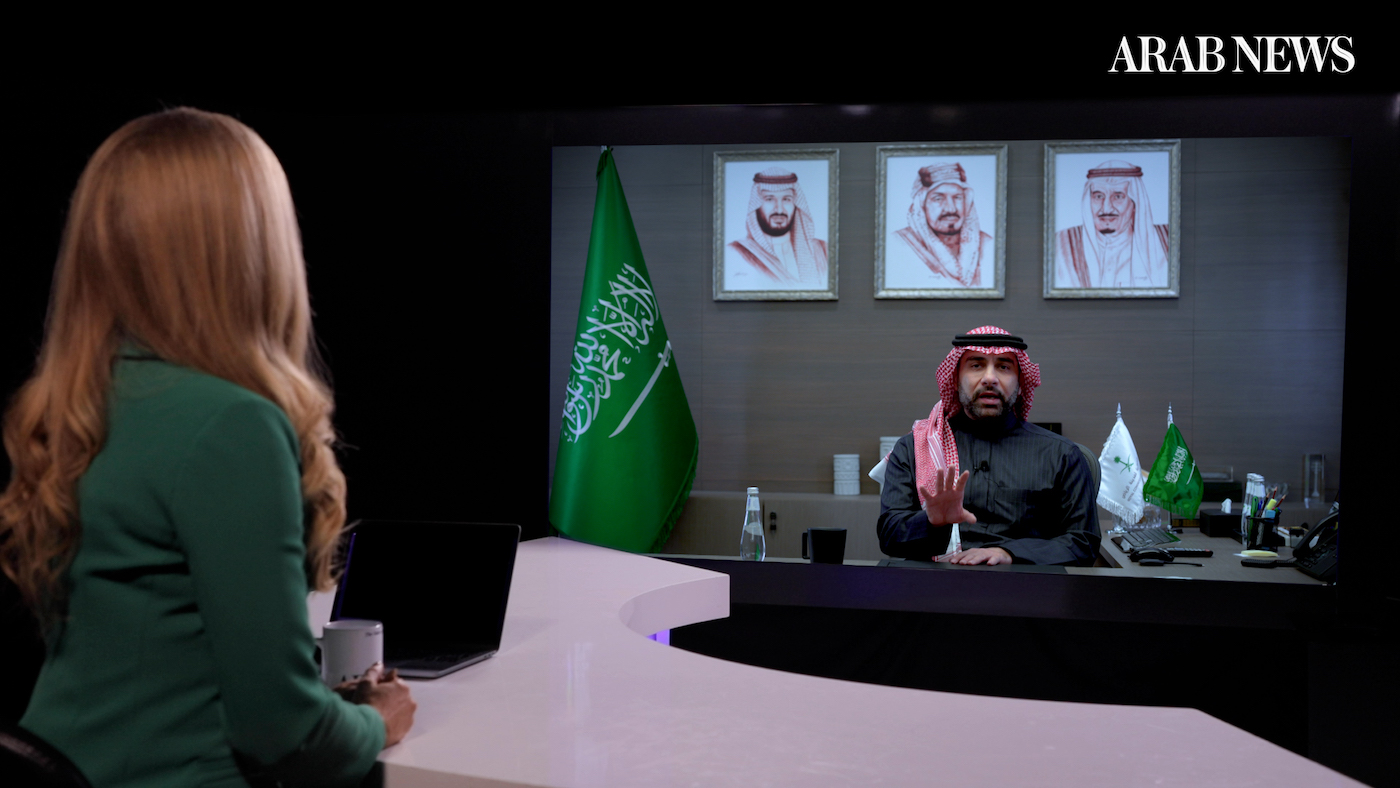
CEO of the Royal Commission of Riyadh City Fahd Al-Rasheed speaks to “Frankly Speaking” host Katie Jensen.
Al-Rasheed was categorical in his assertion that the investment needed to host Expo 2030 in order to enhance the image of Riyadh is worth the expected return. “In terms of the investment, the site is a premier site in the city of Riyadh. It’s on The Gateway,” he said.
“We’re going to invest about $8 billion in the development of (the Expo) site, but it is an investment that is integrated into the master plan of the city. We are thinking about that site, not in terms of a site for six months, but exactly what the role of that site will be post-bid. And most of the investment we will make in the site will be actually used later as workspace, as academic institutions, and also focused on entertainment and hospitality. So, the site itself is not just an Expo site. It’s part and parcel of the city of Riyadh.”
Explaining why he wants human engagement, not buildings, to be the main legacy, Al-Rasheed said: “Expos have been typically architectural marvels, or buildings and pavilions. That is the minimum we should offer in the Expo. (But) we would have that and more in our Expo. What we are committing to the world is that this Expo would actually maximize engagement of the citizens of Riyadh and that of the global visitor, and, beyond that, maximize impact through the metaverse.
“We believe that the 1 billion visitors to our metaverse would also be able to engage on the pertinent issues that we should all be dealing with, such as prosperity for all, climate action and a different tomorrow. We are working together for a ‘foresighted tomorrow.’”
Asked what he thought Riyadh is, or would be, most associated with in the mind of the international traveler, in the sense that New Yorkers have the Empire State Building and London has Big Ben, Al-Rashed said that the Saudi city is “a global city,” “the 40th largest city economy in the world,” and “has an 8 million population.
“First and foremost, these cities are not about their buildings. They are about their people. And these citizens and residents are probably the most hospitable people in the world. And what you see in the city of Riyadh is they are working together with our partners all around the world on reshaping the future of Riyadh,” he added.
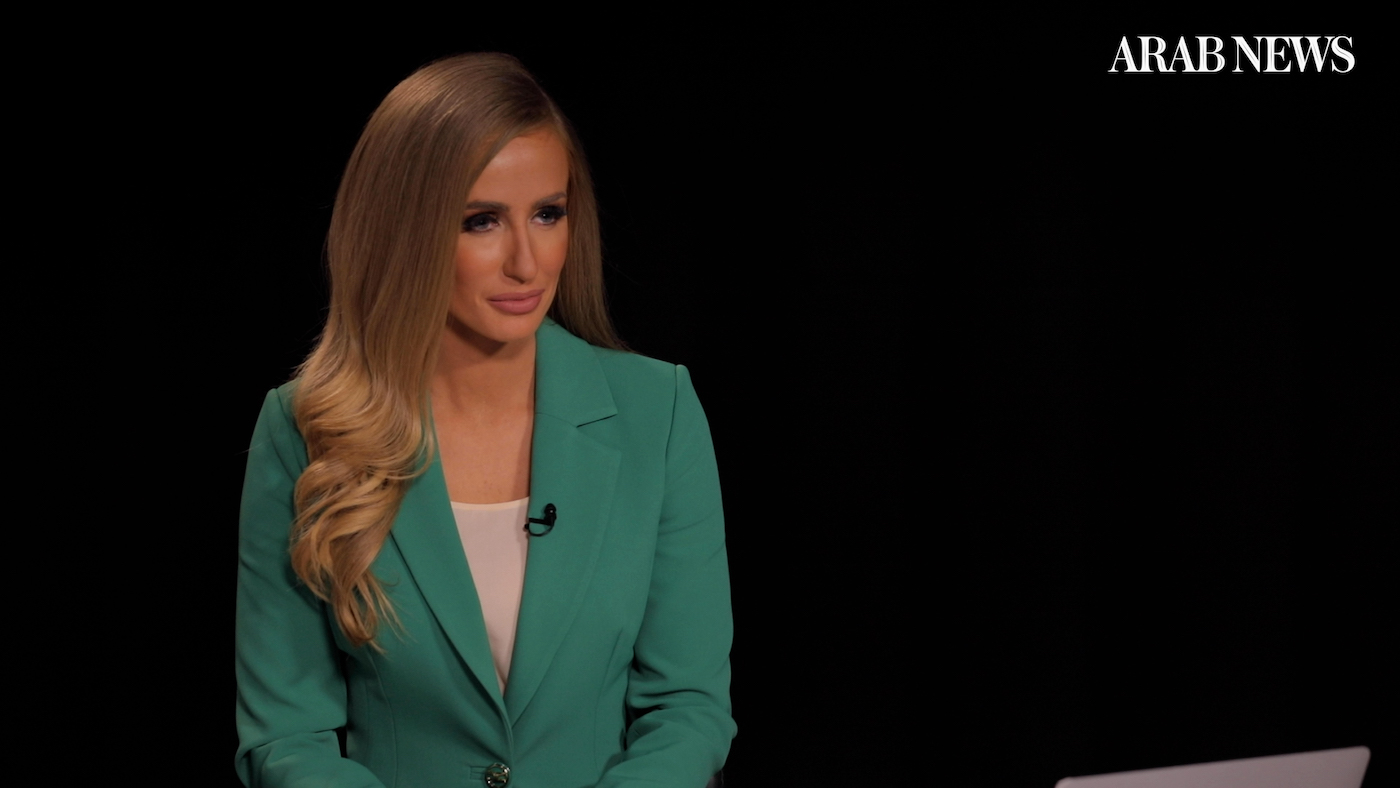
“Frankly Speaking” host Katie Jensen.
“We have more than 30 projects as we speak today in Riyadh. We’re building the largest single-phase metro and public transport system in the world. We have just announced the largest airport in the world.
“We’re building Al-Ghadeer, which is Entertainment and Theme Park 2.0 in the world. So, it is going to be the largest hub for art, sport and culture. And we are building Diriyah area, which is an example of how to protect, preserve heritage and celebrate it, and many, many, many more things. In the next few years, the city’s livability and excitement is just going to multiply. We are very excited about these times.”
Given that Expo 2030 cannot be separated from Saudi Vision 2030, could the event be an opportunity to rebut critics who have repeatedly said that some of the reform plan’s targets are unattainable or overly ambitious?
Al-Rasheed said: “Vision 2030 is equipment by the country to transform itself. And in some cases, we have actually exceeded what we expected in some of the areas and sectors within Vision 2030.”
He added: “For example, on women’s participation in the workforce, we’ve achieved 37 percent, which is higher than most OECD countries. So, on these key performance indicators that we’ve already achieved or exceeded, we will revise them for those that we have not yet achieved. What we want to achieve, we would actually work harder on them.”
Al-Rasheed said: “You have to understand that Vision 2030 is a transformation led by the whole country, not just by the government. All of us are working across the board. Every Saudi individual is working across the board. Residents who are not Saudi are partaking in this Vision 2030.
“So, we believe that it’s a transformation we should share with the world. And the idea of hosting Expo 2030, which is in the culmination of Vision 2030, is also for us to share with the world our experiences and how we aim to look at the future beyond 2030, 2040 and 2050.”


