

SAMA reduces minimum paid-up capital for finance firms supporting SMEs 

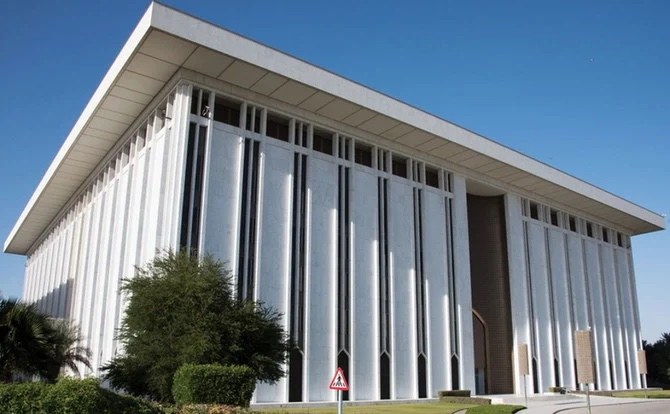
SAMA said the amendment made to the Implementing Regulation of the Finance Companies Control Law cements its efforts to further develop Saudi Arabia’s SME sector. (Supplied)
Short Url
Updated 22 January 2023
Follow

SAMA reduces minimum paid-up capital for finance firms supporting SMEs 

RIYADH: The Saudi Central bank, also referred to as SAMA, has announced adding a subtitle to an existing law, which reduces the minimum paid-up capital for finance firms specialized in financing and supporting small and medium enterprises to SR50 million ($13.3 million), according to a statement.

SAMA said the amendment made to the Implementing Regulation of the Finance Companies Control Law cements its efforts to further develop Saudi Arabia’s SME sector.

The new amendment will also help attract more investors to the Kingdom’s SME sector and establish more finance companies specializing in financing SMEs.

With proper financial support and advisory services – such as the National Industry Strategy – SMEs will have the opportunity to achieve long-term success and overcome the challenges faced, according to a report released in 2022 by multinational professional services network KPMG.

“As Saudi Arabia looks to diversify its sources of revenue, grow its non-oil-based economy and increase the contribution of SMEs and the industrial sector to the GDP, supporting emerging industrial enterprises in the country will be vital,” asserted Omar Alhalabi, director of the Global Strategy Group at KPMG in Saudi Arabia.

The Social Development bank has signed an agreement with the National Technology Development Program to operate a financing opportunity worth SR200 million, to be allocated to technology-centric SMEs to enhance their competitiveness and play their vital role in the national economy in line with the Saudi Vision 2030.

In 2022, the General Authority for SMEs, also known as Monsha’at, announced that the number of SMEs in the Kingdom surged 15 percent in the first three months of 2022 to hit 752,600 SMEs.

This comes as the SME sector is perceived as a vital economic engine, a key generator of new employment, and the foundation of the global economy, Al Sa’adi explained in an exclusive interview with Arab News last year.

Under the Vision 2030 goals, the SME sector m in the Kingdom aims to make a 35 percent contribution to the national gross domestic product by 2030, with Aramco keen on being part of that.

Furthermore, SMEs will play a significant role in achieving Saudi Arabia’s objectives of lowering the unemployment rate from 11.6 percent to 7 percent, and increasing women’s participation in the workforce from 22 percent to 30 percent


Closing Bell: Saudi stocks slip as Tadawul falls 1% amid broad market weakness

Updated 30 December 2025
Follow

Closing Bell: Saudi stocks slip as Tadawul falls 1% amid broad market weakness

RIYADH: Saudi stocks fell sharply on Tuesday, with the Tadawul All Share Index closing down 108.14 points, or 1.03 percent, at 10,381.51.

The broader decline was reflected across major indices. The MSCI Tadawul 30 Index slipped 0.78 percent to 1,378.00, while Nomu, the parallel market index, fell 1 percent to 23,040.79.

Market breadth was strongly negative on the main board, with 237 stocks falling compared to just 24 gainers. Trading activity remained robust, with 164.7 million shares changing hands and a total traded value of SR3.19 billion ($850.6 million).

Among the gainers, SEDCO Capital REIT Fund led, rising 2.73 percent to SR6.77, followed by Chubb Arabia Cooperative Insurance Co., which gained 2.69 percent to SR20.20.

National Medical Care Co. added 1.72 percent to close at SR141.60, while Alyamamah Steel Industries Co. and Thimar Advertising, Public Relations and Marketing Co. advanced 1.57 percent and 1.13 percent, respectively.

Losses were led by Al Masar Al Shamil Education Co., which tumbled 8.36 percent to SR24.65. Raoom Trading Co.fell 6.75 percent to SR64.20, while Alkhaleej Training and Education Co. dropped 6.60 percent to SR18.12 and Naqi Water Co. declined 5.51 percent to SR54.00. Gulf General Cooperative Insurance Co. closed 5.44 percent lower at SR3.65.

On the announcement front, Chubb Arabia Cooperative Insurance Co. signed a multiyear insurance agreement with Saudi Electricity Co. to provide various coverages, expected to positively impact its financial results over the 2025–2026 period. The deal will run for three years and two months and is within the company’s normal course of business.

Meanwhile, Bupa Arabia for Cooperative Insurance Co. announced a one-year health insurance contract with Saudi National Bank, valued at SR330.2 million, covering the bank’s employees and their families from January 2026. Despite the sizable contract, Bupa Arabia shares fell 0.8 percent to close at SR137, weighed down by the broader market weakness.

In contrast, United Cooperative Assurance Co. revealed an extension of its engineering insurance agreement with Saudi Binladin Group for the Grand Mosque expansion in Makkah. The contract value exceeds 20 percent of the company’s gross written premiums based on its latest audited financials and is expected to support results through 2026. However, the stock came under selling pressure, ending the session down 4.51 percent at SR3.39.