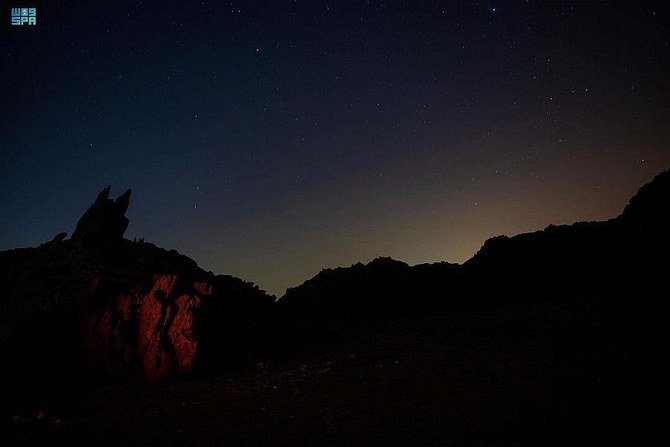
AL-QUWAY’IYAH, Saudi Arabia: The ‘Heart of Arabia’ trek led by British explorer Mark Evans has crossed through some of Saudi Arabia’s most iconic historical locations.
The journey follows in footsteps of legendary British explorer Abdullah Philby, reported the Saudi Press Agency on Thursday.
The team crossed Qiddiya mountains through Darb Al-Manjur, a path that extends from the heights of Qiddiya mountains toward Dhurma.
Residents and caravans used the path throughout history to move between cities and villages. It extends westward to the village of Dasman affiliated to Al-Quway’iyah and is located on sandy ground with a bottom layer of hard rock that retains rainwater for long periods of time.
Among the distinguishing features of Dhurma, which is located within the trek, are the agricultural areas that extend to Nafud Al-Qunfudah and are located on the path of Philby’s historic journey. It is a high sandy area with a charming view of the city and a park for residents and visitors.
Within the trek’s path, there is also Nafud Dalqan, where Evans and his team stayed for a day. An uninterrupted running water stream is located east of the town of Al-Quway’iyah to Nafud Al-Sir from the east, where the sand ends.
The area is also distinguished by sand dunes that form golden curves, interspersed with types of wild plants on the slopes.


![]()
![]()
![]()

British explorer Mark Evans’ ‘Heart of Arabia’ trek crosses iconic Saudi sites


Short Url
https://arab.news/jbnq2
British explorer Mark Evans’ ‘Heart of Arabia’ trek crosses iconic Saudi sites
- Journey follows in footsteps of legendary explorer Abdullah Philby
- Group crossed Qiddiya mountains through Darb Al-Manjur


Latest updates




© 2026 SAUDI RESEARCH & PUBLISHING COMPANY, All Rights Reserved And subject to Terms of Use Agreement.