

Saudi Arabia joins WEF Jobs Consortium reinforcing Vision 2030 

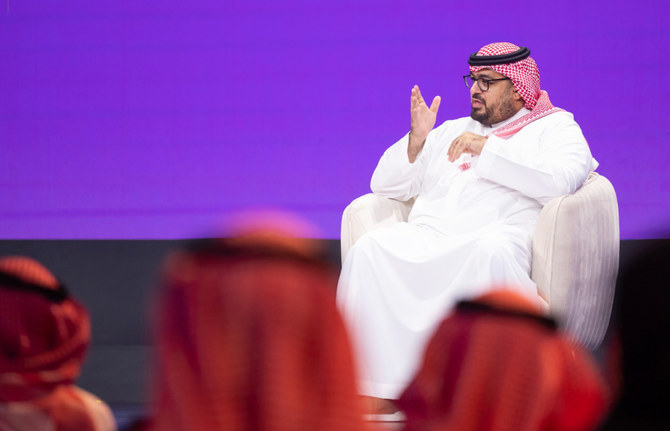
Saudi Minister of Economy and Planning Faisal bin Fadhil Al-Ibrahim. (SPA)
Short Url
Updated 19 January 2023
Follow

Saudi Arabia joins WEF Jobs Consortium reinforcing Vision 2030 

RIYADH: Saudi Arabia’s Ministry of Economy and Planning has joined the World Economic Forum’s Jobs Consortium at the WEF annual meeting in Davos, as part of its efforts to develop the Kingdom’s labor force under Vision 2030. 

The Jobs Consortium is a union of world-class leaders with the unilateral vision of developing job creation and job transitions to reach a more promising and inclusive future in terms of employment, according to a press release. 

"People are the key driver of any successful transformation and the sustainability of its outcome. Everything we do is focused on empowering our people by equipping them with the evolving set of tools and skills, and creating the opportunities for them to capture, grow, and flourish," said the Minister of Economy and Planning Faisal bin Fadhil Al-Ibrahim at the WEF.  

The new membership supports Saudi Vision 2030 “and its commitment to building a thriving, vibrant economy that creates new sectors, hundreds of thousands of new jobs, and cross-cutting innovation,” stated the press release.   

Al-Ibrahim further mentioned a central aspect of Saudi Arabia’s Vision 2030 in the WEF is to limit the Kingdom’s oil dependence and produce new industries thus luring talent into the country.  

“Moving forward, we expect the new sectors that did not exist in the past — we have sports, entertainment, culture and tourism — to play a big role,” Al-Ibrahim said to Reuters on the sidelines of the WEF, noting that the Kingdom planned to generate high-quality jobs faster than the rate at which people enter the labor market.   

He noted that the Saudi female participation in the labor force reached 37 percent exceeding the initial target of 30 percent by 2030, while the male unemployment rate hit a record low of 4.8 percent.   

“We reached 2.2 million private sector jobs this year, which is a record high.”  

Saudi Arabia’s execution in the esports industry illustrated the reaping of what has been sown by the Kingdom’s intended diversification efforts in that industry.   

Saudi Arabia’s Crown Prince Mohammed bin Salman unveiled the National Gaming and Esports Strategy last September, revealing its aims to produce more than 30 competitive games in the Kingdom’s studios and become one of the top three countries containing the highest number of professional esports players.   

The strategy marked the start of a new era towards leading the sector and making the country a global hub for the gaming industry by 2030, according to the state news agency SPA.  

Raising the quality of life by improving players’ experience, providing new entertainment opportunities, and achieving an economic impact by contributing to the GDP by about 50 billion riyals are the strategy’s three main objectives. 

SPA’s report also suggests that this will lead to the creation of 39,000 new job opportunities by 2030. 


Bahrain to roll out fiscal reforms to bolster public finances

Updated 5 sec ago
Follow

Bahrain to roll out fiscal reforms to bolster public finances

RIYADH: Bahrain’s government has unveiled a comprehensive package of fiscal reforms aimed at curbing public expenditure, generating new revenue streams, and safeguarding essential subsidies for citizens.

According to a report by the Bahrain News Agency, the measures include increases in fuel prices, higher electricity and water tariffs for certain categories, and greater dividend contributions from state-owned enterprises.

The Cabinet emphasized that electricity and water prices will remain unchanged for the first and second tariff bands for citizens’ primary residences, including homes accommodating extended families.

These reforms are aligned with Bahrain’s Economic Vision 2030, which seeks to reinforce fiscal discipline, diversify revenue sources beyond crude oil, and ensure long-term fiscal sustainability.

“The Cabinet confirmed that electricity and water tariffs for the first and second tariff bands for citizens’ primary residences will remain unchanged, taking into account extended families residing in a single household,” BNA reported.

The Cabinet also agreed to defer any changes to the subsidy mechanisms for electricity and water used in citizens’ primary residences until further studies are completed. At the same time, it approved amendments to electricity and water consumption tariffs for other categories, with implementation scheduled to begin in January 2026.

Under the proposed reforms, a 10 percent corporate income tax will be levied on companies with revenues exceeding 1 million Bahraini dinars ($2.6 million) or annual net profits above 200,000 dinars.

The new corporate tax framework is expected to come into force in 2027, subject to the completion of necessary legislative and regulatory approvals.

In addition, Bahrain plans to increase natural gas prices for businesses and reduce administrative government spending by 20 percent as part of broader cost-cutting efforts.

The government also aims to improve the utilization of undeveloped investment land that already has infrastructure in place by introducing a monthly fee of 100 fils per square meter, with implementation anticipated in January 2027.

The Cabinet further tasked the ministers of labor, legal affairs, and health with reviewing fees related to worker permits and health care services.

According to the report, revised fees will be phased in gradually over a four-year period starting in January 2026, with domestic workers exempt from the changes.

Authorities stressed that the reforms are designed to streamline government procedures that support investment, attract foreign capital, and strengthen the role of the private sector in driving economic growth.