

Riyadh exhibition showcases NEOM’s futuristic city THE LINE

1 / 2
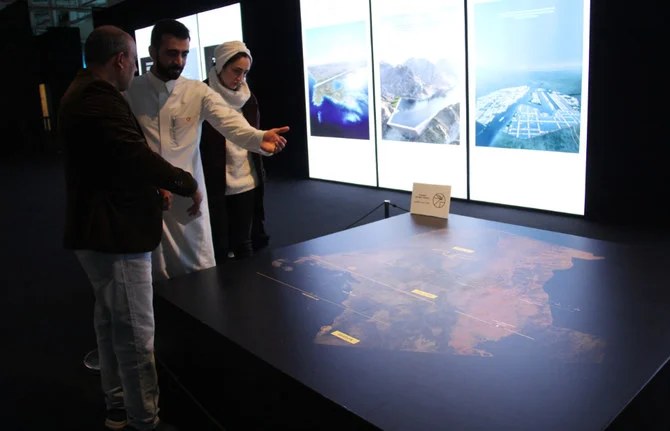
THE LINE Experience Exhibition in Riyadh showcases its revolutionary designs for Livability. (AN photo by Abdulaziz Aloraifi)
2 / 2
THE LINE Experience Exhibition in Riyadh details the revolutionary smart city of the future. (Supplied)
Short Url
Updated 16 January 2023
Follow

Riyadh exhibition showcases NEOM’s futuristic city THE LINE

  • Visitors given a glimpse into life without streets, cars, or emissions
  • The futuristic linear city at NEOM will be home to 9 million people

RIYADH: An exhibition showcasing a smart city being built as part of the NEOM project in northwestern Saudi Arabia has gone on display in Riyadh.

The Line development will be constructed using revolutionary architectural designs and urban planning concepts and the exhibition will run until April 29 at the Diriyah Biennale Foundation for Contemporary Art in Riyadh’s Jax district.

Visitors will be given a glimpse into life without streets, cars, or emissions in the futuristic linear city.
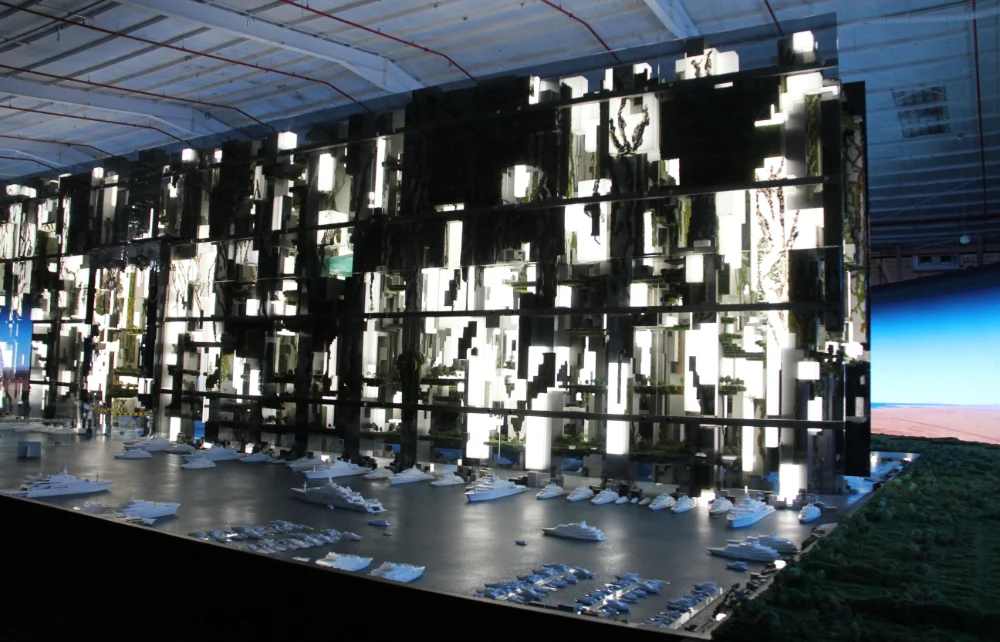


THE LINE Experience Exhibition in Riyadh showcases its revolutionary designs for Livability. (AN photo by Abdulaziz Aloraifi)

A spokesman for the project told Arab News: “The future is here. Unlike traditional cities, The Line will run on 100 percent renewable energy, prioritize health, and promote a sense of well-being for residents and visitors over transportation and infrastructure.”

The city will be 200 meters wide, 170 kilometers long, and rise 500 meters above sea level and will contribute to conserving 95 percent of NEOM’s land and support environmental sustainability.

“There will be no cars, but a high-speed railway will take residents and visitors across its length,” the spokesman said.
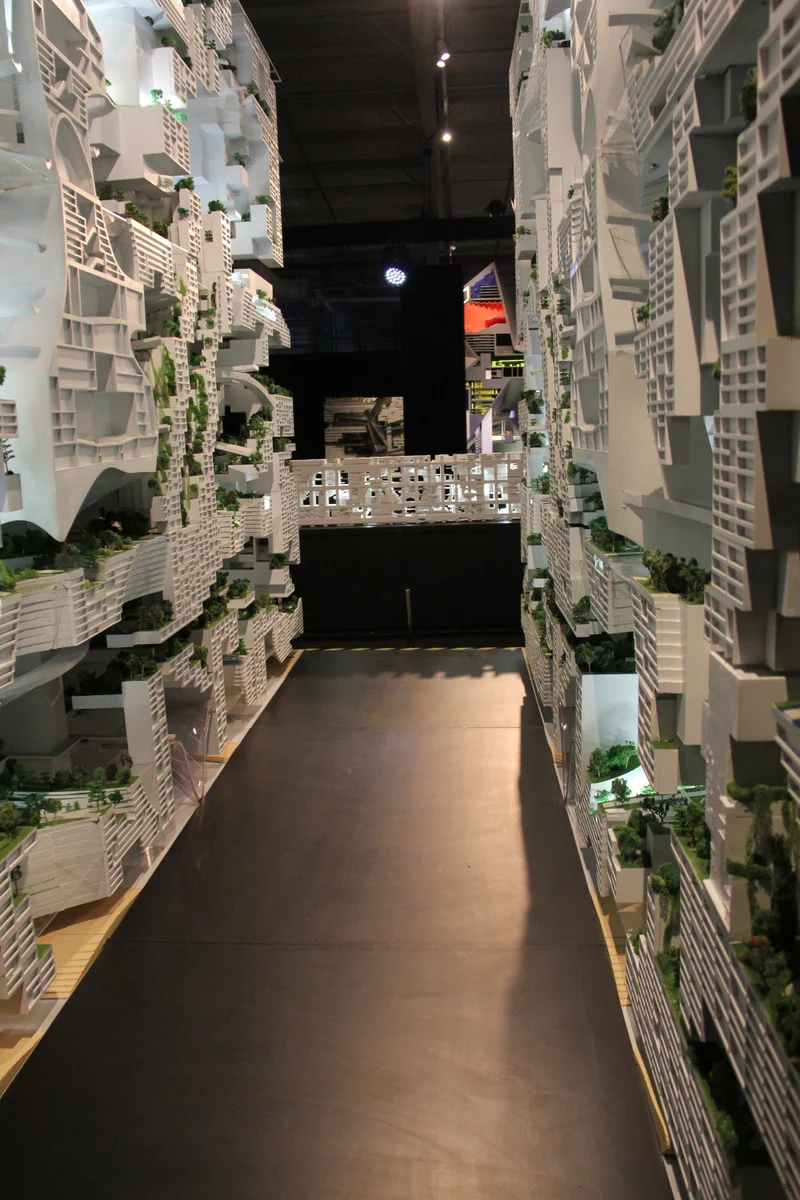


THE LINE Experience Exhibition in Riyadh showcases its revolutionary designs for Livability. (AN photo by Abdulaziz Aloraifi)

He pointed out that The Line design was based on a new concept of zero gravity urbanism, the idea of layering city functions vertically while enabling inhabitants to move seamlessly in the city in three directions – up, down, and across – offering quick access to offices, schools, parks, and residential facilities.

The Line’s unique modular design ensures that all facilities and amenities can be accessed within a five-minute walk.

Using an innovative design that requires minimal space and less water, hydroponics gardens will grow fruit, vegetables, and flowers in half the time of traditional agriculture methods.
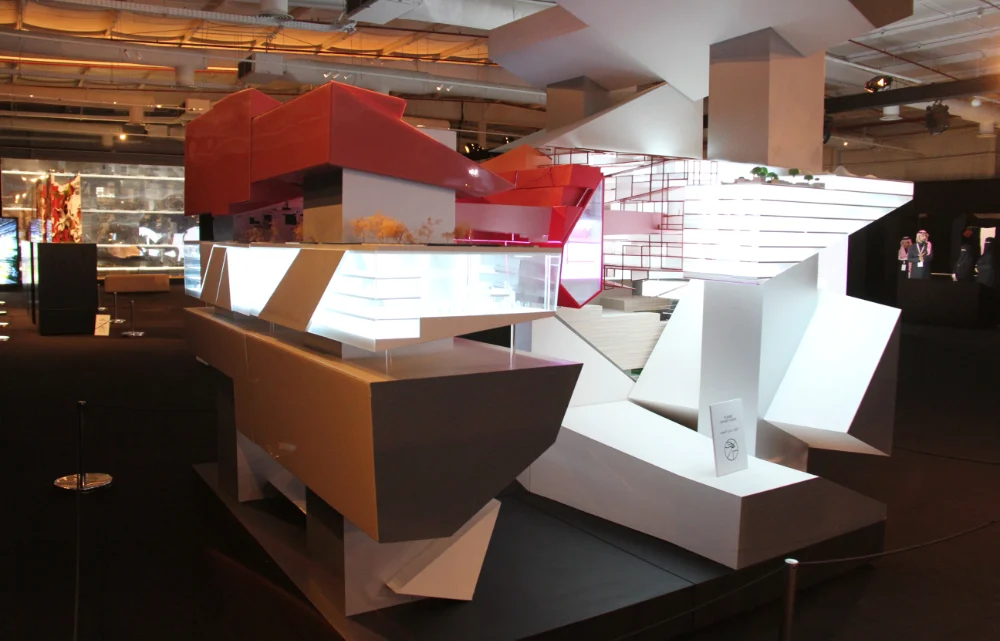


THE LINE Experience Exhibition in Riyadh showcases its revolutionary designs for Livability. (AN photo by Abdulaziz Aloraifi)

The Line, which will become home to 9 million people, was announced by Crown Prince Mohammed bin Salman, chairman of the NEOM board of directors, in July.

NEOM has several ongoing megaprojects, one of them being Trojena, a year-round winter sports complex designed by Iraqi British architect Zaha Hadid. And what will be the first outdoor ski resort in the Gulf Cooperation Council region, is set to host the Asian Winter Games in 2029.

Another megaproject is Sindalah Island, a luxury tourist destination.

Exhibition visitors can opt to take a guided tour conducted in Arabic and English, while free tickets can be booked at https://theline.halayalla.com/en-us.
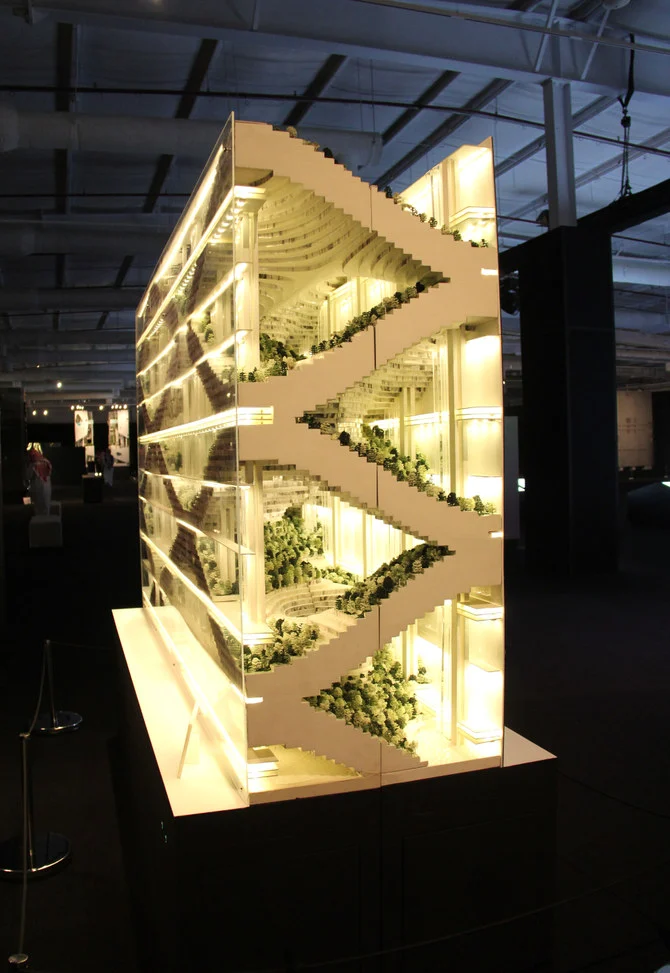


THE LINE Experience Exhibition in Riyadh showcases its revolutionary designs for Livability. (AN photo by Abdulaziz Aloraifi)
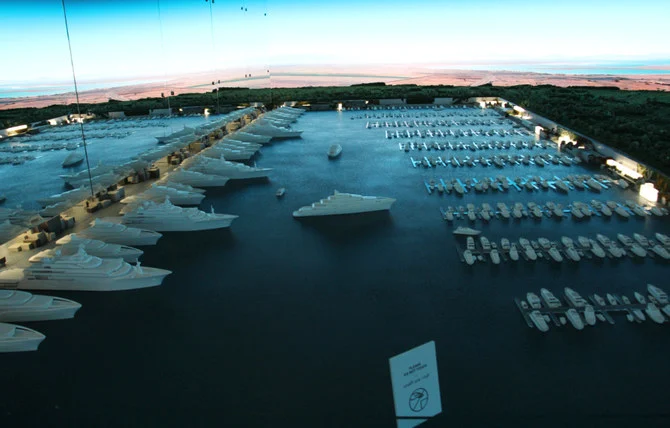


THE LINE Experience Exhibition in Riyadh showcases its revolutionary designs for Livability. (AN photo by Abdulaziz Aloraifi)


Makkah’s urban shift enhances the city’s quality of life

Updated 4 sec ago
Follow

Makkah’s urban shift enhances the city’s quality of life

  • By harmonizing its religious heritage with modern urban development, Makkah is proving that a city can honor its past while vigorously embracing the future, offering a holistic experience that nourishes both the soul and community


MAKKAH: Islam’s holiest city is currently witnessing a qualitative urban shift, one that seamlessly blends its profound spiritual sanctity with a modern, vibrant lifestyle. By integrating cultural, educational, and entertainment initiatives, Makkah is redefining the visitor experience and significantly enhancing the quality of life for its residents, directly supporting the goals of Saudi Vision 2030.

The city’s transformation was recently highlighted by the success of the Makkah winter season. The event attracted approximately 400,000 visitors — over 60% of whom were locals — demonstrating a strong domestic demand for high-quality public spaces. The season revitalized community interaction, driving a 35% increase in visits to recreational sites and creating more than 1,200 temporary jobs for the local workforce.

Central to this urban renaissance is the Hira Cultural District. Since opening its doors in January 2023 near the historic Mount Hira, the district has become a definitive landmark that bridges Islamic history with contemporary identity.

Makkah’s Hira Cultural District has become a definitive landmark that bridges Islamic history with contemporary identity. (SPA photo)

Far from being a static monument, the district has cultivated a thriving creative economy. Its craftsmanship program, which features over 100 artisans, has generated up to SAR 3 million in sales and attracted 130,000 visitors to live workshops. These interactive spaces allow visitors to engage directly with the region’s heritage, moving beyond passive observation to active participation.

A living legacy 

The shift extends to Makkah’s broader ecosystem of museums and cultural sites, which are now positioned as key pillars of cultural tourism. Facilities like the Revelation Exhibition use cutting-edge technology and multilingual content to narrate the story of the Holy Quran’s revelation, offering an immersive experience that complements the spiritual journey of pilgrims.

These efforts align with the “Makkah: A Living Legacy” campaign, which seeks to document the city’s historical narrative and preserve its collective memory. Recent months have seen a surge in educational workshops for university students and tour guides, ensuring that the human element of Makkah’s history is conveyed with accuracy and depth.

City’s transformation recently highlighted by the success of the Makkah winter season. (SPA photo)

Economic and social impact 

The results of this integrated approach are tangible. Specialized museums and restored historic sites now attract up to 1.6 million annual visitors. Crucially, this cultural enrichment is encouraging pilgrims to linger longer, increasing the average duration of stay by 18%.

By harmonizing its religious heritage with modern urban development, Makkah is proving that a city can honor its past while vigorously embracing the future, offering a holistic experience that nourishes both the soul and the community.