LONDON: Iran must halt its executions of people sentenced to death for taking part in anti-government protests, Amnesty International has urged.
The human rights organization condemned the executions of two men — Mohammad Mehdi Karami and Seyed Mohammad Hosseini — on Jan. 7, labeling their sentencing as “arbitrary.”
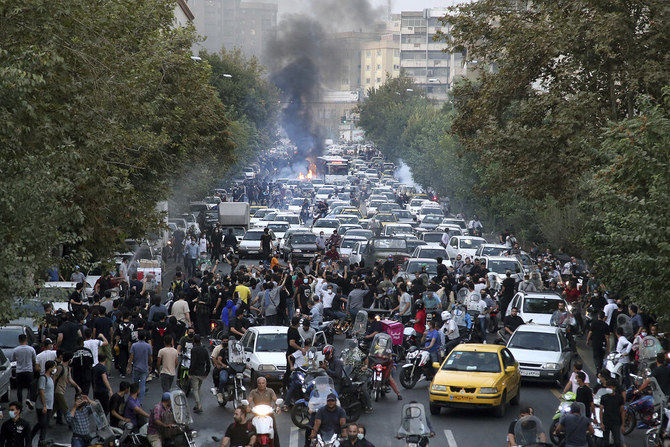
Others are also facing the same fate after being sentenced for their roles in nationwide demonstrations, which began in September last year, Amnesty warned.
Families of detained protesters are left unaware of the fate of relatives because authorities’ “persistent secrecy” surrounding the use of the death penalty means no advance notice of execution is provided.
Karami and Hosseini were sentenced to death on Dec. 5 last year in a trial that Amnesty described as a “grossly unfair sham.”
The sentence was delivered less than a week after the trial began, with the two men convicted over the death of a Basij paramilitary operative during a protest in early November.
Before the trial began, Iranian state media aired confessions by the two men allegedly obtained under torture, with Hosseini telling his lawyer that he was kicked and beaten with iron rods and until he confessed.
Diana Eltahawy, Amnesty deputy director for the Middle East and North Africa, said: “It is abhorrent that the Iranian authorities persist in their state-sanctioned killing spree as they desperately seek to end the protests and cling to power by instilling fear among the public.
“The arbitrary executions of Mohammad Mehdi Karami and Seyed Mohammad Hosseini, just days after their death sentences were upheld, reveal how the Iranian authorities continue to wield the death penalty as a weapon of repression, and serve as a chilling reminder that scores of others remain at risk of execution.
“It is crucial that the international community not only stands with the people in Iran but takes urgent action to hold the Iranian authorities to account.”
Eltahawy added: “States must exercise universal jurisdiction to criminally investigate all officials reasonably suspected of involvement in crimes under international law and other grave violations of human rights, and issue arrest warrants where there is sufficient evidence.”


![]()

Iran must halt protester executions: Amnesty International
Short Url
https://arab.news/gj9d3
Iran must halt protester executions: Amnesty International
- ‘Grossly unfair sham trial’ ended with death sentence for 2 men on Jan. 7
- Families of detained protesters are left unaware of the fate of relatives because authorities’ “persistent secrecy”


Latest updates


© 2026 SAUDI RESEARCH & PUBLISHING COMPANY, All Rights Reserved And subject to Terms of Use Agreement.