Egypt’s December inflation accelerates to annual 21.3%

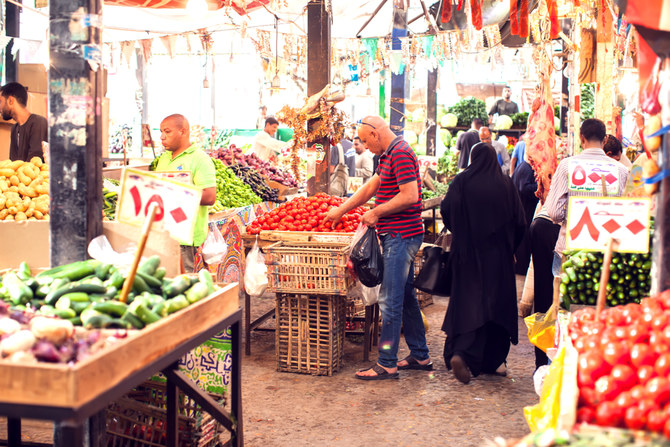
The inflation figure was the highest since December 2017, when it hit 21.9 percent. (Shutterstock)
Short Url
Updated 10 January 2023
Follow

Egypt’s December inflation accelerates to annual 21.3%

CAIRO: Egyptian annual urban consumer inflation in December rose to 21.3 percent from 18.7 percent in November, exceeding analyst expectations, data from the statistics agency CAPMAS showed on Tuesday.

The inflation figure was the highest since December 2017, when it hit 21.9 percent. The price rises followed a currency devaluation in October and restrictions on imports.

The median forecast in a Reuters poll of 15 economists had projected inflation of 20.50 percent. Five economists also forecast that core inflation, due later on Tuesday, would come in at a median 23.6 percent, up from 21.5 percent in November.

The central bank allowed the Egyptian pound to depreciate by about 14.5 percent on Oct. 27 and let its value continue to weaken slowly and incrementally in November and December.

"Food and beverages were up 4.6 percent month-on-month (adding to the 4.5 percent in November), impacted mainly by bread and cereals, dairy, vegetables and meat," said Allen Sandeep of Naeem Brokerage.

This goes somewhat towards absorbing a 25 percent devaluation in late October but portends more inflation to come, Sandeep said.

"Now combined monthly inflation has risen by around 7 percent over three months. This is close to a 30 percent pass-through to the urban CPI index. With the new round of devaluation ongoing, which we expect to be roughly 15 percent, we can expect annual CPI to touch 25 percent by February."

Egypt's surging prices will add to pressure on the central bank's Monetary Policy Committee to raise interest rates when it next meets on Feb. 2.


Saudi Arabia’s foreign reserves rise to a 6-year high of $475bn

Updated 22 February 2026
Follow

Saudi Arabia’s foreign reserves rise to a 6-year high of $475bn

RIYADH: Saudi Arabia’s foreign reserves climbed 3 percent month on month in January to SR1.78 trillion, up SR58.7 billion ($15.6 billion) from December and marking a six-year high.

On an annual basis, the Saudi Central Bank’s net foreign assets rose by 10 percent, equivalent to SR155.8 billion, according to data from the Saudi Central Bank, Argaam reported.

The reserve assets, a crucial indicator of economic stability and external financial strength, comprise several key components.

According to the central bank, also known as SAMA, the Kingdom’s reserves include foreign securities, foreign currency, and bank deposits, as well as its reserve position at the International Monetary Fund, Special Drawing Rights, and monetary gold.

The rise in reserves underscores the strength and liquidity of the Kingdom’s financial position and aligns with Saudi Arabia’s goal of strengthening its financial safety net as it advances economic diversification under Vision 2030.

The value of foreign currency reserves, which represent approximately 95 percent of the total holdings, increased by about 10 percent during January 2026 compared to the same month in 2025, reaching SR1.68 trillion.

The value of the reserve at the IMF increased by 9 percent to reach SR13.1 billion.

Meanwhile, SDRs rose by 5 percent during the period to reach SR80.5 billion.

The Kingdom’s gold reserves remained stable at SR1.62 billion, the same level it has maintained since January 2008.

Saudi Arabia’s foreign reserve assets saw a monthly rise of 5 percent in November, climbing to SR1.74 trillion, according to the Kingdom’s central bank.

Overall, the continued advancement in reserve assets highlights the strength of Saudi Arabia’s fiscal and monetary buffers. These resources support the national currency, help maintain financial system stability, and enhance the country’s ability to navigate global economic volatility.

The sustained accumulation of foreign reserves is a critical pillar of the Kingdom’s economic stability. It directly reinforces investor confidence in the riyal’s peg to the US dollar, a foundational monetary policy, by providing SAMA with ample resources to defend the currency if needed.

Furthermore, this financial buffer enhances the nation’s sovereign credit profile, lowers national borrowing costs, and provides essential fiscal space to navigate global economic volatility while continuing to fund its ambitious Vision 2030 transformation agenda.