

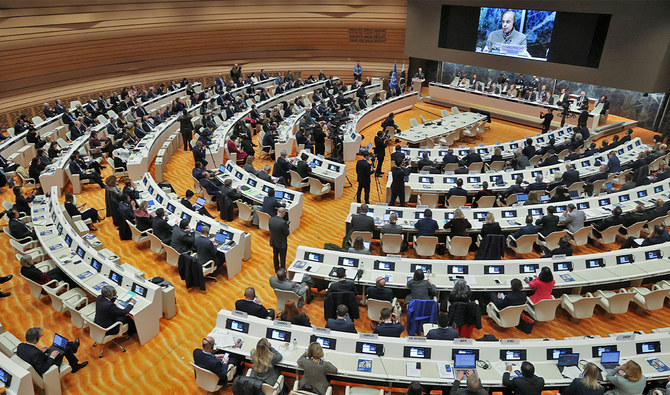

ISLAMABAD: Pakistan’s Prime Minister Shehbaz Sharif on Monday launched the ‘Resilient Recovery, Rehabilitation, and Reconstruction Framework’ (4RF) and asked the world to fill the funding gap of $8 billion out of the $16.3 billion required to rebuild flood-affected areas of the country.
Sharif expressed these views while addressing the opening session of the day-long international conference on ‘Climate Resilient Pakistan’ which he co-chaired with United Nations (UN) Secretary-General Antonio Guterres in Geneva.
Since mid-June, devastating floods in Pakistan have claimed more than 1,700 lives and affected 33 million people. According to the country’s post-disaster needs assessment (PDNA), which was carried out in collaboration with development partners, the total destruction and economic losses from the floods exceeded $30 billion, which is eight percent of Pakistan’s GDP, pushing nine million people into abject poverty.
On Monday, governments, leaders, and high-level representatives from around 40 countries and international financial institutions, foundations, and funds gathered to attend the conference both in person and virtually. Islamabad seeks the world’s assistance in speeding up its reconstruction and rehabilitation efforts.
“Pakistan has built a framework for the country’s uplift,” Sharif said during the conference, adding that the first part of this plan reflected priorities for recovery and reconstruction.
“Bearing in mind the minimum funding requirement of $16.3 billion, half of which was proposed to be met from domestic resources and the other half from development partners and friends, the funding gap for minimum recovery is $8 billion which will be needed over the next three years.”
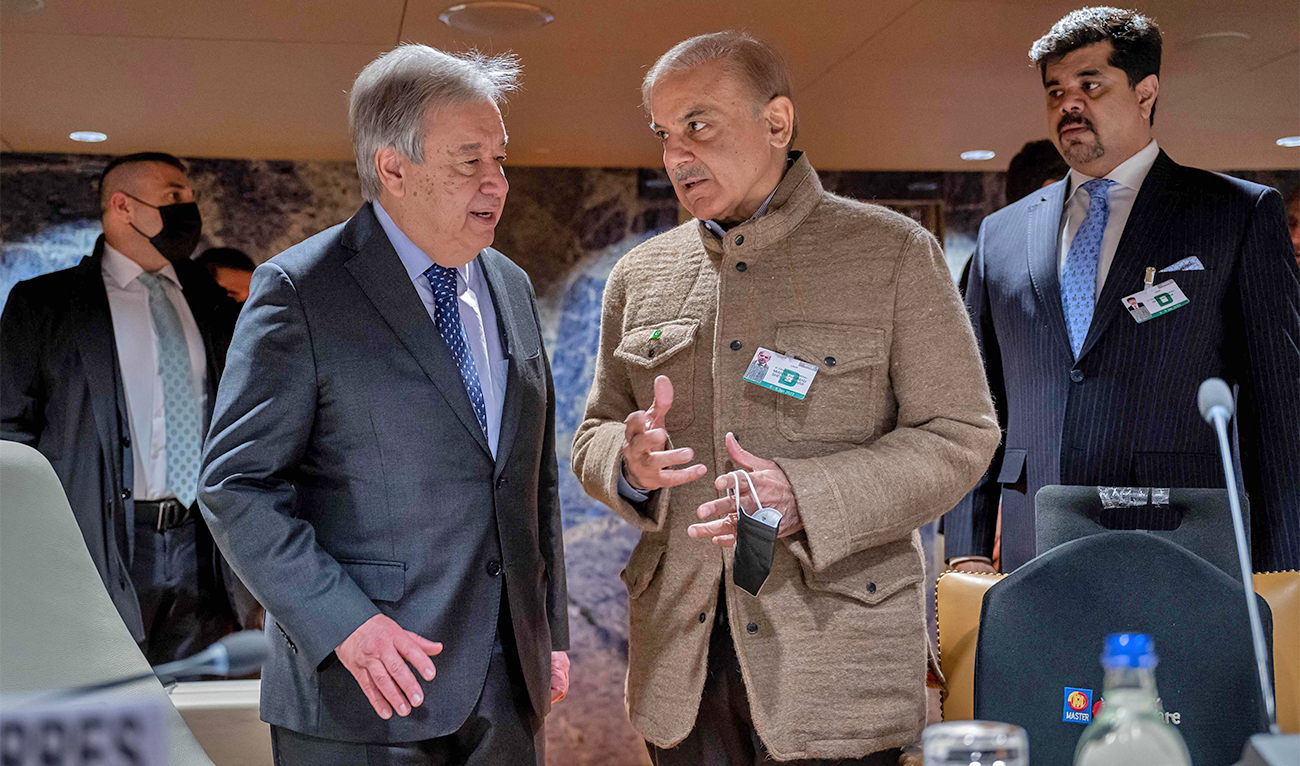
UN Secretary-General Antonio Guterres (L) speaks with Pakistan Prime Minister Shehbaz Sharif at the start of a Pakistan's Resilience to Climate Change conference in Geneva, on January 9, 2023. (AFP)
The second part of the framework incorporates flood resilience design and infrastructure projects such as protecting key highways, rail line networks, an early warning system, and capacity building for rescue and relief in future disasters, Sharif said.
“Pakistan’s ability to recover from the colossal flood disaster, to restore critical infrastructure, and revive rapid economic growth will hinge substantially on the speed of these actions,” he added.
“The scale of the resource gap for funding crisis recovery is so wide that it has redefined how we think about resilience. Frankly, it has changed life forever,” Sharif added.
In his remarks, UN Secretary-General Guterres appealed to the world to help Pakistan deal with the disaster.
“Massive investments are needed for the country’s rehabilitation which is expected to cost more than $16 billion,” he said, adding that the international community must match the heroic response of the people of Pakistan with massive investments to strengthen their communities for the future.
“Pakistan is doubly victimized by climate chaos and a morally bankrupt global financial system,” he said.
The UN boss reiterated his demand for finding creative ways for developing countries to access debt relief and financing.
Pakistan’s foreign minister, Bilawal Bhutto-Zardari, said the country would need considerable support over the next several years from international partners to implement this comprehensive plan of reconstruction and rehabilitation of the flood victims.
“We will transform the challenge of recovery and reconstruction into an opportunity to build a more resilient Pakistan,” he said.
Bhutto-Zardari added that the South Asian nation was determined to implement a rebuilding plan in an open, transparent, and collaborative way.
Virtually addressing the participants, French President, Emmanuel Macron, said Paris would continue to provide financial support and expertise in the long term as required by Islamabad.
“France will bring a new contribution of $10 million for Pakistan aid support,” he added.


