

Pakistan PM hopes UN conference in Geneva will help rebuild lives in flood-affected regions

In this file photo taken on September 23, 2022, Pakistani Prime Minister Shehbaz Sharif addresses the 77th session of the United Nations General Assembly at UN headquarters in New York City. (Photo courtesy: AFP/File)
Short Url
Updated 08 January 2023
Follow

Pakistan PM hopes UN conference in Geneva will help rebuild lives in flood-affected regions

  • Prime Minister Sharif says he will give the world a comprehensive reconstruction plan at the climate conference
  • Pakistan is expected to seek $16.3 billion in aid from the international community to carry out post-flood activities

ISLAMABAD: Prime Minister Shehbaz Sharif said on Sunday it was vital to bridge a funding gap to restore critical infrastructure in the country that was washed away by recent floods not only to rebuild millions of lives but also to revive the national economy.

The prime minister is flying to Geneva to co-host a United Nations conference on Monday where his delegation will highlight Pakistan’s immediate reconstruction needs amounting to about $16.3 billion. The country witnessed devasting floods last year that killed more than 1,700 people and affected over 33 million others.

According to official estimates, the damages wreaked by unprecedented rains and floods have cost the cash-strapped nation $30 billion, which is about a tenth of Pakistan’s GDP. UN officials in Pakistan have already warned the current international aid is likely to run out on January 15.

“We will place comprehensive post-disaster framework plan for recovery, rehabilitation & reconstruction with resilience before development partners & friendly countries,” the prime minister said in a string of Twitter posts before leaving for the international conference. “Bridging funding gap is key to restore critical infrastructure, rebuild lives & livelihoods & revive economy.”

“Humanity is at an inflection point in world history,” he continued. “Our actions today will shape the resilient future for our succeeding generations. Millions of Pakistanis affected by unprecedented devastation look for compassion & solidarity to build back better.”

In an article written on Friday, the prime minister complained about a decline in international enthusiasm to deal with help his country deal with the issue.

“International attention has receded, but the waters have not,” he wrote in Britain’s Guardian newspaper. “Large parts of Sindh and Balochistan provinces remain inundated.”

“The number of food-insecure people in Pakistan has doubled to 14 million; another 9 million have been pushed into extreme poverty,” he said. “These flooded areas now look like a huge series of permanent lakes, transforming forever the terrain and the lives of people living there. No amount of pumps can remove this water in less than a year; and by July 2023, the worry is that these areas may flood again.”

The prime minister maintained he was conscious the Geneva conference would only the beginning of a long and arduous journey, though a substantive outcome would reassure millions of imperiled people they had not been forgotten and that the international community would help them to rebuild their lives.

Pakistan reports current account surplus in Jan. owing to improved trade, remittances

Updated 4 sec ago
Follow

Pakistan reports current account surplus in Jan. owing to improved trade, remittances

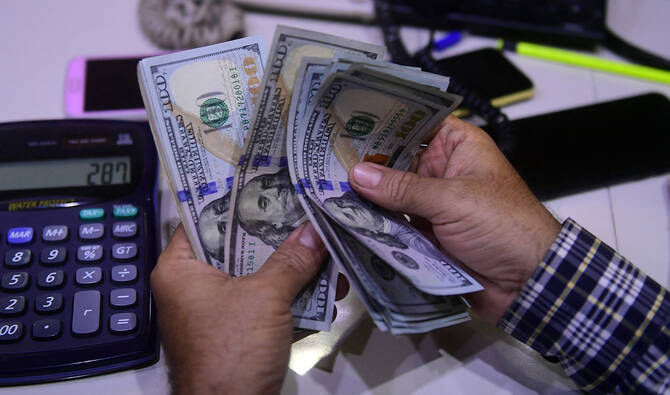
  • Pakistan’s exports crossed the $3 billion mark in Jan. as the country received $3.5 billion in remittances
  • Last month, IMF urged Pakistan to accelerate pace of structural reforms to strengthen economic growth

ISLAMABAD: Pakistan recorded a current account surplus of more than $120 million in January, the country’s finance adviser said on Tuesday, attributing it to improved trade balance and remittance inflows.

Pakistan’s exports rebounded in January 2026 after five months of weak performance, rising 3.73 percent year on year and surging 34.96 percent month on month, according to data released by the country’s statistics bureau.

Exports crossed the $3 billion mark for the first time in January to reach $3.061 billion, compared to $2.27 billion in Dec. 2025. The country received $3.5 billion in foreign remittances in Jan. 2026.

Khurram Schehzad, an adviser to the finance minister, said Pakistan reported a current account surplus of $121 million in Jan., compared to a current account deficit of $393 million in the same month last year.

“Improved trade balance in January 2026, strong remittance inflows, and sustained momentum in services exports (IT/Tech) continue to reinforce the country’s external account position,” he said on X.

Pakistan has undergone a difficult period of stabilization, marked by inflation, currency depreciation and financing gaps, and international rating agencies have acknowledged improvements after Islamabad began implementing reforms such as privatizing loss-making, state-owned enterprises (SOEs) and ending subsidies as part of a $7 billion International Monetary Fund (IMF) loan program.

Late last month, the IMF urged Pakistan to accelerate the pace of these structural reforms to strengthen economic growth.

Responding to questions from Arab News at a virtual media roundtable on emerging markets’ resilience, IMF’s director of the Middle East and Central Asia Jihad Azour said Islamabad’s implementation of the IMF requirements had been “strong” despite devastating floods that killed more than 1,000 people and devastated farmland, forcing the government to revise its 4.2 percent growth target to 3.9 percent.

“What is important going forward in order to strengthen growth and to maintain the level of macroeconomic stability is to accelerate the structural reforms,” he said at the meeting.

Azour underlined Pakistan’s plans to privatize some of the SOEs and improve financial management of important public entities, particularly power companies, as an important way for the country to boost its capacity to cater to the economy for additional exports.

“This comes in addition to the effort that the authorities have made in order to reform their tariffs, which will allow the private sector of Pakistan to become more competitive,” the IMF official said.