

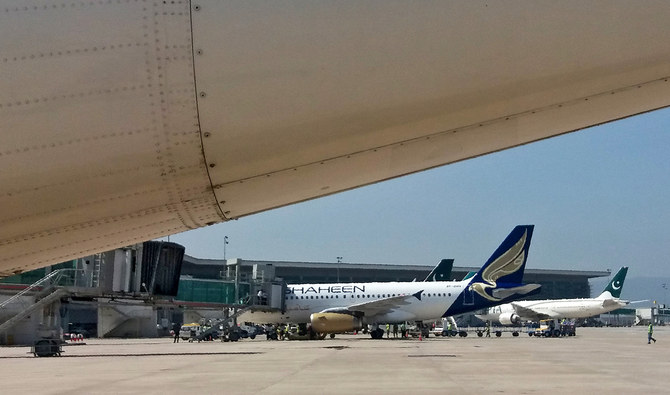

ISLAMABAD: The Pakistani government is planning to outsource operations of three major airports of the country to Qatar and the United Arab Emirates (UAE) among other operators, a federal minister announced on Saturday, saying it would improve airport service standards and bring in the much-needed foreign direct investment.
The development comes as the South Asian country desperately looks for external finance to support its depleting foreign exchange reserves, amid currency devaluation and decades-high inflation.
Railways Minister Khawaja Saad Rafique said Islamabad had acquired the services of the International Finance Corporation, a subsidiary of the World Bank that has provided consultancy for dozens of airports, in this regard and was already working on outsourcing operations of the Karachi, Lahore and Islamabad airports.
"The government has offered it to Qatar, perhaps the UAE will also be offered," Rafique said at a press conference on Saturday.
"Anyhow, these three airports are on the radar, they should be upgraded, citizens will get best facilities, Pakistan will get an upfront amount and foreign direct investment will come to Pakistan."
The minister said the same model was being followed all over the world, quoting examples of some major airports in the UK, Germany, France, Saudi Arabia, Turkey and India.
"We are trying to follow the same model in the country, which should have been done decades ago," he added.
Rafique said those waging a "vicious" propaganda in this regard were actually propagating against the country, clarifying that none of the airports was being privatized.
"All concerned ministries are on board and we are jointly working with Public-Private Partnership Authority of the government," he said.
"There will be no privatization, not an inch is being sold out."
Rafique said the government would invite the best operators in the world for a competitive bidding to outsource airport operations.
"After a certain time period, they will leave, handing over everything to us," he said.
Pakistan's economy has crumbled alongside a simmering political crisis, with the rupee plummeting and inflation at decades-high levels, but devastating floods and a global energy crisis have piled on further pressure.
The latest data from the central bank for the week ending December 30 shows the country has half the foreign exchange reserves it held a year ago, with servicing foreign debt and paying for crucial commodities such as medicine, food and energy among the chief concerns.


