

Saudi authorities set rules, conditions for establishing duty-free shops at customs

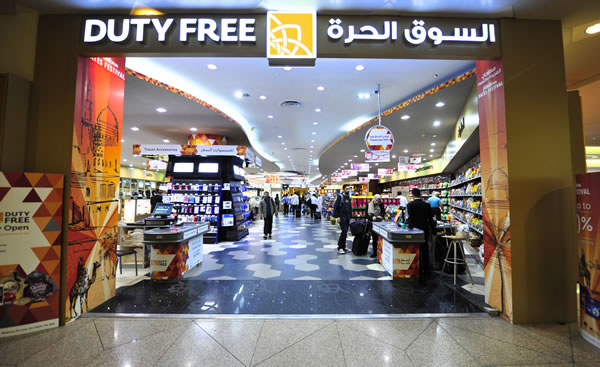
ZATCA said that the decision will contribute to supporting supply chains and improving logistical services to duty-free shops. (File Photo)
Short Url
Updated 08 January 2023
Follow

Saudi authorities set rules, conditions for establishing duty-free shops at customs

  • ZATCA said that the decision will contribute to supporting supply chains and improving logistical services to duty-free shops

RIYADH: Authorities in Saudi Arabia on Friday announced new customs rules, conditions and procedures for establishing duty-free shops at air, sea, and land ports, but said that prohibited goods will continue to be banned in the Kingdom, the Saudi Press Agency reported.

The Zakat, Tax and Customs Authority said the measures were in accordance with the unified customs system of the Gulf Cooperation Council states, which includes requirements related to the operation of the free market, in addition to provisions related to the requirements for operating licenses and other related controls.

The authority said that defining these rules was the consequence of a Saudi Cabinet decision, which included approving the establishment of free markets — according to air, sea, and land ports demands, and allowing sales for travelers coming to and departing from the Kingdom.

ZATCA said that the decision will contribute to supporting supply chains and improving logistical services to duty-free shops by providing a wide range of goods and products for shopping during travel.

The shops will also be able to provide additional sales channels to the local companies by selling their products to the duty-free operators, which will support and contribute to promoting national products by displaying them in sales halls.

The authority said that the duty-free shops are currently located in the departure halls of a number of airports, including the King Abdulaziz Airport in Jeddah, King Khalid Airport in Riyadh, King Fahd Airport in Dammam, and Prince Mohammed bin Abdulaziz Airport in Madinah.

Free markets at customs are defined as retail outlets that allow travelers to purchase goods and products that are permitted to be traded in the Kingdom, and that are subject to exemption from customs duties or taxes in accordance with the provisions of the relevant regulations, as stipulated in the Unified Customs Law of the free market rules system.

Goods prohibited from entering the Kingdom include contraband, alcohol, weapons, and products violating regulations related to the protection of commercial, industrial, literary and artistic property, as well as those originating from a country that has been boycotted economically.

Tax exemption systems differ from one country to another according to the location of the free market (arrival or departure halls) and in accordance with the provisions of the unified customs system, its executive regulations, and any of the relevant laws and legislation in each country.


Saudi-French cooperation to localize veterinary vaccine manufacturing

Updated 17 February 2026
Follow

Saudi-French cooperation to localize veterinary vaccine manufacturing

RIYADH: In the presence of sector leaders, the National Livestock and Fisheries Development Program signed a memorandum of understanding with French company Ceva under the patronage of Minister of Environment, Water and Agriculture Abdulrahman bin Abdulmohsen Al-Fadhli, who also chairs the program’s board.

The agreement aims to localize vaccine manufacturing, transfer technology and technical expertise, and expand the industrial and commercial production of veterinary vaccines across the Kingdom.

According to the MoU, the two parties will work to achieve high efficiency in mass production scale-up and establish a clear path for sustainable commercial operation that meets the needs of the local and national market, as well as strengthen the biosecurity and food security system.

The MoU also includes the development and modernization of messenger RNA vaccine technologies, along with joint research and development of a Middle East Respiratory Syndrome vaccine for camels. This involves designing, evaluating, and developing vaccines specifically tailored to combat the virus.

The agreement also covers the development of a rabies vaccine and related solutions, as well as supporting national efforts to control the disease through vaccine provision, capacity building, and the implementation of integrated prevention strategies.

The collaboration between the program and Ceva aims to meet the needs of the poultry vaccine market in the Kingdom, currently estimated at around SR750 million ($199 million).

The company will work to cover approximately 30 percent of this market with an initial investment of around SR250 million.

With continued government support for poultry projects and increased production in the sector, the market is expected to grow at a rate exceeding 10 percent annually, reaching approximately SR1.25 billion by 2030.

The addition of the world’s leading poultry vaccine manufacturer to Biotech Park highlights the program’s key role in developing new industries within the livestock and fisheries sector.

It also highlights the program’s commitment to building international partnerships with global companies, organizations, research centers, and universities to support advanced biotechnology industries and attract high-quality investments. It also seeks to create new economic sectors based on biotechnology, enhance veterinary health security, and support the sustainable economic development of the livestock sector, as well as empower national and emerging companies and provide advanced research and industrial infrastructure.

This will solidify the Kingdom’s position as a global hub for biotechnology industries and the development of national capabilities.

Ceva is the first international partner to join Biotech Park, the future veterinary biotechnology city launched by the program in Dhurma Governorate. The city is the world’s first specialized and fully integrated hub for veterinary biotechnology, serving as a benchmark for sector development and a platform supporting markets across the Kingdom, the Gulf, the Middle East, Africa and beyond.

The signing of Ceva is a significant step, given its position as the world’s leading manufacturer of poultry vaccines and medicines, and one of the most prominent international companies in the field of biotechnology.

The MoU aims to localize the veterinary vaccine industry, ensuring its compatibility with the strains of poultry diseases prevalent in Saudi Arabia. This includes the transfer of technology and technical expertise from Ceva, along with the implementation of specialized training programs to guarantee that manufacturing facilities comply with international Good Manufacturing Practice standards.