

London barber shop owner jailed for sending COVID-19 grant funding to Daesh

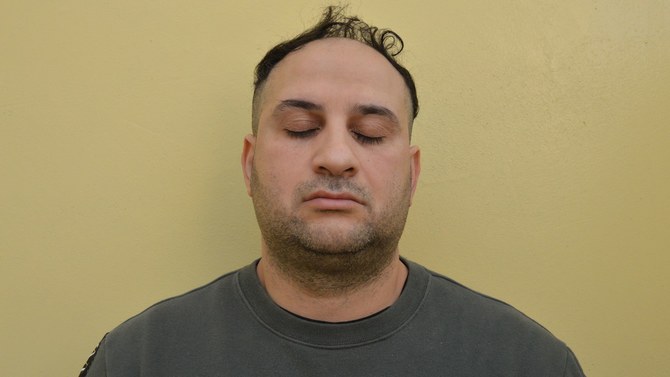
Tarek Namouz, 43, from west London, sent money received from bounce-back loans to Daesh militants in Syria. (Metropolitan Police)
Short Url
Updated 05 January 2023
Follow

London barber shop owner jailed for sending COVID-19 grant funding to Daesh

  • Barber shop owner received bounce-back loans from UK government during the coronavirus pandemic and sent around £11,280 to Daesh militants in Syria

LONDON: The owner of a London barber shop who claimed thousands of pounds in COVID-19 grant payments and sent the money to Daesh militants in Syria was on Thursday jailed for 12 years.

Tarek Namouz, 43, from west London, had received the bounce-back loans from the British government during the coronavirus pandemic to support his hair-cutting business.

The scheme was introduced to help companies during the global virus outbreak, with small and medium-sized enterprises able to borrow between £2,000 and up to 25 percent of their turnover.

Namouz had previously been found guilty of eight counts of funding terrorism and two of possessing information likely to be useful for terrorism, Sky News reported.

The sentence was handed down at Kingston Crown Court and included a further year on extended licence.

Namouz sent around £11,280 to Syria on dates between November 2020 and April 2021, the court heard. The money was intended to fund a militia in the country.

He was also recorded telling someone visiting him in prison while on remand that he had sent around £25,000, the court was told.

Prosecutors said cash and a hidden mobile phone containing messages to a contact in Syria, a Daesh bomb-making video, and a video showing how to kill with a knife, were found at the barber shop after a police raid.

Commander Richard Smith, head of the Metropolitan Police counter-terrorism command, said that terrorist groups relied on funding to carry out their activities and to continue to operate.

“People like Namouz who provide money to terrorist groups — both in the UK and overseas — are enabling others to go and commit serious and deadly attacks, and we will always pursue and investigate those people and seek to bring them to justice,” Smith added.

Judge Peter Lodder said Namouz had shown a “commitment to terrorism” and had planned to “re-establish a state run in accordance with extreme Islamic principles.”

He added: “In 2020 and 2021 you ran a barber’s shop in Hammersmith. You were entitled to COVID-19 bounce-back loans which were paid to you by the local council.

“You sent that money, and other money, through a west London transfer and currency exchange, to terrorists in Syria.”


Pakistan killed over 80 militants in strikes on TTP camps in Afghanistan — official

Updated 5 sec ago
Follow

Pakistan killed over 80 militants in strikes on TTP camps in Afghanistan — official

  • Saturday’s airstrikes followed a series of attacks inside Pakistan amid a surge in militancy
  • The Afghan Taliban authorities accuse Pakistani forces of killing civilians in the airstrikes

ISLAMABAD: Pakistan’s airstrikes in Afghanistan destroyed seven Tehreek-e-Taliban Pakistan (TTP) camps and killed over 80 militants, a Pakistani security official said on Sunday, with the Afghan Taliban accusing Pakistani forces of killing civilians in the assault.

Saturday’s airstrikes followed a series of attacks inside Pakistan amid a surge in militancy. Authorities say the attacks, particularly in Khyber Pakhtunkhwa province and the Pakistani capital of Islamabad, were carried out by the TTP and allied groups that Islamabad alleges are operating from sanctuaries in Afghanistan. Kabul denies this.

According to Pakistan’s information ministry, recent incidents included a suicide bombing at a Shiite mosque in Islamabad, separate attacks in Bajaur and Bannu, and another recent incident in Bannu during the holy month of Ramadan, which started earlier this week. The government said it had “conclusive evidence” linking the attacks to militants directed by leadership based in Afghanistan.

“Last night, Pakistan’s intelligence-based air strikes destroyed seven centers of Fitna Al-Khawarij TTP in three provinces of Nangarhar, Paktika and Khost, in which more than eighty Khawarij (TTP militants) have been confirmed killed, while more are expected,” a Pakistani security official, who spoke on condition of anonymity, told Arab News.

An earlier statement from Pakistan’s information ministry said the targets included a camp of a Daesh regional affiliate, the Islamic State Khorasan Province (ISKP), which claimed a suicide bombing at an Islamabad Shiite mosque that killed 32 people this month.

In an X post, Afghan government spokesperson Zabihullah Mujahid said Pakistani forces had violated Afghan territory.

“Pakistani special military circles have once again trespassed into Afghan territory,” Mujahid said. “Last night, they bombed our civilian compatriots in Nangarhar and Paktika provinces, martyring and wounding dozens of people, including women and children.”

 The Afghan Taliban’s claims of civilian casualties could not be independently verified. Pakistan did not immediately comment on the allegation that civilians had been killed in the strikes.

In a post on X, Afghanistan’s foreign ministry said it had summoned Pakistan’s charge d’affaires to Afghanistan Ubaid-ur-Rehman Nizamani and lodged protest through a formal démarche in response to the Pakistani military strikes.

“IEA-MoFA (The Islamic Emirate of Afghanistan’s Ministry of Foreign Affairs) vehemently condemns the violation of Afghanistan’s airspace and the targeting of civilians, describing it as a flagrant breach of Afghanistan’s territorial integrity & a provocative action,” it said in a statement.

“The Pakistani side was also categorically informed that safeguarding Afghanistan’s territorial integrity is the religious responsibility of the Islamic Emirate of Afghanistan; henceforth, the responsibility for any adverse consequences of such actions will rest with the opposing side.”

Tensions between Islamabad and Kabul have escalated since the Afghan Taliban returned to power in 2021. Pakistan says cross-border militant attacks have increased since then and has accused the Taliban of failing to honor commitments under the 2020 Doha Agreement to prevent Afghan soil from being used for attacks against other countries. The Taliban deny allowing such activity and have previously rejected similar accusations.

Saturday’s exchange of accusations marks one of the most direct confrontations between the two neighbors in recent months and risks further straining already fragile ties along the volatile border.