

UAE’s non-oil private sector growth further eases in December: S&P Global 

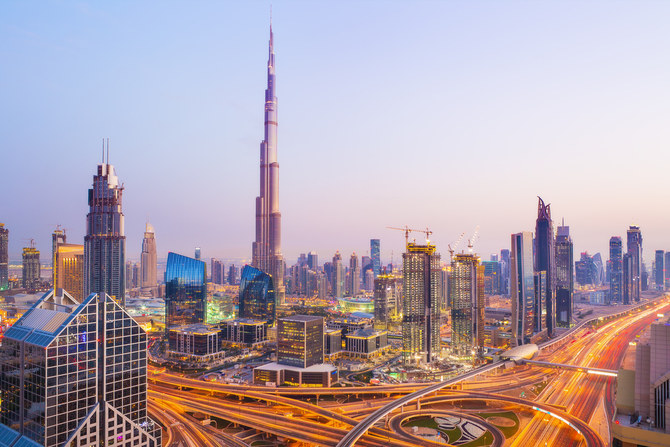
The deceleration in business activity dragged down the country’s Purchasing Managers’ Index to 54.2 in December from 54.4 in November. (Shutterstock)
Short Url
Updated 04 January 2023
Follow

UAE’s non-oil private sector growth further eases in December: S&P Global 

RIYADH: The growth of the non-oil private sector in the UAE further slipped in December, for the second consecutive month, as waning demand prompted an ease in output and new orders, the latest S&P Global report showed.  

The deceleration in business activity dragged down the country’s Purchasing Managers’ Index to 54.2 in December from 54.4 in November.  

Even though the PMI fell slightly, the global consultancy firm said it does not mean that business conditions in the UAE are deteriorating.  

According to the S&P Global Index, readings above the 50-mark show growth, while those below 50 signal contraction. 

“The UAE PMI fell for the second month in a row to 54.2 in December, almost registering the lowest reading in 2022 (54.1 in January 2022) and providing further signs that growth momentum has moderated from its post-pandemic peak in the third quarter,” said David Owen, an economist at S&P Global Market Intelligence.  

He added: “The slowdown reflected downward movements in three of the PMI’s largest components, with output and new business growth both easing to 15-month lows, whilst employment rose at the softest rate in eight months.”  

Owen further noted that weakness in the global economy has led to a first decrease in new export business since August 2021.  

According to the S&P Global report, the new orders subindex fell to 55.5 in December from 55.7 in November, while the employment index also eased, down to 50.6 last month from 51.5 in November.  

“The broad slowdown in growth led non-oil firms to make fewer additions to staffing in December. Job numbers rose at the softest rate in eight months and only marginally overall,” said S&P Global in the report.  

The report explained that reduced hiring efforts among non-oil companies resulted in an accelerated increase in backlogs of work.  

Reflecting the softer demand outlook, firms were less optimistic about future activity in December, while expectations fell to their lowest since early 2021, the report pointed out.  

However, the non-oil economy in the UAE witnessed a renewed decrease in overall cost burdens, driven by improved input availability and a stabilization of wage costs.  

Meanwhile, S&P Global, on Tuesday, revealed that Saudi Arabia’s job numbers witnessed their strongest growth rate since January 2018, as non-oil companies witnessed a sharp expansion in business activity driven by robust market demand and business intake.  

According to the Riyad Bank Saudi Arabia Purchasing Managers’ Index report, the Kingdom’s headline PMI stood firmly above the 50.0 no-change mark at 56.9 in December 2022 — a slight decline from November when the index hit 58.5. 


Acwa signs key terms to develop 5GW of renewable energy capacity in Turkiye

Updated 23 February 2026
Follow

Acwa signs key terms to develop 5GW of renewable energy capacity in Turkiye

JEDDAH: Saudi utility giant Acwa has signed key investment agreements with Turkiye’s Ministry of Energy and Natural Resources to develop up to 5 gigawatts of renewable energy capacity, starting with 2GW of solar power across two plants in Sivas and Taseli.

Under the investment agreement, Acwa will develop, finance, and construct, as well as commission and operate both facilities, according to a press release.

The program builds on the company’s first investment in Turkiye, the 927-megawatt Kirikkale Independent Power Plant, valued at $930 million, which offsets approximately 1.8 million tonnes of carbon dioxide annually, the statement added.

A separate power purchase agreement has been concluded with Elektrik Uretim Anonim Sirketi for the sale of electricity generated by each facility.

Turkiye aims to boost solar and wind capacity to 120GW by 2035, supported by around $80 billion in investment, while recent projects have already helped prevent 12.5 million tonnes of CO2 emissions and reduced reliance on imported natural gas.

Turkiye’s energy sector has undergone a rapid transformation in recent years, with renewable power emerging as a central pillar of its strategy.

Raad Al-Saady, vice chairman and managing director of ACWA, said: “The signing of the IA (implementation agreement) and PPA key terms marks a pivotal moment in Acwa’s partnership with Turkiye, reflecting the country’s strong potential as a clean energy leader and manufacturing powerhouse.”

He added: “Building on our long-standing presence, including the 927MW Kirikkale Power Plant commissioned in 2017, this step elevates our partnership to a new level,” Al-Saady said.

In its statement, Acwa said the 5GW renewable energy program will deliver electricity at fixed prices, enhancing predictability for grid planning and supporting long-term industrial investment.

By replacing imported fossil fuels with domestically generated clean energy, the initiative is expected to reduce Turkiye’s exposure to global energy market volatility, strengthening energy security and lowering long-term power costs.

The company added that the economic impact will extend beyond the anticipated investment of up to $5 billion in foreign direct investment, with thousands of jobs expected during the construction phase and hundreds of high-skilled roles created during operations.

The energy firm concluded that its existing progress in Turkiye reflects a strong appreciation for Turkish engineering, construction, and manufacturing capacity, adding that localization has been a strategic priority, and it has already achieved 100 percent local employment at its developments in the country.