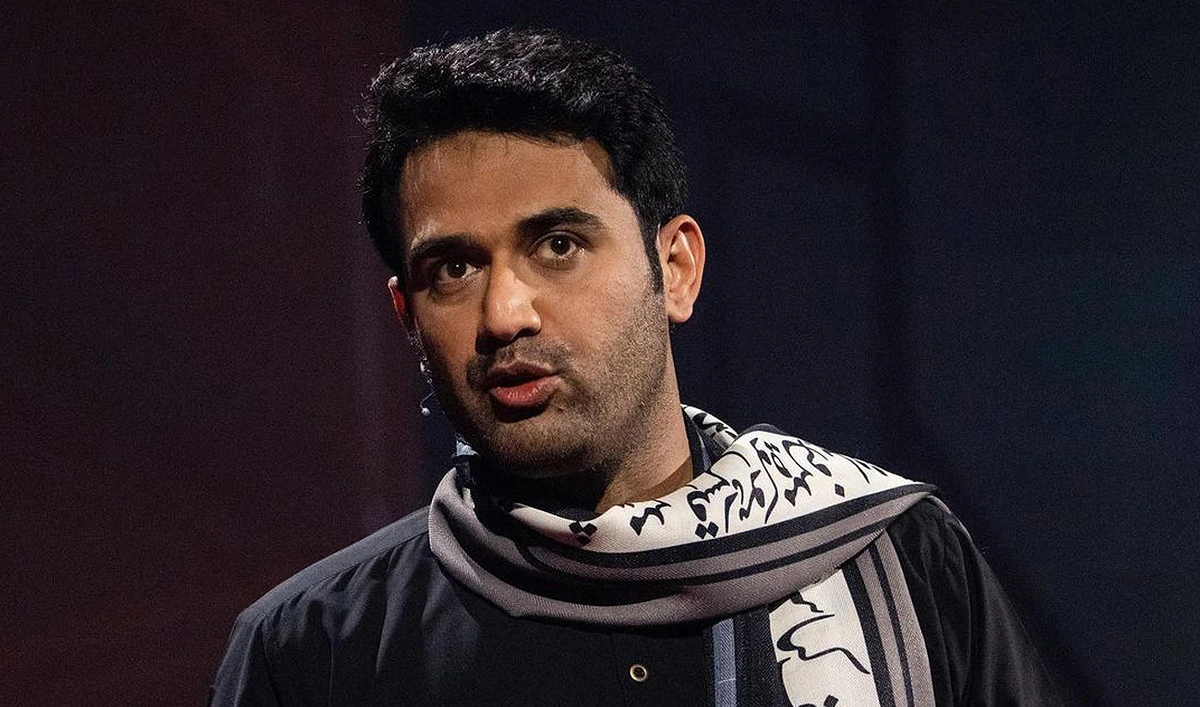
- ‘The Losing Side’ by Jawad Sharif presents first-hand accounts of forced conversions in Pakistan
- The documentary won ‘Best Human Rights Film’ award at Cannes World Film Festival in December
KARACHI: Jawad Sharif, the director of the Pakistani documentary ‘The Losing Side’ on forced religious conversions in Pakistan which won big at the prestigious Cannes World Film Festival in France last month, said on Monday that films based on such themes help inspire “positive change” in society.
’The Losing Side’, according to Sharif’s production house, narrates the “traumatic stories” of four survivors of forced conversions and marriages in Pakistan’s southern Sindh province. The documentary won the ‘Best Human Rights Film’ award in the November Online Edition of the Cannes World Film Festival 2022.
The 40-minute-long documentary film was shot in 2022 in different parts of Pakistan’s southern Sindh province, including Tharparkar, Mithi, and Badin. As per official data, at least four million Hindus reside in Sindh.
According to a report by the All-Party Parliamentary Group (APPG) for Pakistani Minorities — an informal group run by members of the UK’s House of Commons and Lords — each year, as many as 1,000 Pakistani Hindu and Christian girls aged 12 to 25 are forcibly converted to Islam to be married off to their abductors.
The report suggested that cases of forced conversions in the country have been increasing steadily in recent years, making it one of the most pressing human rights issues in the South Asian nation. In October 2021, Pakistan’s Parliamentary Committee to Protect Minorities from Forced Conversions rejected the anti-forced conversion bill after the Ministry of Religious Affairs opposed the proposed law.
“The reason behind highlighting such themes is to bring positive change in society by addressing the violations [of human rights] so they can be lessened or eradicated,” Sharif told Arab News on Monday.
“When it comes to themes such as forced conversion and forced marriages [in Pakistan], it becomes quite a conflict to release the film,” he added. “There is pressure from the government to not send out a negative message in media, given that the country’s economic situation is bad.”
But for Sharif, the reason behind highlighting such themes is to bring positive change in society by addressing human rights violations so they can be decreased or eradicated.
“We have filmed first-hand accounts of victims in ‘The Losing Side’. They are basically survivors from the Hindu community in Sindh,” he said.
“They were forcefully kidnapped, converted, and sold out to different parties who forced girls into multiple marriages, raped them, and used them,” Sharif added. “It is a very emotional and sensitive story featuring personal takes.”
Sharif said men in this part of the world take advantage of minority women knowing they are vulnerable. He added that most minority girls live below the poverty line which enables the men, who have some authority over them, to manipulate them into surrendering.
“It was a huge challenge to film the girls and women as they were scared that people would come after them again after watching the documentary,” he recalled. “My first target is local audiences to create awareness among the local community where the issue is prevalent,” Sharif shared.
Sharif said recognition at an international film festival helps raise the issue in mainstream media, which makes it more prominent. “If we speak of legislation and policy change for forced conversion in Pakistan, the pressure mostly comes from international media,” he added.
In addition to the victims, ‘The Losing Side’ features former senator Farhatullah Babar, chairman of the Islamic Ideological Council of Pakistan Dr. Qibla Ayaz, and Sindh chief minister’s aide Veerji Kolhi, among others.