


UNITED NATIONS: UN aid chief Martin Griffiths will visit Afghanistan in the coming weeks and seek to meet the highest possible officials within the Taliban-led administration after it banned female aid workers, a senior UN official said on Thursday.
"We regret to see that there is already an impact of this decision on our programs," Ramiz Alakbarov, UN aid coordinator in Afghanistan, told reporters in New York after the United Nations said that some "time-critical" programs had temporarily stopped and other activities will also likely be paused.
He said women made up roughly 30% of aid workers and that they would not be replaced with men. Alakbarov also said the "humanitarian needs of the people are absolutely enormous and it's important that we continue to stay and deliver."
The United Nations has said that 97% of Afghans live in poverty, two-thirds of the population need aid to survive and 20 million people face acute hunger.
Alakbarov said UN officials were meeting with ministries to discuss the impact on aid programs and that a meeting with the health minister about the delivery of services for women and girls by female aid workers had been "rather constructive."
"We already had an agreement with the minister that in that sector there should not be a barrier and the service providers may return to work. Now let's see how this is going to play out," Alakbarov said. "The discussions with other line ministers have not yielded the same results yet, but they are ongoing."
He said he would be focused on talking with the Taliban-led administration to try and get the ban reversed because they responded better to dialogue instead of pressure, adding: "This movement have not responded well to the pressure in the past."
Alakbarov said that 70% of UN programs were implemented in partnership with other aid organizations.
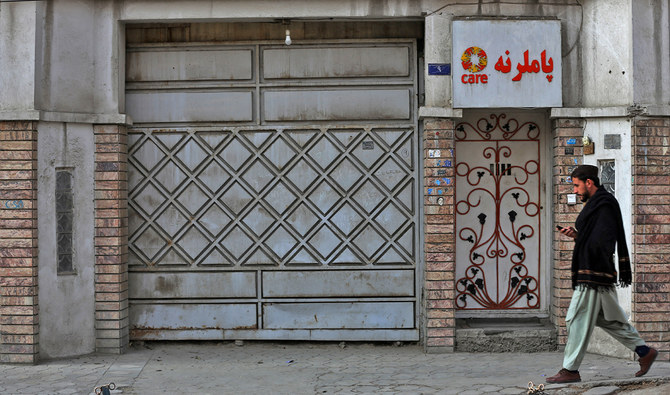
Four major global groups said on Sunday that they were suspending operations because they were unable to run their programs without female staff. Others have since followed suit.
The ban on female aid workers was announced by the Islamist Taliban-led administration on Saturday. It follows a ban imposed last week on women attending universities. Girls were stopped from attending high school in March.
Alakbarov said most of the decrees came from the Shura, or leadership council, in the southern city of Kandahar -- the birthplace of the Taliban -- and if a decree was signed by a minister in the capital Kabul it referenced the Kandahar Shura.
He said there were divisions within the Taliban over the bans on women, adding: "It's also generational. The older generation of Taliban is more conservative."
The Taliban seized power in August last year. They largely banned education of girls when last in power two decades ago but had said their policies had changed. The Taliban-led administration has not been recognized internationally.


