WASHINGTON: The Supreme Court is keeping pandemic-era limits on immigration in place indefinitely, dashing hopes of immigration advocates who had been anticipating their end this week.
In a ruling Tuesday, the Supreme Court extended a temporary stay that Chief Justice John Roberts issued last week. Under the court’s order, the case will be argued in February and the stay will be maintained until the justices decide the case.
The limits, often referred to as Title 42 in reference to a 1944 public health law, were put in place under then-President Donald Trump at the beginning of the pandemic. Under the restrictions, officials have expelled asylum-seekers inside the United States 2.5 million times and turned away most people who requested asylum at the border on grounds of preventing the spread of COVID-19.
Immigration advocates sued to end the policy, saying it goes against American and international obligations to people fleeing to the US to escape persecution. They’ve also argued that the policy is outdated as coronavirus treatments improve.
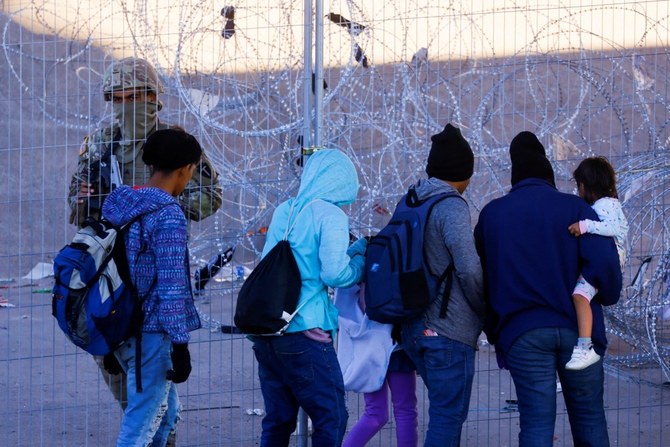
The Supreme Court’s decision comes as thousands of migrants have gathered on the Mexican side of the border, filling shelters and worrying advocates who are scrambling to figure out how to care for them.
“We are deeply disappointed for all the desperate asylum seekers who will continue to suffer because of Title 42, but we will continue fighting to eventually end the policy,” said Lee Gelernt, a lawyer with the American Civil Liberties Union, which had been arguing to end Title 42′s use.
The ruling Tuesday said specifically that the Supreme Court will review the issue of whether the states have the right to intervene in the legal fight over Title 42. Both the federal government and the immigration advocates have argued that the states waited too long to intervene and even if they hadn’t waited so long, that they don’t have sufficient standing to intervene.
In a dissent, Justices Neil Gorsuch and Ketanji Brown Jackson said that even if the court were to find the states have the right to intervene and Title 42 was lawfully adopted “.... the emergency on which those orders were premised has long since lapsed.”
The judges said the “current border crisis is not a COVID crisis.”
“And courts should not be in the business of perpetuating administrative edicts designed for one emergency only because elected officials have failed to address a different emergency. We are a court of law, not policymakers of last resort,” the justices wrote.
A federal judge sided with advocates in November and set a Dec. 21 deadline to end the policy. Conservative-leaning states appealed to the Supreme Court, warning that an increase in migration would take a toll on public services and cause an “unprecedented calamity” that they said the federal government had no plan to deal with.
Roberts, who handles emergency matters that come from federal courts in the nation’s capital, issued a stay to give the court time to more fully consider both sides’ arguments.
The federal government asked the Supreme Court to reject the states’ effort while also acknowledging that ending the restrictions abruptly would likely lead to “disruption and a temporary increase in unlawful border crossings.”
The precise issue before the court is a complicated, largely procedural question of whether the states should be allowed to intervene in the lawsuit, which had pitted advocates for the migrants against the federal government. A similar group of states won a lower court order in a different court district preventing the end of the restrictions after the Centers for Disease Control and Prevention announced in April that it was ending use of the policy.
Until the judge’s November order in the advocates’ lawsuit, the states had not sought to take part in that case. But they say that the administration has essentially abandoned its defense of the Title 42 policy and they should be able to step in. The administration has appealed the ruling, though it has not tried to keep Title 42 in place while the legal case plays out.


US Supreme Court keeps immigration limits in place indefinitely
https://arab.news/g57fw
US Supreme Court keeps immigration limits in place indefinitely


US designates Afghanistan as ‘state sponsor of wrongful detention’
- “The Taliban continues to use terrorist tactics, kidnapping individuals for ransom or to seek policy concessions,” Rubio says
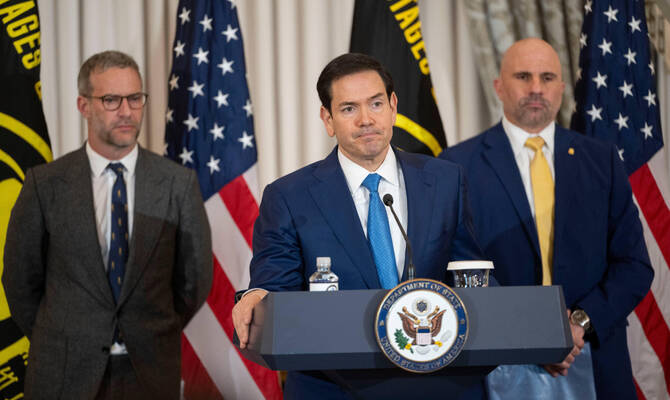
WASHINGTON, United States: US Secretary of State Marco Rubio announced Monday he has designated Afghanistan as a “State Sponsor of Wrongful Detention,” demanding Taliban authorities release two Americans and commit to ending its “hostage diplomacy.”
The move comes just over a week after Iran became the first country added to Washington’s new “wrongful detention” blacklist.
President Donald Trump in September signed an executive order that created the blacklist, similar to designations by the United States on terrorism.
“The Taliban continues to use terrorist tactics, kidnapping individuals for ransom or to seek policy concessions,” Rubio said in a statement.
He said it was “not safe for Americans to travel to Afghanistan because the Taliban continues to unjustly detain our fellow Americans and other foreign nationals.”
“The Taliban needs to release Dennis Coyle, Mahmoud Habibi, and all Americans unjustly detained in Afghanistan now and commit to cease the practice of hostage diplomacy forever,” he added.
Habibi, an Afghan-American businessman, previously served as Afghanistan’s director of civil aviation.
He was arrested in August 2022 in Kabul along with dozens of other employees of his telecommunications company, according to US authorities.
The State Department has issued a reward of $5 million for information leading to Habibi’s return.
Coyle is an academic from Colorado who worked for two decades in Afghanistan before being detained in January 2025, according to the James Foley Foundation.