TUNIS: Tunisia expects to reduce its fiscal deficit to 5.5 percent next year from a forecast 7.7 percent this year, driven by austerity measures that could pave the way for a final deal with the International Monetary Fund on a rescue package.
The country has been in urgent need of international help for months as it grapples with a crisis in public finances that has raised fears it may default on debt and has contributed to shortages of food and fuel, according to government critics.
The Economy Ministry said on Friday that economic growth next year would be 1.8 percent, compared with 2.5 percent expected this year.
The country’s external borrowing needs next year will increase by 34 percent to 16 billion dinars ($5.2 billion) while public debt is expected to rise by 44.4 percent to 20.7 billion dinars.
Tunisia has reached a staff-level agreement with the IMF for a $1.9 billion rescue package in exchange for unpopular reforms, including cutting food and energy subsidies, and overhauling public companies. It aims to reach a final deal in weeks.
PAINFUL REFORMS
According to next year’s budget published by the economy ministry, Tunisia intends to reduce subsidy expenditure by 26.4 percent to 8.8 billion dinars.
The government is also seeking to raise tax revenue by 12.5 percent to 40 billion dinars with the rate for some jobs increasing to 19 percent from 13 percent.
The powerful UGTT union, with about 1 million members, has said it would reject the finance law if it was passed, adding it could cause a social explosion as Tunisians struggle with poverty and inflation, which hit a record 9.8 percent last month.
The ministry said it expects inflationary pressure to continue with the start of the reforms, which union called “very painful.”


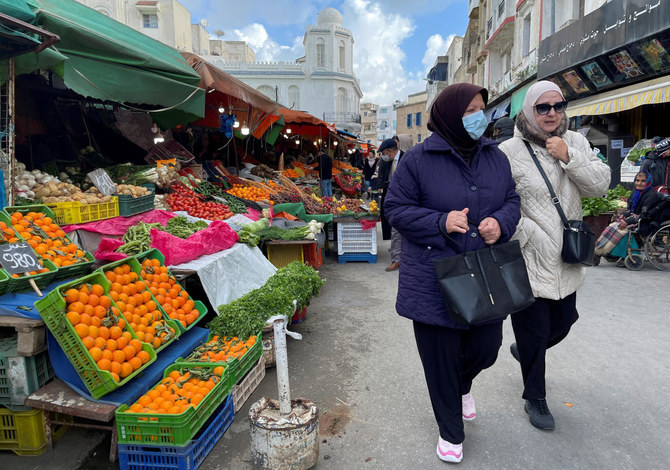
Tunisia seeks to cut fiscal deficit to 5.5% in 2023, led by economic reforms
https://arab.news/9wxtq
Tunisia seeks to cut fiscal deficit to 5.5% in 2023, led by economic reforms

- The country has been in urgent need of international help for months as it grapples with a crisis in public finances
- The Economy Ministry said on Friday that economic growth next year would be 1.8%, compared with 2.5% expected this year


Saudi Maaden reports 156% profit surge to $2bn on strong commodity prices, record production
RIYADH: Saudi mining and metals company Maaden has reported a 156 percent jump in its net profit attributable to shareholders for 2025, driven by higher commodity prices, record production volumes, and a one-off bargain purchase gain.
The state-backed giant posted a net profit of SR7.35 billion ($1.95 billion) for the full year 2025, an increase from SR2.87 billion in the previous year. The firm’s revenue surged by 19 percent to SR38.58 billion, up from SR32.55 billion in 2024.
This comes as Saudi Arabia steps up efforts to expand its mining sector as a pillar of economic diversification, encouraging international participation and private investment to unlock the Kingdom’s estimated $2.5 trillion in untapped mineral resources under Vision 2030.
In a statement on Tadawul, the company said: “Performance was led by record phosphate production, near record aluminum production, an increase in all three of Maaden’s main output commodity prices.”
The performance was also fueled by a 60 percent increase in gross profit, which reached SR14.79 billion. In its annual results announcement, Maaden attributed the top-line growth to “higher commodity market prices for phosphate, aluminum and gold business units,” as well as increased sales volumes in its phosphate and aluminum segments. This was partially offset by slightly lower sales volume in the gold unit.
Maaden’s CEO, Bob Wilt, hailed 2025 as a transformative year for the company, marked by strategic growth and operational excellence. “This was a great year for Maaden’s strategic growth. We delivered strong financial results and sustained operational excellence across the business,” he said in a statement.
“This was driven by growth in production across all businesses, including record-breaking DAP (di-ammonium phosphatevolumes), disciplined cost control across and a clear commitment to our role as a cornerstone of the Saudi economy,” Wilt added.
Profitability was further bolstered by an increased share of net profit from joint ventures and an associate. This included a one-off bargain purchase gain of SR768 million related to Maaden’s investment in Aluminium Bahrain B.S.C. The company also benefited from lower finance costs.
The fourth quarter of 2025 was strong, with Maaden swinging to a net profit of SR1.67 billion, compared to a loss of SR106 million in the same period of the prior year. Quarterly revenue rose 7 percent to SR10.64 billion.
The firm achieved record production of di-ammonium phosphate, reaching 6.72 million tonnes for the year, a 9 percent increase. Aluminum production remained near-record levels, while the company added a net 7.8 million ounces to its reportable gold mineral resources through discovery and resource development.
The phosphate division saw sales jump 17 percent to SR20.77 billion, with the earnings before interest, taxes, depreciation, and amortization margin expanding to 47 percent. The aluminum business reported a 9 percent increase in sales to SR10.99 billion, with EBITDA more than doubling in the fourth quarter.
Looking ahead, Wilt emphasized that the pace of growth will accelerate as the company advances key initiatives, including the Phosphate 3 Phase 1 and Ar Rjum projects, which remain on budget and schedule. Maaden has also secured a gas supply for its future Phosphate 4 project.
“This pace of growth will only accelerate. Not only as we advance projects and increase the scale of our exploration program, but as we continue to grow production and implement technology that will further modernize, streamline and unlock value,” Wilt added.
Earnings per share for the year rose sharply to SR1.91, up from SR0.78 in 2024. Total shareholders’ equity increased by 18.7 percent to SR61.59 billion.


