Pakistan army chief visits hospitalized soldiers injured in Bannu operation

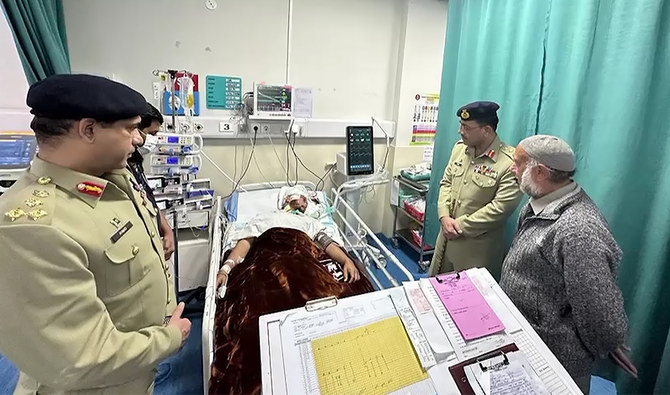
Pakistani chief of army staff (COAS) General Syed Asim Munir (first right) meets soldiers injured in Bannu operation at Combined Military Hospital in the city of Rawalpindi, Pakistan on December 21, 2022. (ISPR)
Short Url
Updated 21 December 2022
Follow

Pakistan army chief visits hospitalized soldiers injured in Bannu operation

  • Militants held at counterterrorism department complex took control of the compound on Sunday
  • A two day siege followed and ultimately army commandoes storming the compound on Tuesday

KARACHI: Pakistani chief of army staff (COAS) General Syed Asim Munir on Wednesday visited the Combined Military Hospital in the city of Rawalpindi to enquire about the wellbeing of soldiers injured in an operation on Tuesday to take control of a police compound that militants had held hostage since Sunday. 

Militants being detained at the counterterrorism department (CTD) complex in the northwestern city of Bannu took control of the compound after overpowering their interrogators and taking their weapons, leading to a two day siege. Army commandoes ultimately stormed the compound on Tuesday and took back control.

Army spokesman Major General Ahmed Sharif told a local TV channel late on Tuesday night that one hostage and two commandos died in the operation to retake the compound on Dec 20. He also said one CTD official was killed earlier on Dec 18 when the Taliban detainees first took over the facility, while another was injured on that day but died later. He did not specify if this second official was among those killed during the operation. Ten soldiers, including three officers, were also injured during crossfiring, the spokesperson said.

“COAS met injured officers and soldiers who got injured during CTD complex Bannu Operations,” the army’s media wing said in a statement. “COAS remained with them for some time and inquired about their well being. COAS appreciated their high spirit and morale and lauded their professionalism during operation against terrorists.”
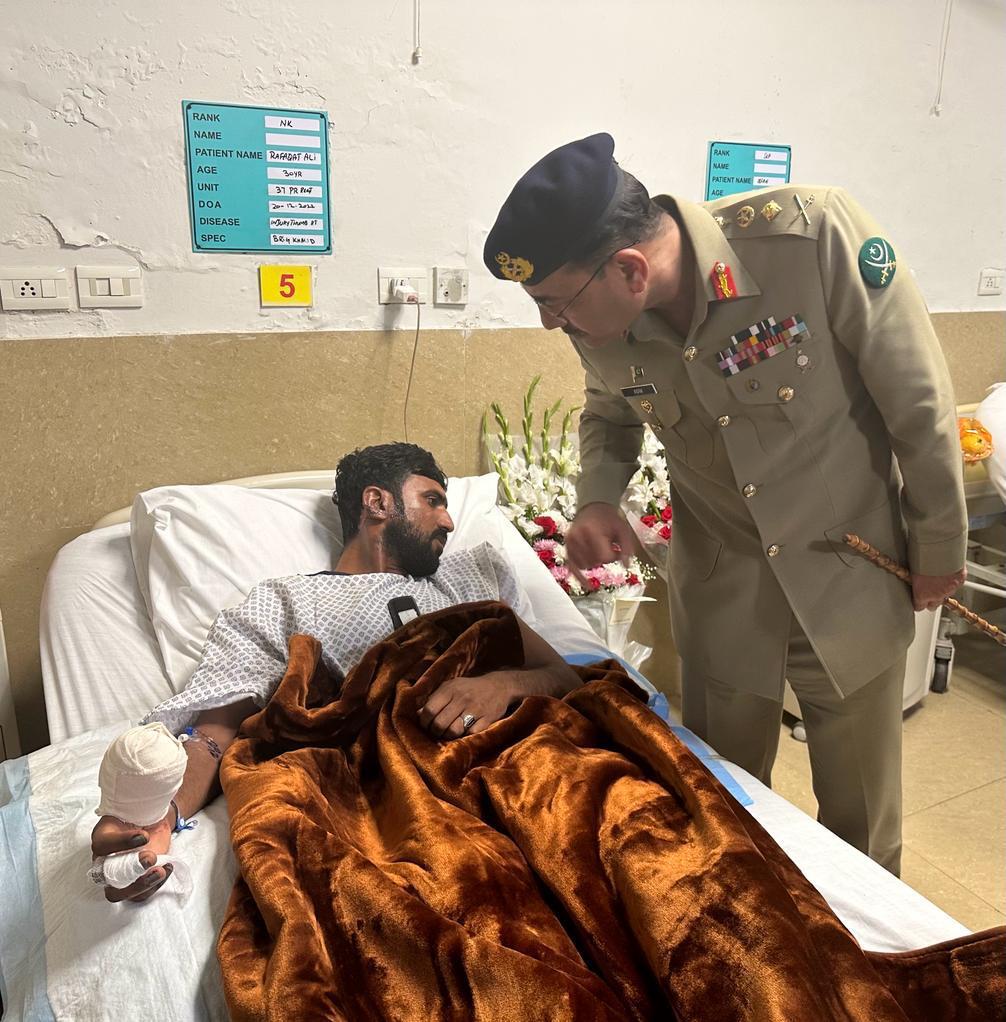


Pakistani chief of army staff (COAS) General Syed Asim Munir (right) enquires about the wellbeing of a soldier injured in the Bannu operation at Combined Military Hospital in the city of Rawalpindi, Pakistan, on December 21, 2022. (ISPR)

Of the 35 militants detained in the facility, 25 were killed during the operation, three were arrested while trying to escape and seven surrendered, the military said. 

According to the account by the army spokesperson and Defense Minister Khawaja Asif, the compound was back under state control on Tuesday.

The TTP associates itself with the Afghan Taliban and has been fighting to overthrow the government in Islamabad since the late 2000s. The outlawed group has ramped up attacks in recent weeks since announcing the end of an Afghan Taliban-brokered cease-fire with Islamabad in November.


Pakistan raises India's suspension of water-sharing treaty with UNGA president, seeks action

Updated 7 sec ago
Follow

Pakistan raises India's suspension of water-sharing treaty with UNGA president, seeks action

  • New Delhi said in April last year it was holding the treaty in abeyance after a gun attack in Indian-administered Kashmir
  • Official says such actions threaten lives of 240 million Pakistanis, particularly at a time of climate stress, water scarcity

ISLAMABAD: Pakistan has taken up India’s suspension of a decades-old water-sharing treaty with the president of the United Nations General Assembly (UNGA), urging action over the move that Islamabad said sets "dangerous precedents."

The Indus Waters Treaty (IWT) divides control of the Indus basin rivers between the two nuclear-armed neighbors. India said in April last year it would hold the treaty “in abeyance” after a gun attack in Indian-administered Kashmir killed more than 26 tourists. New Delhi blamed the assault on Pakistan, Islamabad denied it.

The attack led to a four-day military conflict between the neighbors last May that say them attack each other with fighter jets, missiles, drones and artillery before the United States-brokered a ceasefire. Tensions have remained high between the nuclear-armed neighbors.

During a meeting on the sidelines of the Inter-Parliamentary Union (IPU) annual hearing, Pakistan Senate Chairman Yusuf Raza Gilani told UNGA President Annalena Baerbock that India's unlawful action constituted a blatant violation of the treaty’s provisions and principles of customary international law.

"Such actions threaten the lives and livelihoods of over 240 million Pakistanis and set dangerous precedents, particularly at a time when climate stress and water scarcity demand cooperation and strict respect for international agreements," he was quoted as saying by the Pakistani information ministry.

The treaty, mediated by the World Bank, grants Pakistan rights to the Indus basin’s western rivers — Indus, Jhelum, and Chenab — for irrigation, drinking, and non-consumptive uses like hydropower, while India controls the eastern rivers — Ravi, Beas, and Sutlej — for unrestricted use but must not significantly alter their flow.

Highlighting the adverse impacts of climate change, Gilani said countries like Pakistan remain among the most severely affected and underscored the urgency of collective action, climate justice and strengthened international cooperation.

"The United Nations provides an indispensable platform for addressing these interconnected challenges," he said at the meeting.

Gilani, who was leading a six-member parliamentary delegation, this week delivered the national statement at the IPU annual hearing at the UN headquarters, calling for democratic, transparent, and accountable decision-making in order to enhance the UN’s credibility, according to the Senate of Pakistan.

“Parliaments are indispensable partners in ensuring national ownership of international commitments,” he was quoted as saying by the Senate. “Reform is essential. But it must be ‘Reform for All, Privilege for None’.”

The Senate chairman highlighted the continuing importance of the United Nations as the cornerstone of multilateral cooperation, stressing that the organization’s universal membership and Charter-based mandate remain central to promoting global peace and security.