JERUSALEM: Palestinian chef Izzeldin Bukhari begins the tours he offers to the Old City of Jerusalem with breakfast at Abu Shukri’s hummus restaurant which he says serves the perfect balance of chickpeas, tahina and lemon juice.
“Palestinian cuisine really utilizes what the land has to offer,” Bukhari says, explaining that these heavily plant-based recipes are deeply rooted in a connection to the local produce.
Bukhari, descended from Sufi mystics who walked to Jerusalem from Bukhara in Uzbekistan 400 years ago, takes guests down the narrow streets of the Old City, to food stalls and restaurants, telling stories of recipes dating back thousands of years.
For Palestinians living in the complex and often tense political environment of East Jerusalem, which includes the walled Old City and its holy sites of three major religions, food is a major part of their cultural identity. The stories behind it open up ways to talk about the wider culture.
Bukhari explains that kras beid, a quiche-like dish but with a pizza-style crust, is not just a food but also a social activity which brings people together in the evenings. Even the humble plate of hummus served for breakfast has found itself at the center of heated debates about whether it is a Jewish or Palestinian dish.
“It gives me a way to talk about Palestine and the culture of Palestine through the food,” said Bukhari.
The overwhelming majority of East Jerusalem’s more than 340,000 Palestinians hold Israeli residency permits but few have citizenship in Israel, which considers the entire holy city as its eternal, undivided capital.
The Palestinians have long sought the city’s east, which Israel captured in a 1967 war and later annexed in a move not recognized internationally, as the capital of a future state.
Friction between Israel and Palestinians can sporadically arise, especially around the Al-Aqsa mosque, one of the Middle East’s most volatile holy sites.
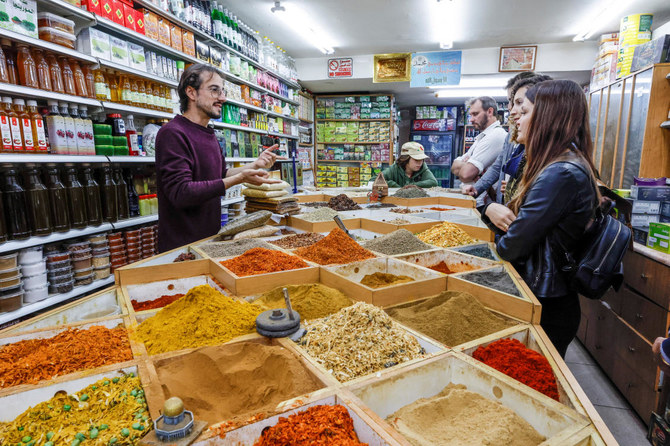
A lesson on food becomes a lesson about a city which has changed hands, like recipes, over generations. In a spice shop, Bukhari explains that rice was once considered a rare delicacy and used sparsely or as a garnish served on other grains, while Palestinians mostly cook with other grains, such as Freekeh, wheat picked when it is young and then fire roasted.
“In our area politics is a big part of the talk of the day, so to have something different which is focusing on the culture, I found it to be unique and people enjoy it as well,” said Bukhari.


![]()

Jerusalem chef gives tourists a Palestinian taste of life in the Old City
Short Url
https://arab.news/jr98q
Jerusalem chef gives tourists a Palestinian taste of life in the Old City
- "Palestinian cuisine really utilizes what the land has to offer," Bukhari says
- He explains that kras beid, a quiche-like dish but with a pizza-style crust, is not just a food but also a social activity


Latest updates


Recommended


© 2026 SAUDI RESEARCH & PUBLISHING COMPANY, All Rights Reserved And subject to Terms of Use Agreement.