

COFE App partners with Saudi Coffee Company to boost domestic coffee market

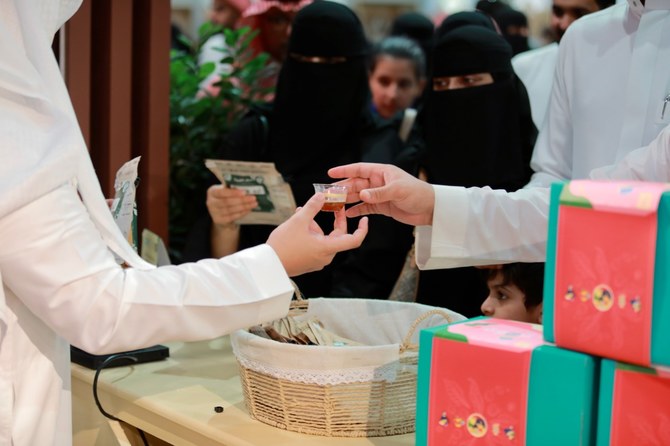
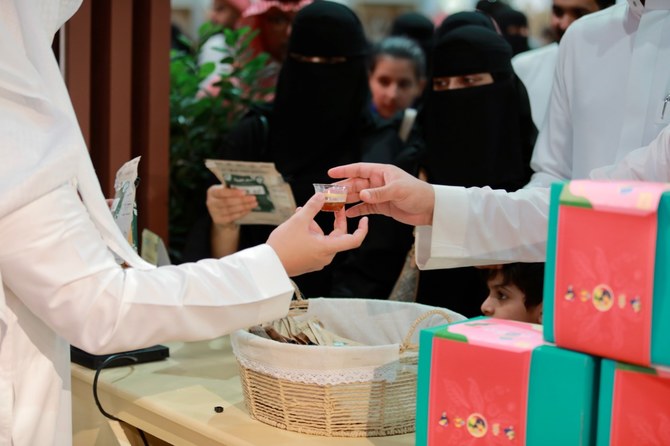
COFE App, founded in Kuwait in 2018, will be the top online partner for Saudi Coffee Company. (Supplied)
Short Url
Updated 20 December 2022
Follow

COFE App partners with Saudi Coffee Company to boost domestic coffee market

COFE App, a leading online coffee platform, has signed an agreement to officiate its partnership with the Saudi Coffee Company on Tuesday, according to a recent press release.   

COFE App, founded in Kuwait in 2018, will be the top online partner for SCC, enabling them to extend their market reach as well as drive Saudi Arabia’s coffee industry into the digital world to facilitate an easy and convenient relation between local producers and end users.   

“It is a pleasure to be partnering with COFE App. Their passion for the cumulative growth of the coffee industry is very evident, and we are happy to say that they share both our vision and values,” stated Mohammed Zainy, marketing director of Saudi Coffee Company.  

The arrangement also intends to boost the Kingdom’s e-commerce sector through making local coffee beans available to the public via COFE’s mobile app.  

Ali Al Ebrahim, COFE App founder and CEO, noted: “We hope that this partnership will help in giving Saudi coffee the visibility and reach that it truly deserves. Through our work in Saudi, we hope to take this integral part of our culture and tradition to the world.”  

He added: “It is truly the beginning of something great.”   

The public’s opinion complements the owner’s optimism, as the platform was listed as one of the top 10 most downloaded food delivery and restaurant apps in the Kingdom in 2021, according to a survey by the Communication & Information Technology Commission of Saudi Arabia.  

On the sidelines of the Future Investment Initiative in Riyadh on Oct 25, SCC’s CEO Raja AlHarbi told Arab News that SCC, solely owned by the Kingdom’s Public Investment Fund, currently produces 300 tons of coffee a year, but is aiming to hit 2,500 tons.   

AlHarbi said the company also has plans to open 25 coffee shops globally as he revealed details of a strategic plan comprising five pillars to elevate the coffee production industry in Saudi Arabia.   

“PIF is targeting to help in the diversification of the Saudi economy. Agriculture and coffee play a major role in this diversification. Coffee is the second biggest product globally after oil. So, imagine one day Saudi Arabia is the major oil producer, and one of the major coffee producers,” he added.  

He also noted that the development of the coffee industry in the Kingdom will help create jobs, and open businesses; both small and medium.  

The company aims to invest more than $319 million in the Kingdom’s coffee sector over the next ten years, raising the annual output from 300 tons today to over 2,500 tons by 2030.   

The domestic coffee market in Saudi Arabia was valued at $1.96 billion in 2021 and is estimated to increase to $2.78 billion by 2025.  


European gas prices soar almost 50% as Iran conflict halts Qatar LNG output

Updated 02 March 2026
Follow

European gas prices soar almost 50% as Iran conflict halts Qatar LNG output

  • Analysts warn prolonged disruption could push prices higher
  • Some shipments of oil, LNG through Strait of Hormuz suspended
  • Benchmark Asian LNG price up almost 39 percent

LONDON: ​Benchmark Dutch and British wholesale gas prices soared by almost 50 percent on Monday, after major liquefied natural gas exporter Qatar Energy said it had halted production due to attacks in the Middle East.

Qatar, soon to cement its role as the world’s second largest LNG exporter after the US, plays a major role in balancing both Asian and European markets’ demand of LNG.

Most tanker owners, oil majors and ‌trading houses ‌have suspended crude oil, fuel and liquefied natural ​gas shipments ‌via ⁠the ​Strait of ⁠Hormuz, trade sources said, after Tehran warned ships against moving through the waterway.

Europe has increased imports of LNG over the past few years as it seeks to phase out Russian gas following Russia’s invasion of Ukraine.

Around 20 percent of the world’s LNG transits through the Strait of Hormuz and a prolonged suspension or full closure would increase global competition for other ⁠sources of the gas, driving up prices internationally.

“Disruptions to ‌LNG flows would reignite competition between ‌Asia and Europe for available cargoes,” said ​Massimo Di Odoardo, vice president, gas ‌and LNG research at Wood Mackenzie.

The Dutch front-month contract at the ‌TTF hub, seen as a benchmark price for Europe, was up €14.56 at €46.52 per megawatt hour, or around $15.92/mmBtu, by 12:55 p.m. GMT, ICE data showed.

Prices were already some 25 percent higher earlier in the day but extended gains ‌after QatarEnergy’s production halt.

Benchmark Asian LNG prices jumped almost 39 percent on Monday morning with the S&P Global ⁠Energy Japan-Korea-Marker, widely used ⁠as an Asian LNG benchmark, at $15.068 per million British thermal units, Platts data showed.

“If LNG/gas markets start to price in an extended period of losses to Qatari LNG supply, TTF could potentially spike to 80-100 euros/MWh ($28-35/mmBtu),” Warren Patterson, head of commodities strategy at ING, said. The British April contract was up 40.83 pence at 119.40 pence per therm, ICE data showed.

Europe is also relying on LNG imports to help fill its gas storage sites which have been depleted over the winter and are currently around 30 percent full, the latest data from Gas Infrastructure ​Europe showed. In the European carbon ​market, the benchmark contract was down €1.10 at €69.17 a tonne