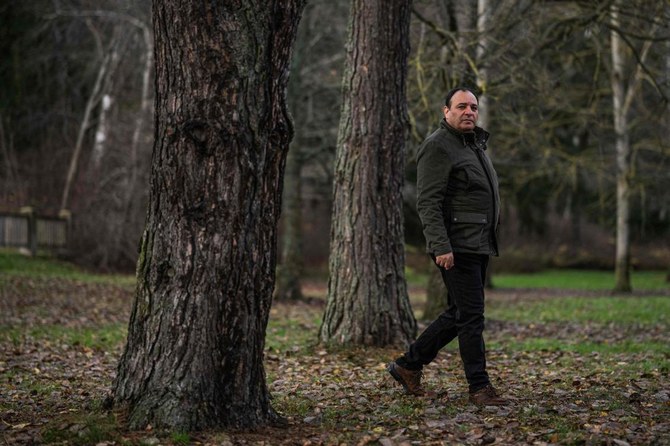
STOCKHOLM: Sweden’s Supreme Court on Monday blocked the extradition of exiled Turkish journalist Bulent Kenes, a key demand by Ankara to ratify Stockholm’s NATO membership.
There were “several hindrances” to sending back the former editor-in-chief of the Zaman daily, who Turkiye accuses of being involved in a 2016 attempt to topple President Recep Tayyip Erdogan, the court said.
Some of the accusations against Kenes are not crimes in Sweden, which along with the political nature of the case and his refugee status, made extradition impossible, the court added.
“There is also a risk of persecution based on this person’s political beliefs. An extradition can thusly not take place,” Judge Petter Asp said in a statement.
As a result, “the government... is not able to grant the extradition request.”
Sweden’s foreign ministry’s press office underscored the point.
“If the Supreme Court declares that there are hindrances to an extradition in an individual case the government has to deny the extradition request,” the ministry said.
“We can’t speculate on any potential effects on the NATO accession. Sweden’s government has to follow Swedish and international law in extradition affairs, which is also laid out in the trilateral agreement,” it added.
Kenes is the only person Erdogan has identified by name among dozens of people Ankara wants extradited in exchange for approving Sweden’s NATO membership.
Following decades — or in Sweden’s case centuries — of staying out of a military alliance, the two countries made the historic decision to apply to join NATO after Russia invaded Ukraine.
The bid needs unanimous approval from all NATO members.
Apart from Hungary, which is due to ratify Sweden’s and Finland’s membership in early 2023, Turkiye is the only country to threaten to prevent the two countries from joining NATO.
Turkiye, which has accused Sweden especially of providing a safe haven for outlawed Kurdish groups it deems “terrorists,” has held back on ratifying their NATO applications despite reaching an agreement with Sweden and Finland in June.
Ankara says it expects Stockholm in particular to take tougher action on several issues, including the extradition of criminals.
Swedish Prime Minister Ulf Kristersson traveled to Turkiye in November to meet Erdogan to discuss the issues.
When pressed about “terrorists” he wants extradited from Sweden during a joint press conference, Erdogan only named Kenes as one on the list.
Stockholm has repeatedly stressed that its judiciary is independent and has the final say in extraditions.
In early December, Sweden extradited to Turkiye a convicted member of the outlawed Kurdistan Workers’ Party (PKK), who had fled to Sweden in 2015 but had his asylum request denied.
Kenes, who now works for the Stockholm Center for Freedom — an association founded by other Turkish dissidents in exile — told AFP Monday that he was “happy” but not surprised by the court’s opinion.
“It is not an unexpected decision. I have always repeated that I had 100 percent trust in the Swedish legal system and judicial system because Sweden has rule of law,” Kenes said, while stressing that the allegations against him were “fabricated by the Erdogan regime.”
He insisted he committed “neither political crime nor violent crime.
“I’m not a coup maker, I am not a terrorist,” he added.
“I am just a journalist. I am just a person doing his journalism in the framework of defending human rights,” Kenes said.
Ankara has over time increased the number of people it wants extradited: first 33, then 45, then 73, in unofficial lists published by media close to the Turkish government.
Speaking to AFP in November, Kenes said he believed he was singled out by Erdogan “because he has known me for decades” due to his long career as a journalist, and because it was the first name he came up with off the top of his head.


![]()

Sweden blocks extradition of journalist sought by Erdogan
Short Url
https://arab.news/82p67
Sweden blocks extradition of journalist sought by Erdogan
- Bulent Kenes is the only person Erdogan has identified by name among dozens of people Ankara wants extradited in exchange for approving Sweden’s NATO membership
- Kenes: ‘It is not an unexpected decision. I have always repeated that I had 100% trust in the Swedish legal system and judicial system because Sweden has rule of law’


Latest updates


© 2026 SAUDI RESEARCH & PUBLISHING COMPANY, All Rights Reserved And subject to Terms of Use Agreement.