

Amid ongoing Iran protests, Pakistani families in border towns fear for relatives on other side

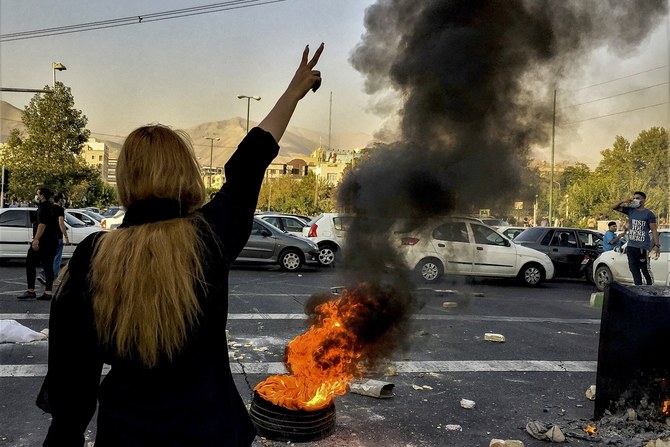
In this photo taken by an individual not employed by The Associated Press and obtained by the AP outside Iran, Iranians protests the death of 22-year-old Mahsa Amini after she was detained by the morality police, in Tehran, on October 1, 2022. (AP/File)
Short Url
Updated 19 December 2022
Follow

Amid ongoing Iran protests, Pakistani families in border towns fear for relatives on other side

  • More than 500 people have been killed in nationwide protests in Iran
  • About one-fifth of deaths have taken place in Iranian province bordering Pakistan

QUETTA: Ongoing anti-government protests and a state crackdown against demonstrators in Iran have sparked fear among Pakistani communities living in frontier towns worried for the safety of their families across the border.

Iran’s clerical rulers have faced the biggest protests in years since September when Mahsa Amini died in the custody of the morality police who enforce strict dress codes.

Protests that erupted during Amini’s funeral in Saqez, her home town in Kurdistan, have since spread to all of Iran’s 31 provinces, and continue to date despite a violent response from the government.

Some of the deadliest unrest has taken place in Iran’s Sistan-Baluchistan province that borders Pakistan’s southwestern province of Balochistan. Rights groups say security forces unlawfully killed at least 66 people on September 30 after firing at protesters in Zahedan, the capital of the flashpoint province.

On that day, Pakistani businessman Asif Burhanzai was among dozens of families who struggled to reach relatives in Zahedan to enquire about their safety.

“Majority of Baloch tribes on the Pakistani side of the border have family relations in Iran,” Burhanzai, who runs a wholesale business in the Pakistani border town of Taftan, told Arab News, saying it took him all day to confirm that his family members in Zahedan were safe.
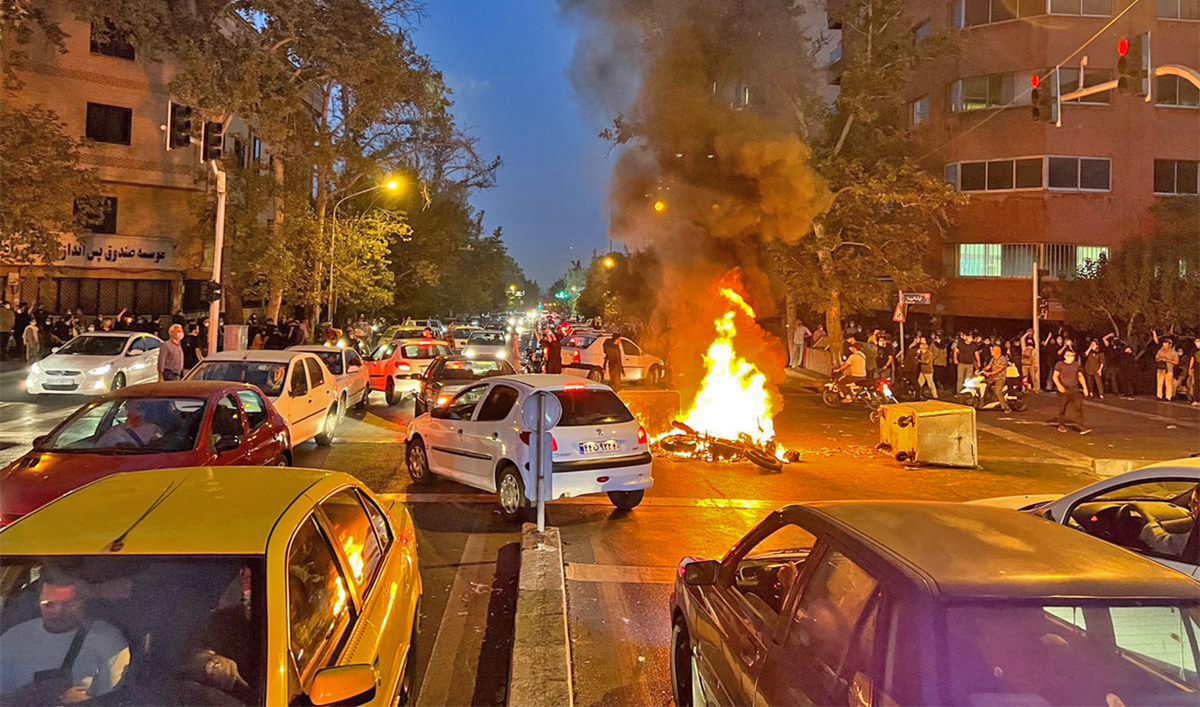


A police motorcycle burns during a protest over the death of Mahsa Amini, a woman who died after being arrested by the Islamic republic's "morality police", in Tehran, Iran September 19, 2022. (REUTERS)

Rehmatullah Notezai, who transports Iranian oil into Pakistan through border crossings in Taftan, said he was worried for his aunt who lives in Zahedan with her children.

“By God, we are worried for our relatives in Iran and completely oblivious of in what conditions they have been living in,” he told Arab News. “We don’t have contact with them for the past few weeks and we always pray for their safety and security.”

More than 500 protesters have been killed across Iran as of Dec. 18, according to the Human Rights Activist News Agency (HRANA), while over 100 people have reportedly died in Sistan-Baluchistan alone.
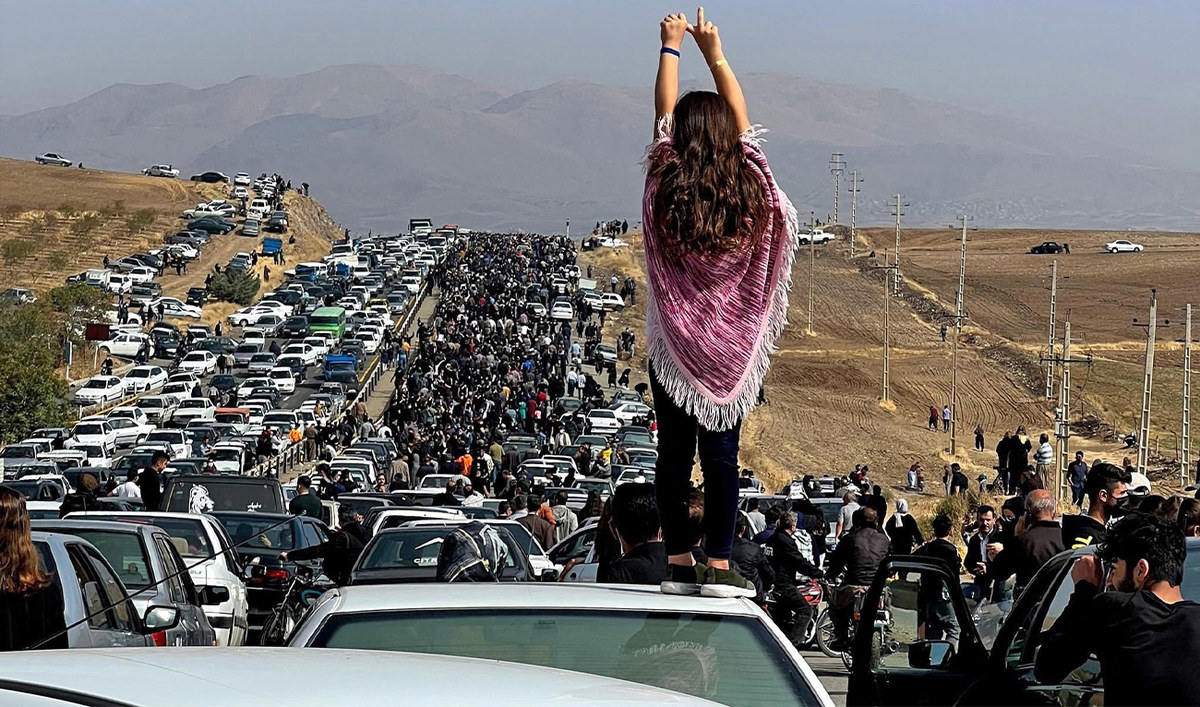


This UGC image posted on Twitter reportedly on October 26, 2022 shows an unveiled woman standing on top of a vehicle as thousands make their way towards Aichi cemetery in Saqez, Mahsa Amini's home town in the western Iranian province of Kurdistan, to mark 40 days since her death, defying heightened security measures as part of a bloody crackdown on women-led protests. (AFP)

Burhanzai said his own work travels to Iran were also in jeopardy now due to the ongoing protests.

“I used to stay in Iran for more than 15 days [a month], but after the nationwide protest, my family members are worried because of my travel,” he said.

“They are afraid that the situation might turn violent in Sistan-Balochistan province.”


Pakistan warns of strict action against hoarding petroleum products amid Iran crisis

Updated 4 sec ago
Follow

Pakistan warns of strict action against hoarding petroleum products amid Iran crisis

  • OGRA says reports indicate “certain elements” may attempt to hoard petroleum products for profiteering
  • Oil and Gas Regulatory Authority says Pakistan’s petroleum reserves stocks adequate, no need for panic buying

ISLAMABAD: Pakistan’s Oil and Gas Regulatory Authority (OGRA) warned on Thursday that the government will take strict action against anyone found illegally hoarding petroleum products for profiteering, amid fears of a shortage of energy supplies due to the ongoing conflict in the Middle East. 

Pakistan has formed a government committee to monitor the country’s stock of petroleum products amid ongoing hostilities between the US and Israel against Iran. The committee is also reviewing supply chains, price movements and assessing broader implications for inflation, external accounts, and financial stability due to the crisis. 

OGRA has repeatedly urged that Pakistan’s stock of petroleum products is adequate and urged the masses not to take part in panic buying. On Wednesday, it allowed oil marketing companies to regulate supplies to their retail outlets so as to discourage hoarding.

“It has been emphasized that strict action will be taken against any individual or entity found involved in illegal hoarding or storage of petroleum products at unauthorized locations,” OGRA spokesperson Imran Ghaznavi said in a statement.

“Particularly at places other than duly licensed oil depots and retail outlets of Oil Marketing Companies (OMCs).”

The OGRA spokesperson said reports indicate certain elements may attempt to hoard petroleum products for profiteering. It said that provincial chief secretaries have been requested to direct deputy commissioners to conduct inspections in their jurisdictions. 

“Any premises found involved in illegal storage of petroleum products will be sealed and action will be taken in accordance with the law,” OGRA warned. 

The spokesperson said OGRA was monitoring energy supplies in Pakistan, adding that inspections are being conducted at oil depots and retail outlets to ensure smooth supply of petroleum products.

“The public is advised not to pay attention to rumors and to continue normal consumption patterns, as the petroleum supply situation in the country remains stable,” it added. 

Pakistan this week asked Saudi Arabia to help Islamabad secure crude oil supplies through the Red Sea port of Yanbu, as the Strait of Hormuz’s closure threatens the country’s energy supply routes.

Pakistan fears higher global energy prices could lead to consumers paying more for petrol and shelling out more for groceries and other goods, at a time when many are already feeling the impacts of inflation.

Pakistan warns of strict action against hoarding petroleum products amid Iran crisis

OGRA says reports indicate “certain elements” may attempt to hoard petroleum products for profiteering

Oil and Gas Regulatory Authority says Pakistan’s petroleum reserves stocks adequate, no need for panic buying

Arab News Pakistan 

Islamabad: Pakistan’s Oil and Gas Regulatory Authority (OGRA) warned on Thursday that the government will take strict action against anyone found illegally hoarding petroleum products for profiteering, amid fears of a shortage of energy supplies due to the ongoing conflict in the Middle East. 

Pakistan has formed a government committee to monitor the country’s stock of petroleum products amid ongoing hostilities between the US and Israel against Iran. The committee is also reviewing supply chains, price movements and assessing broader implications for inflation, external accounts, and financial stability due to the crisis. 

OGRA has repeatedly urged that Pakistan’s stock of petroleum products is adequate and urged the masses not to take part in panic buying. On Wednesday, it allowed oil marketing companies to regulate supplies to their retail outlets so as to discourage hoarding.

“It has been emphasized that strict action will be taken against any individual or entity found involved in illegal hoarding or storage of petroleum products at unauthorized locations,” OGRA spokesperson Imran Ghaznavi said in a statement.

“Particularly at places other than duly licensed oil depots and retail outlets of Oil Marketing Companies (OMCs).”

The OGRA spokesperson said reports indicate certain elements may attempt to hoard petroleum products for profiteering. It said that provincial chief secretaries have been requested to direct deputy commissioners to conduct inspections in their jurisdictions. 

“Any premises found involved in illegal storage of petroleum products will be sealed and action will be taken in accordance with the law,” OGRA warned. 

The spokesperson said OGRA was monitoring energy supplies in Pakistan, adding that inspections are being conducted at oil depots and retail outlets to ensure smooth supply of petroleum products.

“The public is advised not to pay attention to rumors and to continue normal consumption patterns, as the petroleum supply situation in the country remains stable,” it added. 

Pakistan this week asked Saudi Arabia to help Islamabad secure crude oil supplies through the Red Sea port of Yanbu, as the Strait of Hormuz’s closure threatens the country’s energy supply routes.

Pakistan fears higher global energy prices could lead to consumers paying more for petrol and shelling out more for groceries and other goods, at a time when many are already feeling the impacts of inflation.