

Amid ongoing Iran protests, Pakistani families in border towns fear for relatives on other side

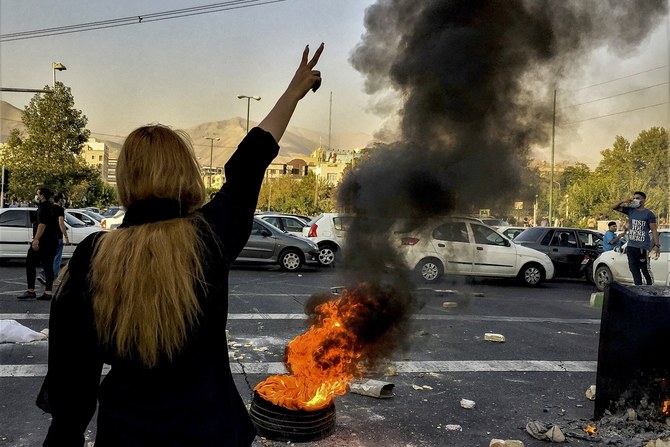
In this photo taken by an individual not employed by The Associated Press and obtained by the AP outside Iran, Iranians protests the death of 22-year-old Mahsa Amini after she was detained by the morality police, in Tehran, on October 1, 2022. (AP/File)
Short Url
Updated 19 December 2022
Follow

Amid ongoing Iran protests, Pakistani families in border towns fear for relatives on other side

  • More than 500 people have been killed in nationwide protests in Iran
  • About one-fifth of deaths have taken place in Iranian province bordering Pakistan

QUETTA: Ongoing anti-government protests and a state crackdown against demonstrators in Iran have sparked fear among Pakistani communities living in frontier towns worried for the safety of their families across the border.

Iran’s clerical rulers have faced the biggest protests in years since September when Mahsa Amini died in the custody of the morality police who enforce strict dress codes.

Protests that erupted during Amini’s funeral in Saqez, her home town in Kurdistan, have since spread to all of Iran’s 31 provinces, and continue to date despite a violent response from the government.

Some of the deadliest unrest has taken place in Iran’s Sistan-Baluchistan province that borders Pakistan’s southwestern province of Balochistan. Rights groups say security forces unlawfully killed at least 66 people on September 30 after firing at protesters in Zahedan, the capital of the flashpoint province.

On that day, Pakistani businessman Asif Burhanzai was among dozens of families who struggled to reach relatives in Zahedan to enquire about their safety.

“Majority of Baloch tribes on the Pakistani side of the border have family relations in Iran,” Burhanzai, who runs a wholesale business in the Pakistani border town of Taftan, told Arab News, saying it took him all day to confirm that his family members in Zahedan were safe.
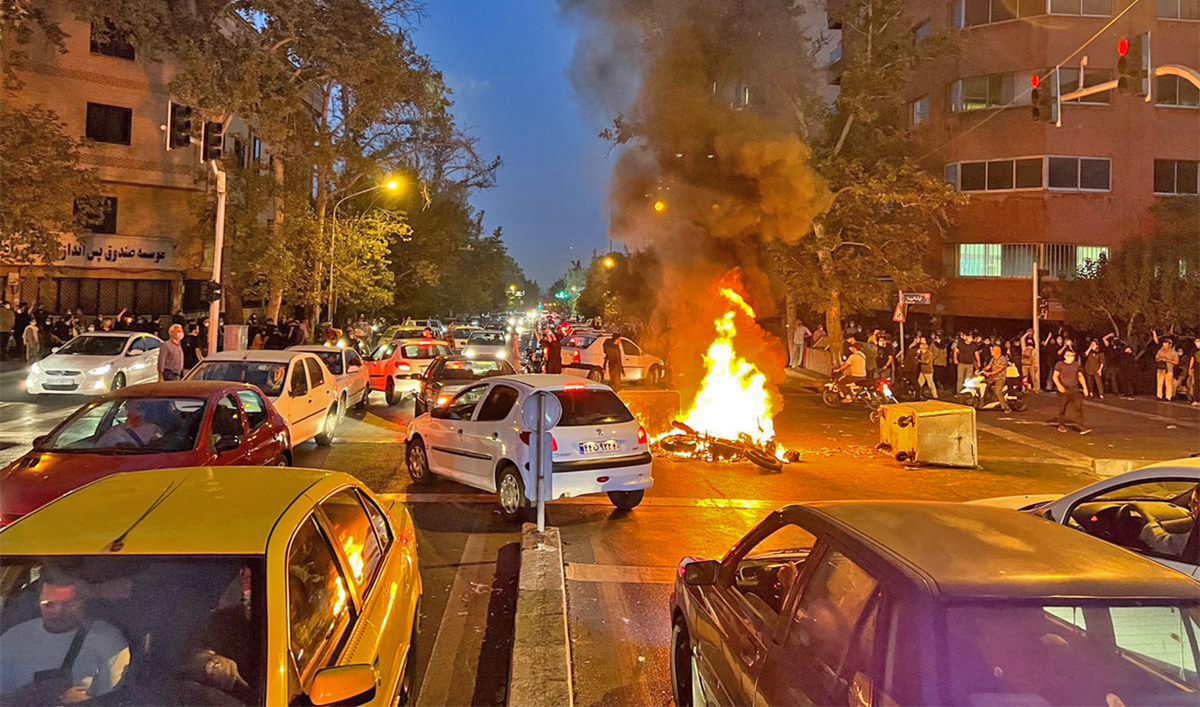


A police motorcycle burns during a protest over the death of Mahsa Amini, a woman who died after being arrested by the Islamic republic's "morality police", in Tehran, Iran September 19, 2022. (REUTERS)

Rehmatullah Notezai, who transports Iranian oil into Pakistan through border crossings in Taftan, said he was worried for his aunt who lives in Zahedan with her children.

“By God, we are worried for our relatives in Iran and completely oblivious of in what conditions they have been living in,” he told Arab News. “We don’t have contact with them for the past few weeks and we always pray for their safety and security.”

More than 500 protesters have been killed across Iran as of Dec. 18, according to the Human Rights Activist News Agency (HRANA), while over 100 people have reportedly died in Sistan-Baluchistan alone.
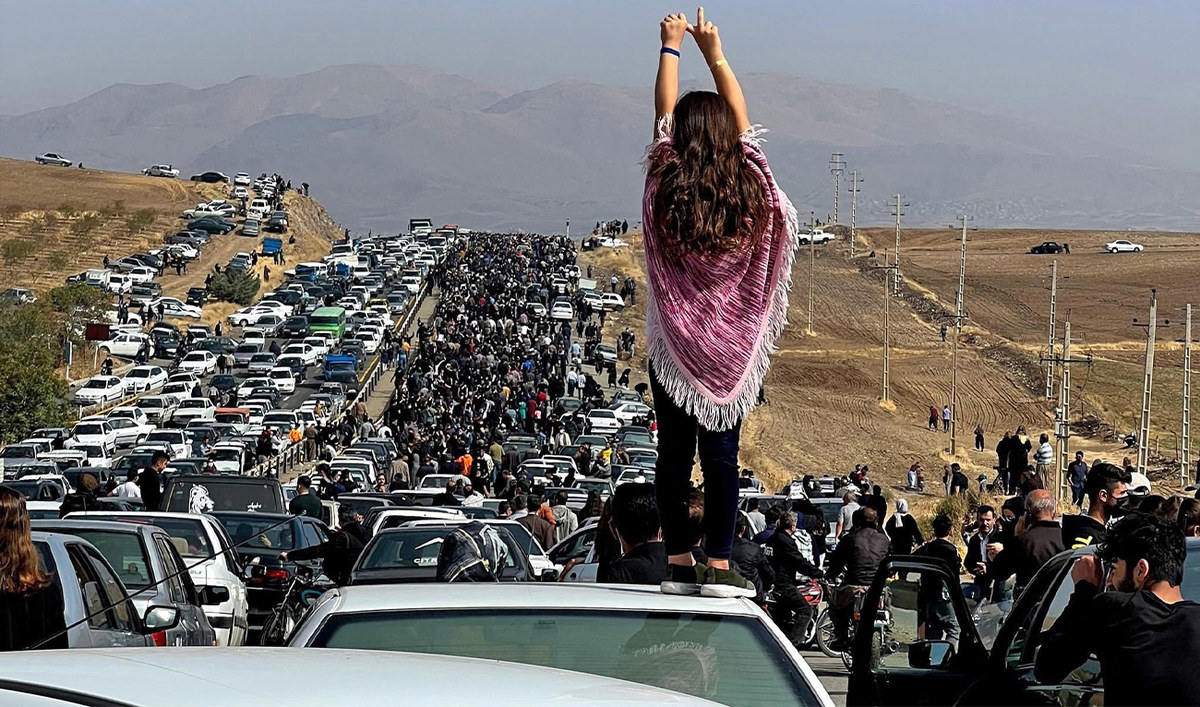


This UGC image posted on Twitter reportedly on October 26, 2022 shows an unveiled woman standing on top of a vehicle as thousands make their way towards Aichi cemetery in Saqez, Mahsa Amini's home town in the western Iranian province of Kurdistan, to mark 40 days since her death, defying heightened security measures as part of a bloody crackdown on women-led protests. (AFP)

Burhanzai said his own work travels to Iran were also in jeopardy now due to the ongoing protests.

“I used to stay in Iran for more than 15 days [a month], but after the nationwide protest, my family members are worried because of my travel,” he said.

“They are afraid that the situation might turn violent in Sistan-Balochistan province.”


Pakistan PM convenes political leaders to discuss Iran crisis, regional tensions

Updated 31 min 5 sec ago
Follow

Pakistan PM convenes political leaders to discuss Iran crisis, regional tensions

  • Leaders of major parties attend meeting on regional security and Pakistan’s military campaign
  • Parliamentarians call for national unity and cohesion under current circumstances, says PMO 

ISLAMABAD: Prime Minister Shehbaz Sharif briefed leaders of various parliamentary parties on Wednesday about the ongoing crisis in Iran and Pakistan’s ongoing military conflict with Afghanistan, his office said in a statement. 

The meeting comes as Pakistan has intensified military operations against the Afghan Taliban and militant groups targeting its civilians and security forces along its western frontier, while the wider region faces growing instability after recent US-Israeli strikes on Iran and subsequent attacks across the Gulf.

Sharif decided to convene the session to update the leaders of various political parties in parliament on the security situation and Pakistan’s diplomatic outreach as tensions spread across the region.

“Participants emphasized the need for national unity, consensus and cohesion in the current circumstances,” the Prime Minister’s Office (PMO) said in a statement. 

The statement said parliamentarians appreciated Pakistan’s diplomatic efforts for peace in the region and stressed the need to accelerate them further.

They presented suggestions to the government on what its future course of action should be.

“All participants reaffirmed their strong resolve to eliminate terrorism from the country,” the statement said. 

Representatives of major political parties, including the ruling Pakistan Muslim League-Nawaz, Pakistan Peoples Party, Jamiat Ulema-e-Islam, Muttahida Qaumi Movement and other parliamentary groups attended the briefing.

Pakistan has accused Afghanistan’s Taliban authorities of allowing militant groups such as the Tehreek-e-Taliban Pakistan (TTP) to operate from Afghan territory, allegations Kabul denies. Islamabad says it has targeted militant hideouts across the border after repeatedly raising the issue with Afghan officials.

The briefing also comes as the government closely monitors developments in the Middle East, where regional tensions have heightened concerns about energy supplies and broader security implications for the country.