

Saudi Arabia begins localization of 14 postal services in first phase   

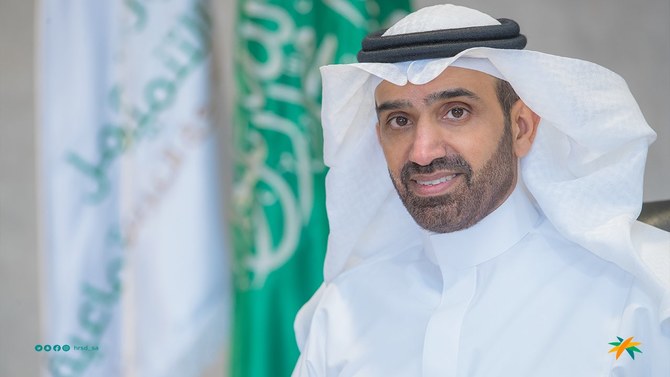
Saudi Minister of Human Resources and Social Development Ahmed Al-Rajhi. (Supplied)
Short Url
Updated 18 December 2022
Follow

Saudi Arabia begins localization of 14 postal services in first phase   

RIYADH: The Saudization of postal and parcel services throughout all regions in the Kingdom has begun, the Ministry of Human Resources and Social Development said in a statement. 

In a tweet from its official account, the ministry announced the end of the grace period given to businesses and said that the first phase of the scheme to localize all employment related to postal and parcel services is now active. 

The first phase targets the 100 percent localization of 14 such services, including verticals associated with them like the provision of delivery services via electronic platforms and mailroom management services. 

The ministry has pledged to provide an incentive and support package to support private sector institutions in the transition. 

The package will give support for recruitment and gaining access to Saudization support programs through the Saudi Human Resources Development Fund, known as Hadaf. 

It offers support to institutions across different sectors for employment and empowerment training. 

In October, Hadaf announced that it supported the employment of 277,000 male and female citizens in private sector institutions from January this year until September. 

The move to include the Kingdom's postal services in the localization program was issued in an announcement by the Minister of Human Resources and Social Development, Ahmed Al-Rajhi, in June.   

Speaking of the localization of sectors and professions in October, Al-Rajhi said that these decisions have contributed to raising the number of Saudi workers in the private sector to over 2.12 million. 

Additionally, the decisions contributed to reducing the unemployment rate of Saudi citizens to 9.7 percent, as well as increasing the women’s economic participation rate to 35.6 percent. 

Al-Rajhi added that private sector establishments’ compliance rate with the labor system and its regulations has reached 98 percent during this year. 

Across the board, authorities and ministries are also implementing Saudization initiatives. 

This aligns with the Saudi Vision 2030 goal to reduce unemployment rates by increasing employment opportunities in the Kingdom. 

Saudization is officially known as the Saudi nationalization scheme, Nitaqat. 

The Kingdom's efforts to create more jobs in line with Vision 2030 are showing fruition with the country coming first in the labor force growth rate among the Group of 20 countries during the period 2012 - 2021, according to a recent report launched by the National Labor Observatory. 

According to Saudi Arabia's Central Department of Statistics and Information, the unemployment rate in the Kingdom decreased to 5.80 percent in the second quarter of 2022, from 6 percent in the first quarter of 2022.   

To achieve its Vision 2030 goals, Saudi Arabia is not only encouraging the recruitment of nationals to private sector jobs, but is also encouraging adequate investment in their future to ensure their retention by employers as well as their contribution to a vibrant and diverse economy. 


Saudi minister at Davos urges collaboration on minerals

Global collaboration on minerals essential to ease geopolitical tensions and secure supply, WEF hears. (Supplied)
Updated 20 January 2026
Follow

Saudi minister at Davos urges collaboration on minerals

  • The reason of the tension of geopolitics is actually the criticality of the minerals

LONDON: Countries need to collaborate on mining and resources to help avoid geopolitical tensions, Saudi Arabia’s minister of industry and mineral resources told the World Economic Forum on Tuesday.

“The reason of the tension of geopolitics is actually the criticality of the minerals, the concentration in different areas of the world,” Bandar Alkhorayef told a panel discussion on the geopolitics of materials.

“The rational thing to do is to collaborate, and that’s what we are doing,” he added. “We are creating a platform of collaboration in Saudi Arabia.”

Bandar Alkhorayef, Saudi Minister of Industry and Mineral Resources 

The Kingdom last week hosted the Future Minerals Forum in Riyadh. Alkhorayef said the platform was launched by the government in 2022 as a contribution to the global community. “It’s very important to have a global movement, and that’s why we launched the Future Minerals Forum,” he said. “It is the most important platform of global mining leaders.”

The Kingdom has made mining one of the key pillars of its economy, rapidly expanding the sector under the Vision 2030 reform program with an eye on diversification. Saudi Arabia has an estimated $2.5 trillion in mineral wealth and the ramping up of extraction comes at a time of intense global competition for resources to drive technological development in areas like AI and renewables.

“We realized that unlocking the value that we have in our natural resources, of the different minerals that we have, will definitely help our economy to grow to diversify,” Alkhorayef said. The Kingdom has worked to reduce the timelines required to set up mines while also protecting local communities, he added. Obtaining mining permits in Saudi Arabia has been reduced to just 30 to 90 days compared to the many years required in other countries, Alkhorayef said.

“We learned very, very early that permitting is a bottleneck in the system,” he added. “We all know, and we have to be very, very frank about this, that mining doesn’t have a good reputation globally.

“We are trying to change this and cutting down the licensing process doesn’t only solve it. You need also to show the communities the impact of the mining on their lives.”

Saudi Arabia’s new mining investment laws have placed great emphasis on the development of society and local communities, along with protecting the environment and incorporating new technologies, Alkhorayef said. “We want to build the future mines; we don’t want to build old mines.”