

Year in Search 2022: What Saudis have googled in 2022?
Spoiler: Madrasati is crowned word of the year
Updated 18 December 2022
Arab News
LONDON: As the year draws to a close, it is the ideal opportunity to take stock and reflect on the previous year, as well as for Google to reveal trends about what people searched for on the internet.
Every December, the tech giant has released its annual “Year in Search” report, which details the top searches throughout the world.
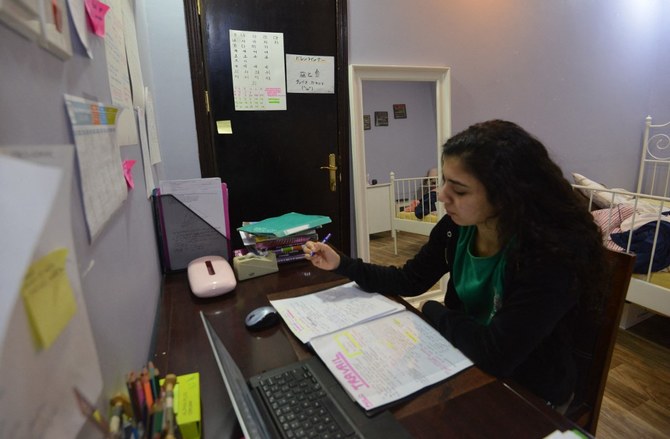
The report revealed that the most googled term in Saudi Arabia in 2022 was Madrasati, the e-learning platform that kept schoolchildren worldwide connected during the COVID-19 pandemic.
In 2021, the app attracted more than 6 million users worldwide and was recognized by an international study as being among the best seven global platforms in 174 countries.
Noor, the educational system used by parents and students in the Kingdom for all school-related services came in second place.
The podium was completed by the term World Cup, which this year was held in Qatar, a first for a Middle Eastern country.
In the “Top Personalities” category, the most searched person of the year was Saz Al-Qahtanim, the Saudi influencer who died at the age of 22 in a tragic car crash in Riyadh last March.
The most googled song of the year was “El Ghazala Ray’a” by Karim Mahmoud Abdel Aziz, followed by “Mesaytara” by Syrian singer and actress Lamis Kan.
World Cup games and cricket matches Sri Lanka vs Australia and Pakistan vs England occupy the top three positions in the “Top Sports Queries.”
To make it into this category in the fifth position was the Saudi-Argentina match at the FIFA World Cup 2022, won by the Green Falcons 2-1 last November, in what was a memorable night for the Kingdom’s sports history.
To top the first three positions in the “TV Shows” category, Google users in the Kingdom expressed a keen interest in the Turkish drama “Duy Beni,” followed by another Turkish series “The Judgement” and the Kuwaiti drama series “Min Share’ Al Haram Ela.”
Saudi Media Forum urges ethical coverage as crises redefine Arab journalism
Raw news without context can mislead audiences and distort credibility, experts say
Updated 04 February 2026
Hajjar AlQusayer
RIYADH: Arab media was born in crisis and shaped by conflict rather than stability, Malik Al-Rougi, general manager of Thaqafeyah Channel, said during the Saudi Media Forum in Riyadh on Wednesday.
Al-Rougi was speaking during a panel titled “Media and Crises: The Battle for Awareness and the Challenges of Responsible Coverage,” which examined how news organizations across the region navigated credibility and professional standards amid fast-moving regional developments.
“Today, when you build a media organization and invest in it for many years, a single crisis can destroy it,” he said.
Referring to recent events, Al-Rougi said that he had witnessed news channels whose credibility “collapsed overnight.”
“In journalistic and political terms, this is not a process of news production. It is a process of propaganda production,” he said. “The damage caused by such a post … is enormous for an institution in which millions, perhaps billions, have been invested.”
When a media outlet shifts from professionalism and credibility toward “propaganda,” he added, it moves away from its core role.
Saudi media leaders, journalists, and experts gathered at the Saudi Media Forum in Riyadh to discuss credibility, ethics, and innovation. (AN photo by Huda Bashatah/Supplied)
“A crisis can work for you or against you,” Al-Rougi added. “When, in the heart of a crisis, you demonstrate high credibility and composure, you move light-years ahead. When you fail to adhere to ethical standards, you lose light-years as well.”
Abdullah Al-Assaf, professor of political media studies at Imam Muhammad bin Saud Islamic University, said that in many crises across the Arab world, agendas and directives had often prevailed over professionalism.
“Credibility was buried,” he added.
Hasan Al-Mustafa, writer and researcher at Al-Arabiya channel, said that raw information could be subject to multiple interpretations if not placed within a proper political, security, historical or geographical context.
He added that such an approach was urgently needed during periods of political and security volatility in the Middle East.
When, in the heart of a crisis, you demonstrate high credibility and composure, you move light-years ahead. When you fail to adhere to ethical standards, you lose light-years as well.
Malik Al-Rougi Thaqafeyah, Channel general manager
“This objectivity, or this reliability, is a great responsibility,” Al-Mustafa said. “It is reflected not only in its impact on the audience, but also on the credibility of the content creator.”
Al-Mustafa warned against populism and haste in coverage, saying that they risked deepening crises rather than providing informed public perspectives.
He also said that competition with social media influencers had pushed some traditional outlets to imitate influencer-driven models instead of strengthening their own professional standards.
“Our media has been crisis-driven for decades,” he said, describing much of the region’s coverage as reactive rather than proactive.
During a separate panel titled “The Official Voice in the Digital Age: Strategies of Influence,” speakers discussed how rapid technological and social changes were reshaping the role of institutional spokespersons.
Abdulrahman Alhusain, official spokesperson of the Saudi Ministry of Commerce, said that the role was no longer limited to delivering statements or reacting to events.
“Today, the spokesperson must be the director of the scene — the director of the media narrative,” he said.
Audiences, he added, no longer accept isolated pieces of information unless they were presented within a clear narrative and structure.
“In the past, a spokesperson was expected to deliver formal presentations. Today, what is required is dialogue. The role may once required defense, but now it must involve discussion, the exchange of views, and open, candid conversation aimed at development — regardless of how harsh the criticism may be.”
He said that spokespersons must also be guided by data, digital indicators and artificial intelligence to understand public opinion before speaking.
“You must choose the right timing, the right method and the right vocabulary. You must anticipate a crisis before it happens. That is your role.”
Abdullah Aloraij, general manager of media at the Riyadh Region Municipality, said that the most important skill for a spokesperson today was the ability to analyze and monitor public discourse.
“The challenge is not in transferring words, but in transferring understanding and impact in the right way,” he said.