UK’s Daily Mail apologizes to PM Sharif for 2019 report

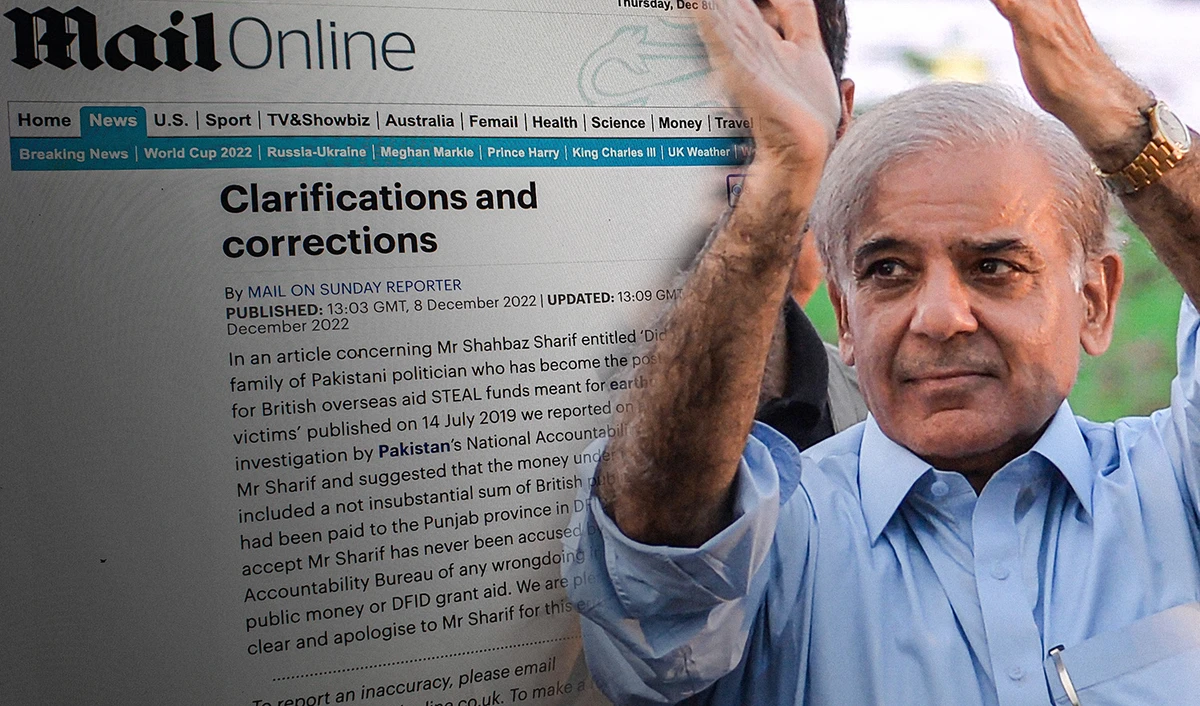
The combination of photos shows a screengrab of Daily Mail's website and Pakistan's Prime Minister Shehbaz Sharif. (Social media/AFP)
Short Url
Updated 08 December 2022
Follow

UK’s Daily Mail apologizes to PM Sharif for 2019 report

  • UK’s Mail claimed in report Sharif was being probed for embezzling funds meant for earthquake victims
  • Sharif had sued the British tabloid in January 2020, saying it was a ‘politically motivated’ article against him

ISLAMABAD: British newspaper The Mail on Sunday and online news website Mail Online on Thursday apologized to Prime Minister Shehbaz Sharif for publishing a 2019 report that said he was being investigated by Pakistani authorities for embezzling fund for earthquake victims.  

British tabloid Mail said in a July 14 article that Sharif, the president of the Pakistan Muslim League-Nawaz party, had embezzled funds provided by UK’s Department for International Development (DFID) for rehabilitation and reconstruction work after a devastating 2005 earthquake. 

A couple of months after the story was published, Sharif hired British law firm Carter-Ruck and filed a lawsuit against the British newspaper in January 2020. The firm, whose lawyers rank in the top tier of media, defamation and privacy lawyers in the United Kingdom, said the article was “gravely defamatory” of Sharif and contained false allegations.  

Sharif said he was appalled to read the story which he said accused him of “stealing British foreign aid money." The younger brother of three-time former prime minister Nawaz Sharif, he was then the chief minister of Punjab, Pakistan’s most populous province.  

“We accept Mr Sharif has never been accused by the National Accountability Bureau of any wrongdoing in relation to British public money or DFID grant aid,” Mail Online wrote in its ‘Clarifications and Corrections’ section on the website.  

“We are pleased to make this clear and apologise to Mr Sharif for this error,” it added.  

"Disinformation & fake news have limited shelf life & truth is ultimate victor," Sharif wrote on Twitter in reaction to the apology.

The DFID had also rejected the contents of the article and said in a statement: “The UK’s financial support to ERRA [Earthquake Reconstruction and Rehabilitation Authority] over this period was for payment by results – which means we only gave money once the agreed work, which was primarily focused on building schools, was completed, and the work audited and verified.” 

EU, Pakistan sign €60 million loan agreement for clean drinking water in Karachi

Updated 17 December 2025
Follow

EU, Pakistan sign €60 million loan agreement for clean drinking water in Karachi

  • Project will finance rehabilitation, construction of water treatment facilities in Karachi city, says European Investment Bank
  • As per a report in 2023, 90 percent of water samples collected from various places in city was deemed unfit for drinking

ISLAMABAD: The European Investment Bank (EIB) and Pakistan’s government on Wednesday signed a €60 million loan agreement, the first between the two sides in a decade, to support the delivery of clean drinking water in Karachi, the EU said in a statement. 

The Karachi Water Infrastructure Framework, approved in August this year by the EIB, will finance the rehabilitation and construction of water treatment facilities in Pakistan’s most populous city of Karachi to increase safe water supply and improve water security. 

The agreement was signed between the two sides at the sidelines of the 15th Pak-EU Joint Commission in Brussels, state broadcaster Radio Pakistan reported. 

“Today, the @EIB signed its first loan agreement with Pakistan in a decade: a €60 million loan supporting the delivery of clean drinking water for #Karachi,” the EU said on social media platform X. 

Radio Pakistan said the agreement reflects Pakistan’s commitment to modernize essential urban services and promote climate-resilient infrastructure.

“The declaration demonstrates the continued momentum in Pakistan-EU cooperation and highlights shared priorities in sustainable development, public service delivery, and climate and environmental resilience,” it said. 

Karachi has a chronic clean drinking water problem. As per a Karachi Water and Sewerage Corporation (KWSC) study conducted in 2023, 90 percent of water from samples collected from various places in the city was deemed unsafe for drinking purposes, contaminated with E. coli, coliform bacteria, and other harmful pathogens. 

The problem has forced most residents of the city to get their water through drilled motor-operated wells (known as ‘bores’), even as groundwater in the coastal city tends to be salty and unfit for human consumption.

Other options for residents include either buying unfiltered water from private water tanker operators, who fill up at a network of legal and illegal water hydrants across the city, or buying it from reverse osmosis plants that they visit to fill up bottles or have delivered to their homes.

The EU provides Pakistan about €100 million annually in grants for development and cooperation. This includes efforts to achieve green inclusive growth, increase education and employment skills, promote good governance, human rights, rule of law and ensure sustainable management of natural resources.