

Riyadh’s Arabian Horse Festival kicks off with top breeders

1 / 6
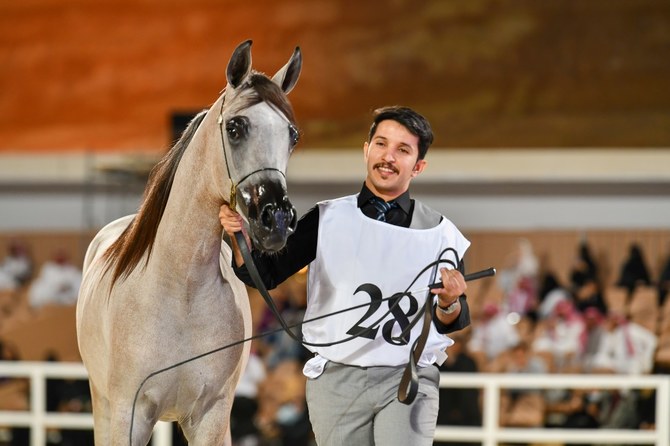
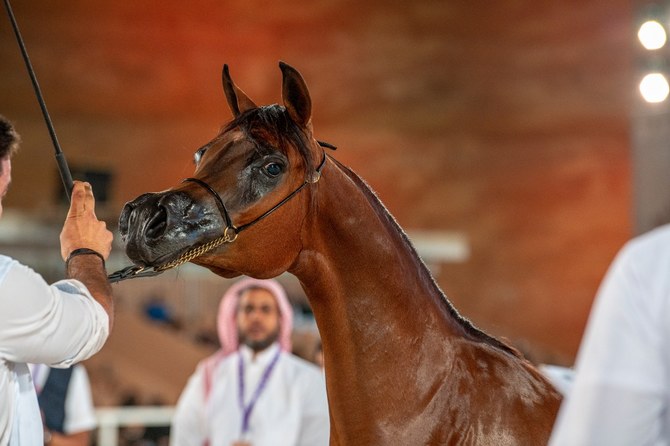
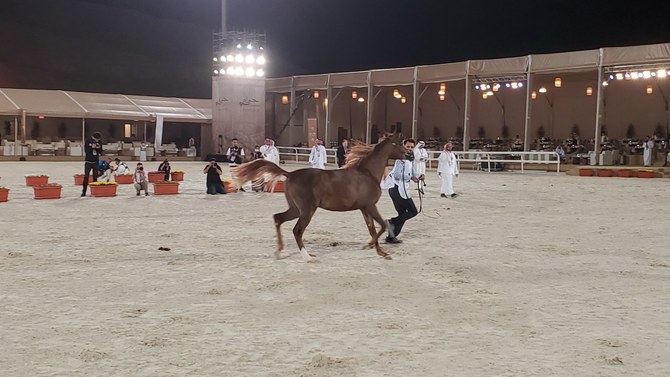
The Riyadh Purebred Arabian Horse Festival, Jawadi, was launched on Tuesday at the Al Duhami Equestrian Center in Diriyah Governorate, with the participation of 347 breeds of horses from the Arabian Peninsula. (SUPPLIED)
2 / 6
The Riyadh Purebred Arabian Horse Festival, Jawadi, was launched on Tuesday at the Al Duhami Equestrian Center in Diriyah Governorate, with the participation of 347 breeds of horses from the Arabian Peninsula. (SUPPLIED)
3 / 6
The Riyadh Purebred Arabian Horse Festival, Jawadi, was launched on Tuesday at the Al Duhami Equestrian Center in Diriyah Governorate, with the participation of 347 breeds of horses from the Arabian Peninsula. (SUPPLIED)
4 / 6
The Riyadh Purebred Arabian Horse Festival, Jawadi, was launched on Tuesday at the Al Duhami Equestrian Center in Diriyah Governorate, with the participation of 347 breeds of horses from the Arabian Peninsula. (SUPPLIED)
5 / 6
The Riyadh Purebred Arabian Horse Festival, Jawadi, was launched on Tuesday at the Al Duhami Equestrian Center in Diriyah Governorate, with the participation of 347 breeds of horses from the Arabian Peninsula. (SUPPLIED)
6 / 6
The Riyadh Purebred Arabian Horse Festival, Jawadi, was launched on Tuesday at the Al Duhami Equestrian Center in Diriyah Governorate, with the participation of 347 breeds of horses from the Arabian Peninsula. (SUPPLIED)
Short Url
Updated 30 November 2022
Follow

Riyadh’s Arabian Horse Festival kicks off with top breeders

  • Hundreds of purebreds to be showcased
  • Leading equestrians competitors and animals participating

RIYADH: The Riyadh Purebred Arabian Horse Festival, Jawadi, kicked off Tuesday at the Al-Duhami Equestrian Center in Diriyah governorate, showcasing 347 breeds of the animals.

The five-day festival has SR1 million ($266,000) in prizes on offer. The competitions over the course of the event include the first Saudi Breeders Cup and the Saudi Production Champions Cup. They have both been organized by the Arabian Horse Organization and supervised by the King Abdulaziz Center for Purebred Arabian Horses.

The festival area reflects traditional Najdi architecture and brings together riders, artists and enthusiasts for competitions, folk dances, workshops, lectures, arts and crafts, local and international food, perfumes and sandals.

Azaam Al-Qasim, an equestrian and horse trainer taking part in the festival, told Arab News that the beauty competition would showcase the pedigree of the animals brought by local and international participants.

He said Arabian equestrians, and their horses, are differentiated by their capability and determination, which has served to attract many to the sport in the Kingdom.

Rana Mohammed, an artist who has her paintings of horses on display at the festival, told Arab News: “Horses are my passion, and the more I paint artwork of horses the more I discover more details about them, and I spend more time mastering these details.”

Faisal Al-Shamsan, a visitor, said the horse competitions in a traditional village setting with food and music was “all great.” He also enjoyed watching traditional dancing with his family.

The festival is part of the offerings of Riyadh Season, organized by the General Entertainment Authority. It is open from 3 p.m. until 12 midnight and runs until Dec. 3.


King Abdulaziz Foundation reveals rare images from king’s 1916 Basra visit

Updated 20 December 2025
Follow

King Abdulaziz Foundation reveals rare images from king’s 1916 Basra visit

  • Photographs form part of a wider collection documented by British photographer Gertrude Bell

RIYADH: The King Abdulaziz Foundation has revealed archival photographs documenting King Abdulaziz’s tour of the outskirts of Basra in 1916, a visit that came at an early stage of his efforts to build regional relationships.

One of the photographs, taken by British photographer Gertrude Bell, shows King Abdulaziz standing with his men in the Basra desert, the Saudi Press Agency reported. 

The image reflects his early political and diplomatic engagement in the region, as he sought to strengthen ties with neighboring areas and engage with the wider Arab and international community, SPA added.

The photograph forms part of a wider collection documented by Bell, which records key developments and transformations across the Arabian Peninsula during the early 20th century.

The Basra visit holds particular significance in King Abdulaziz’s journey as a unifying leader. 

Rather than crossing borders in pursuit of power, the visit reflected an approach focused on stability, cooperation and long-term regional harmony, laying the groundwork for a leadership style defined by pragmatism and openness, SPA said.