

UAE brings forward oil production capacity expansion to 2027

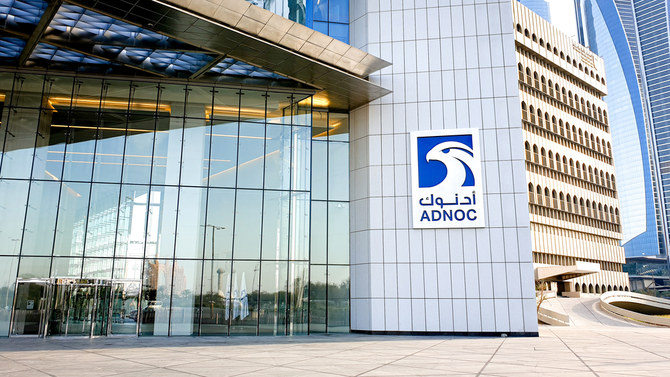
ADNOC’s board of directors also approved the creation of ADNOC Gas (Shutterstock)
Short Url
Updated 29 November 2022
Follow

UAE brings forward oil production capacity expansion to 2027

DUBAI: The board of Abu Dhabi’s ADNOC endorsed plans on Monday to bring forward the company’s five million barrel per day oil production capacity expansion to 2027 from a previous target of 2030, to meet rising global energy demand, according to Reuters.

The UAE’s hydrocarbon reserves increased by 2 billion stock tank barrels of mostly Murban-grade crude and 1 trillion standard cubic feet of natural gas in 2022, the state oil firm said in a statement.

The additional reserves increase the UAE’s reserve base to 113 billion STB of oil and 290 TSCF of natural gas.

ADNOC’s board of directors, which was chaired by the UAE’s President Sheikh Mohammed bin Zayed on Monday, also approved the creation of ADNOC Gas.

A gas processing and marketing entity to be effective from January, the company will combine the operations, maintenance and marketing of ADNOC Gas Processing and ADNOC LNG into one consolidated entity.

ADNOC said it plans to float a minority stake in the new company on the Abu Dhabi Securities Exchange in 2023.

A five-year business plan and capital expenditure of 550 billion dirhams ($150 billion) for the period 2023-2027 was also approved by the board to enable the company’s growth strategy.

ADNOC will also create a low carbon solutions and international growth vertical focused on new energies, gas, LNG and chemicals. The board directed the firm to pursue a net zero by 2050 ambition to support the UAE’s drive toward net zero carbon.

“The world needs maximum energy, minimum emissions and it needs all the energy solutions if we are to ensure global energy security,” ADNOC’s chief Sultan Al-Jaber was quoted as saying in the statement.




AI use reaches 91% in Middle East hospitality: PwC survey  

Updated 4 sec ago
Follow

AI use reaches 91% in Middle East hospitality: PwC survey  

RIYADH: The use of artificial intelligence in the Middle East’s hospitality sector is accelerating, with 91 percent of industry leaders already using or piloting AI-related tools, a new survey showed. 

In its latest report, professional services firm PwC said only 3 percent of tourism and hospitality organizations across the region have achieved full-scale, enterprise-wide implementation of AI technologies. 

PwC noted that countries across the Middle East are rapidly deploying AI and smart digital technologies to enhance visitor experiences and strengthen the tourism and hospitality sector’s contribution to national economic transformation agendas. 

The findings reflect a broader regional trend, as countries such as Saudi Arabia seek to position themselves as tourism and technology hubs as part of efforts to reduce reliance on crude oil revenues. 

Earlier this month, a separate PwC report found that artificial intelligence use among the workforce in the Middle East continues to rise, with 75 percent of employees in the region using AI in their jobs over the past 12 months. 

Commenting on the latest findings, Moussa Beidas, AI Go-to-Market Lead & Future Impact Center co-sponsor at PwC Middle East, said: “To realize AI’s promise, the industry must move beyond pilots and proofs of concept. True impact comes when intelligence is woven into every decision – empowering teams, optimising systems and elevating experiences.”  

He added: “The leaders who turn AI from a tool into an organizational mindset will shape the next era of tourism and hospitality.”  

The survey found that 74 percent of organizations in the Middle East’s hospitality sector now have dedicated AI budgets, signaling a shift from experimentation toward more structured and strategic adoption. 

About 85 percent of respondents reported measurable improvements in cost savings and operational efficiency through the use of AI technologies. 

However, challenges remain. Some 73 percent of participants cited a shortage of employees with AI expertise or experience in managing digital transformation, while 85 percent said they face difficulties integrating AI tools with outdated technology systems. 

According to PwC, AI adoption in tourism and hospitality is being driven primarily by a focus on enhancing the customer experience, with 97 percent of respondents citing it as their main motivation. 

Beyond guest engagement, more than 70 percent of hoteliers identified operational resilience and employee productivity as key drivers, highlighting AI’s growing role in improving internal efficiency and workforce effectiveness. More than 60 percent of participants also said they view AI as a way to differentiate from competitors. 

“AI is redefining how destinations, hotels and travelers connect. The winners won’t be those who collect the maximum data, but those who use it intelligently – to make every interaction seamless, ethical and valuable,” said Marco Rentsch, hospitality leader, PwC Middle East.  

He added: “For industry leaders, this means moving from disconnected systems to connected intelligence, where AI doesn’t replace human judgment and interaction, but amplifies it to create trust, efficiency and new forms of value across the entire travel ecosystem.”