



KARACHI: Centuries-old boxes inscribed with ancient motifs, garments from bygone eras, gramophones and old telephone sets used by colonial officials are among some of the artefacts that are neatly displayed by 60-year-old antiquarian Niaz Ahmed at his shop in the Saddar area of Karachi.
Ahmed takes significant pride in selling these items which he calls unique pieces of beauty. He says it takes a “falcon’s eye” to extract these historical wonders – some of them as old as 300 years – from scrap.
“Beauty has been sold in every age [of history],” he told Arab News as he looked at his shop which he set up after moving to Karachi from Hyderabad city of Sindh province in the 1980s. “What bedazzles people has always been traded. People buy what they find attractive.”
Ahmed said it was not easy to find the items sold by him since they were rare remnants of history.
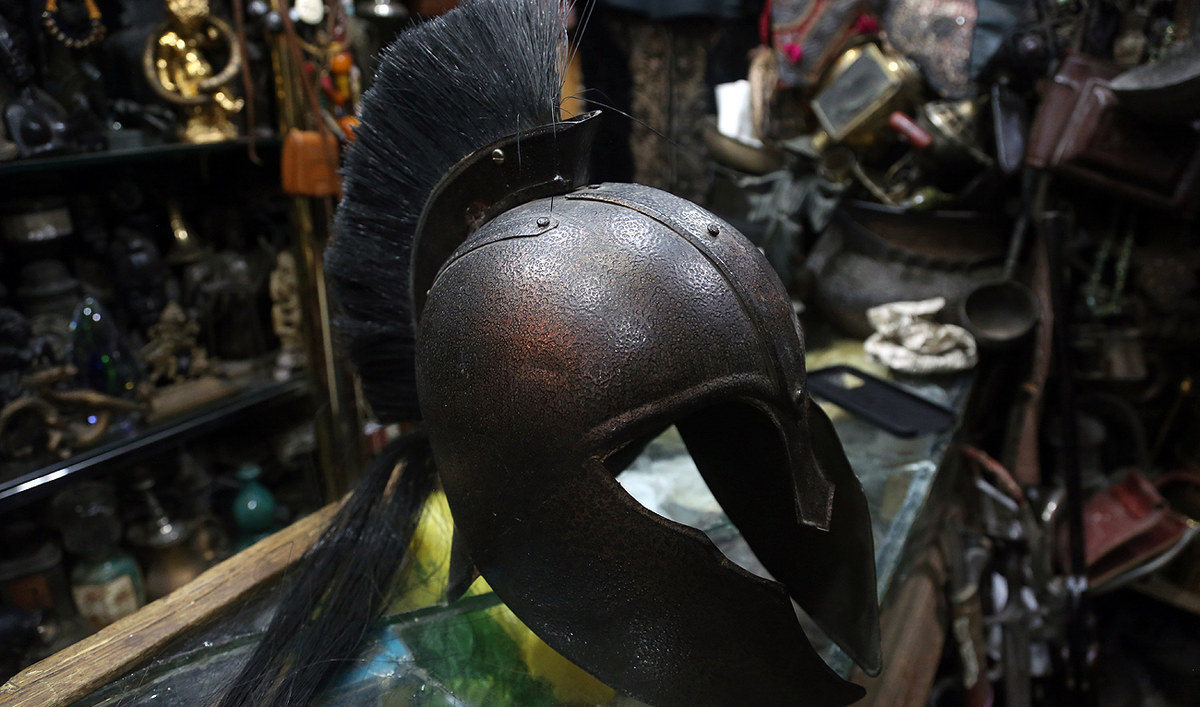
A morion (helmet) displayed at an antique shop at Karachi’s China Center on November 18, 2022 (AN Photo/S.A. Babar)
“Everything that we have is old,” he continued. “If you purchase an item and it goes from us, it’s [only] with you – not with us, not with anyone else.”
Some items in his shop have been acquired from families where young people lack appreciation for their historic significance. Many of them sell old stuff to scrap dealers who bring them to the antique store.
Ahmed mostly procures products for his shop from dealers with huge quantities of copper and brass articles, though he says it takes time to develop the skill to identify the most precious pieces surrounded by heaps of scrap.
He is also among one of the last two shopkeepers dealing in this business at the China Center which has now turned into a cloth market.
Muhammad Asif, who sold artefacts in the same building, said he had to move his shop after the owner of the plaza started accommodating owners of garment business since they made better earnings and paid higher rents.
“There were 30 to 35 [antique] shops over here,” he told Arab News. “Some [of them who ran them] left this place while others passed away.”
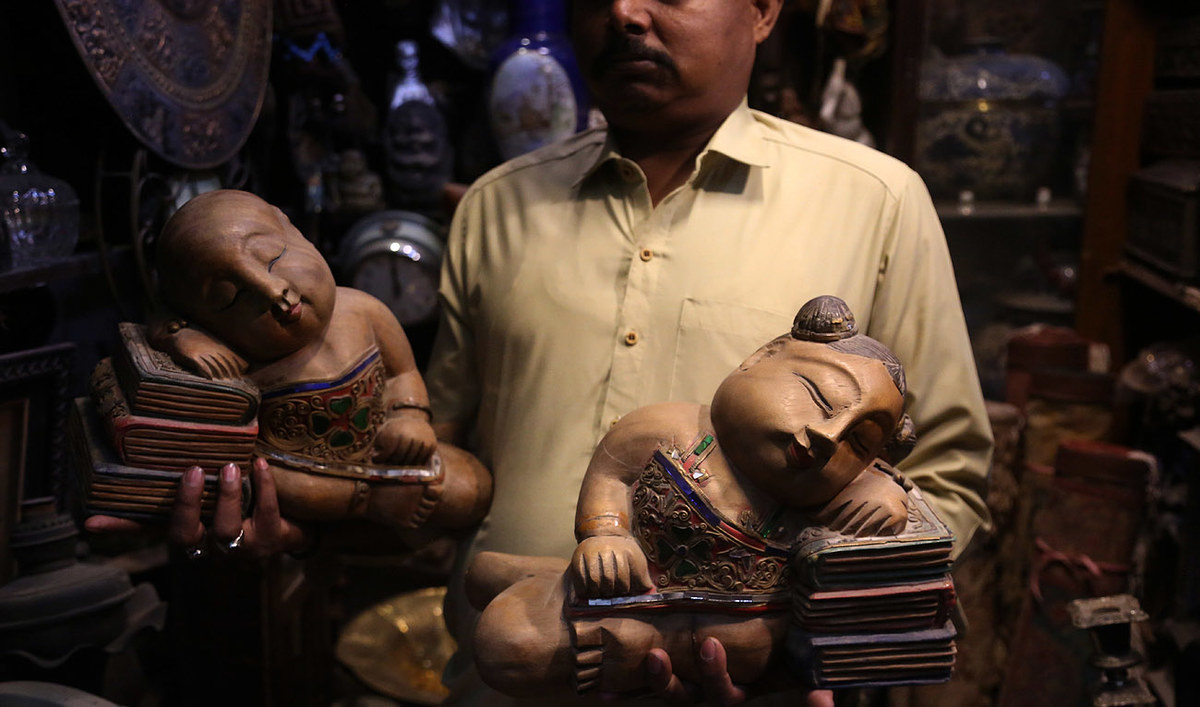
Muhammad Asif, a shopkeeper with artifacts shows his antique pieces in Karachi on November 25, 2022 (AN Photo/S.A Babar)
Asif, 38, inherited his late father’s business who continued his family’s trade after moving to Pakistan in the wake of India’s partition in 1947.
“This trade was thriving in the past,” he said. “It was at its peak. Now we are only left with specific customers.”
“We don’t deal in things that capture everyone’s attention,” Asif continued. “The one who understands also buys [these products]. The stuff we have cannot be found daily [and it only comes] in centuries.”
Back at the China Center, Ahmed said the influx of foreigners could help his business, though he maintained that international tourists had stopped visiting Karachi.
“If you take three steps, you will find a foreigner in India on the fourth one,” he added. “Over here, we don’t get to see a foreigner for months.”

An antique statute at display in a shop at Antique Bazaar, Karachi on November 25, 2022 (AN Photo/S.A. Babar)
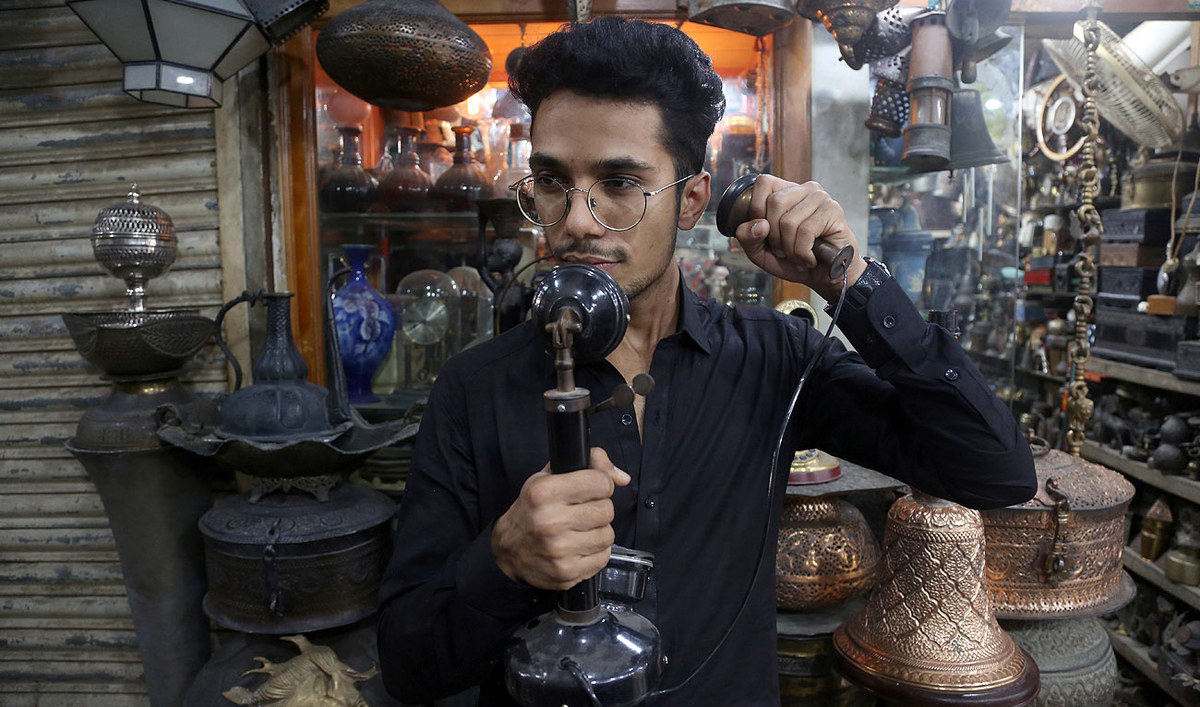
A shop visitor poses for a photograph with an antique phone set, that the shop owner claims dates back to the British era, at Antique Bazaar in Saddar, Karachi on November 18, 2022 (AN Photo/S.A. Babar)
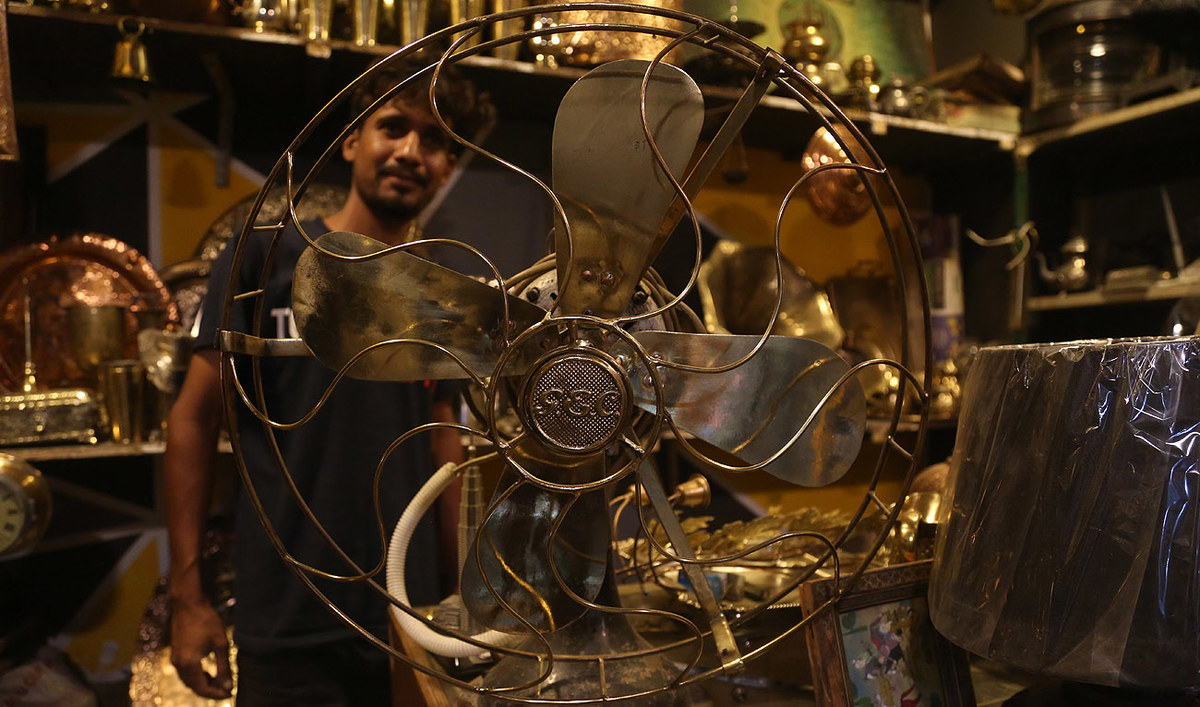
An antique fan displayed in a shop in Karachi’s downtown Saddar on November 25, 2022 (AN Photo/S.A. Babar)


