

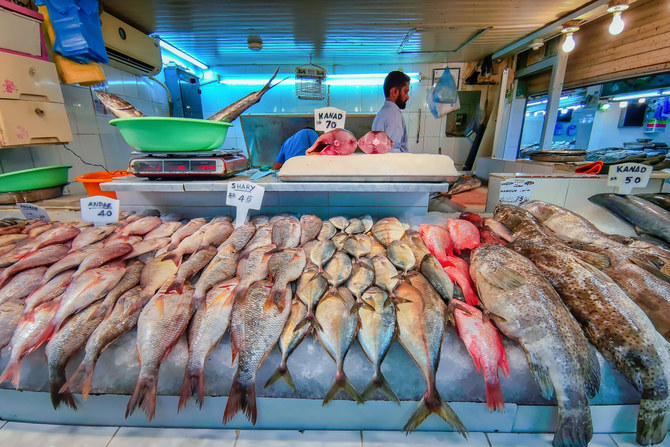

RIYADH: Saudi Arabia's fish production is expected to reach 119,000 tons by the end of this year, moving the Kingdom close to 60 percent of self-sufficiency, said the minister of environment, water, and agriculture.
Speaking to Al Ekhbariya news channel, Abdulrahman Al-Fadley revealed production has risen nearly fourfold since 2016, when 32,000 tons were produced.
He also said around there are 235 fishing projects in the Kingdom, compared to 67 projects in 2016 four years ago.
As the Kingdom has localized the fishing profession, over 2,000 Saudi fishermen are today able to practice the job while exporting to more than 35 countries around the world.
The ministry announced earlier this year that Saudi Arabia is working to establish a regional center for fisheries as part of its bigger goals to diversify the economy and address food security.
Al-Fadley said the government is keen to develop fish farming, describing it as one of the fastest-growing food sectors in the world.
Saudi Arabia launched the National Fisheries Development Program in 2015 to enhance the development of the Kingdom's fisheries sector.
A top Saudi official earlier revealed to Arab News that they plan to attract over $4 billion of foreign and local investment into the fishing industry as part of the Kingdom’s Vision 2030 scheme to diversify the economy.
The man tasked with making this happen over the next eight years is NFPD CEO Ali Al-Shaikhi. His organization is mandated by the government to expand the country’s seafood industry, boost food security and grow agricultural exports.
“This was an idea that in 2010 transformed into an initiative. A steering committee hired KPMG to study the potential of the Kingdom’s seafood sector,” he told Arab News.
The committee also visited many countries to study aquaculture, and they assessed potential Saudi seafood production, at over one million tons. The CEO said a market study discovered that KSA seafood consumption per capita was less than 50 percent of the global average — 11 kilos rather than 24.
“Four years later, the committee’s report spelled out a clear strategy — to improve our aquaculture production facilities, and to increase production capacity. This was approved by the Royal Court, which assigned a program to implement the strategy,” said Al-Shaikhi.


