- Inayat Yousafzai got idea to start Qami Versa after ‘decline’ in Pashtun culture due to years of militancy
- Museum houses 300 items like kettledrums, leather mashaks, antique telephone sets and weapons
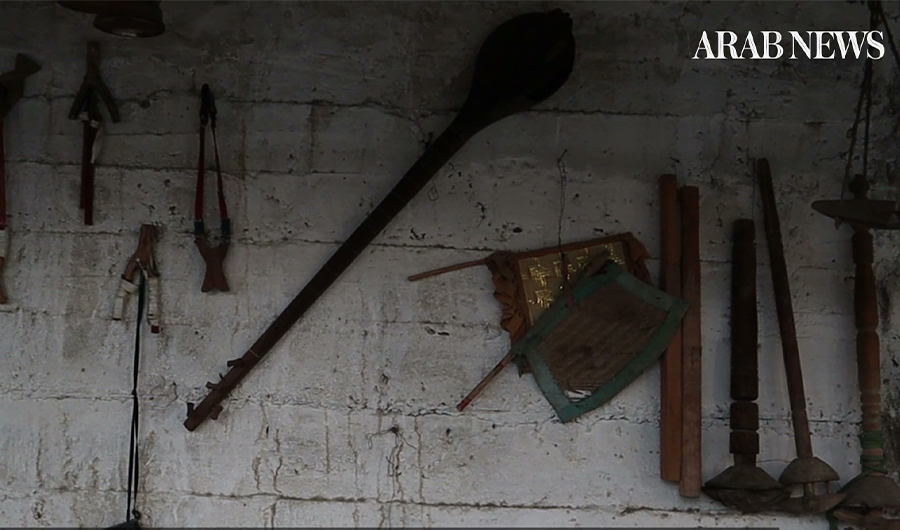
DIR: Under a roof made of an iron sheets supported by wooden beams sits an old kettledrum, leather mashaks used to store water, some quern stones and antique radio and telephone sets and swords and guns.
The scene is from Inayat Yousafzai’s make-do museum in the northwestern Pakistani district of Dir, where the 40-year-old in 2014 set up ‘Qami Versa,’ or national heritage in the Pashto language, to collect relics of what he described as a “bygone era” of Pashtun culture.
It is believed that the ethnic group known as Pashtuns emerged from the region around Kandahar and the Sulaiman Mountains, roughly around the ancient region of Arachosia, and expanded from there between the 13th and 16th centuries to the adjoining areas of modern-day Afghanistan and much of Pakistan’s northwest.
Yousafzai said he had an emotional attachment with his culture, which moved him to set up the Qami Versa museum on two kanals of ancestral land in front of his house in Mandesh village in Dir.
Another reason was that Pakistan’s northwest from which Yousafzai hails was hit by militancy in the mid-2000s as Pakistani Taliban militants overran major districts after the formation of the Tehreek-e-Taliban Pakistan (TTP) group in 2007.
Militants were finally driven away through successive military operations that began in 2009. But much of the region’s cultural heritage was lost after years living in the shadow of the hard-line Taliban, Yousafzai said.
“Around 2007 till 2010, a wave of terrorism erupted all over Khyber Pakhtunkhwa, which destroyed the cultural chain of this region. And our culture was fading away day by day,” he told Arab News at his museum, which is home to at least 300 items.
“So, I and Inayat Yousafzai thought of preserving these things, so they could be saved for future generations,” said Saeed Ahmad Sahil, a Pashto poet, writer and researcher who is Yousafzai’s closest friend and briefs visitors about the history and significance of the items housed at Qami Versa.
“I am interested in keeping these traditional items so that the coming generation would know about the lives and culture of their forefathers,” Yousafzai added.
But the journey has not been an easy one for Yousafzai, who has had to travel to remote, far-flung areas to find and collect items of cultural value, and even pay to procure them.
And keeping these items safe at Qami Versa has been an additional challenge for Yousafzai who, despite financial constraints, said he had hired a watchman to guard the valuables at night.
“It is a difficult task to keep things safe as burglars often attempt to steal them from here,” he said. “Some time ago, a hill torrent destroyed the shelter and I had to rebuild the place.”
People from different walks of life, especially students visit the museum, Sahil said:
“We tell them about the history of these things, we tell them about the use of these things and they take interest in such things.”
Sahil said some of the items at their museum dated back up 250 years and were of “national significance.”
“We have a telephone which was gifted to Bahrawar Said, a late senator and a close friend of Quaid-e-Azam Muhammad Ali Jinnah [founder of Pakistan], in 1947 by Liaqat Ali Khan, then prime minister of Pakistan,” he said.
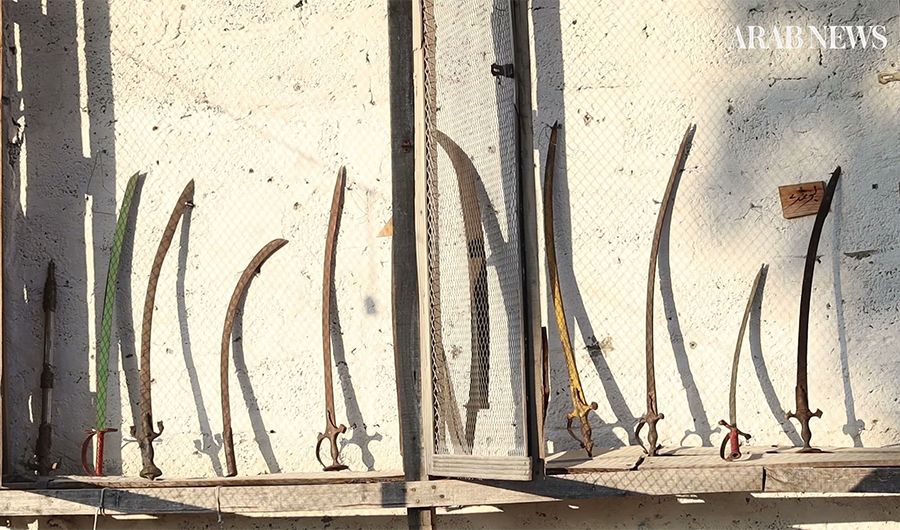
Old rifles and swords used by local tribesmen in different battles before and after the partition of the subcontinent were also on display, Sahil added:
“Here you see different types of rifles, they were used in different battles against the British in 1895 and 1897-98.”
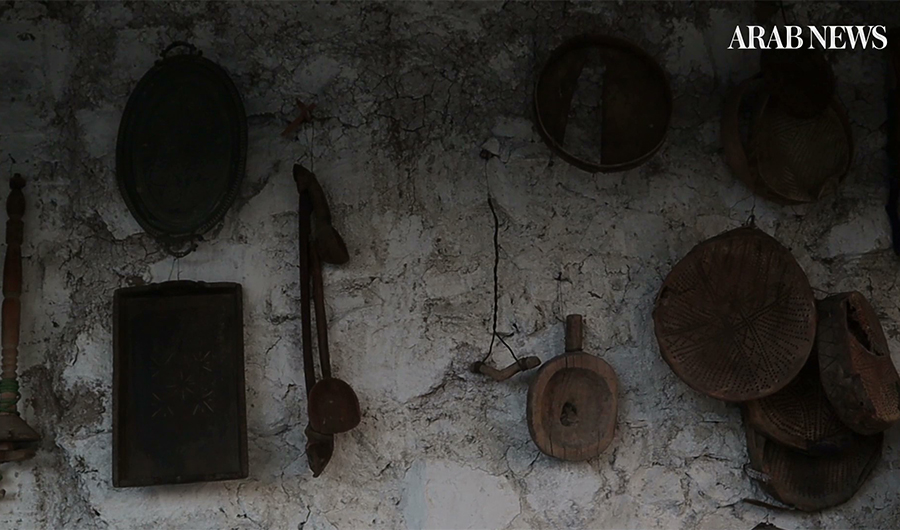
The museum also houses a collection of items hand-made by local women, including the traditional Khall cap and baskets made of wood strands.
“The Khall caps are famous across the world and have got more famous after Sirajul Haq [head of Pakistan’s Jamaat-e-Islami political party] started wearing them,” Sahil said.
“Women in the Khall village would weave them which not only contributed to the economy of the region, but also showed progressiveness of our women.”
Both Yousafzai and Sahil are determined to keep developing Qami Versa as a place of education for young Pashtuns.
“We don’t need any financial support,” Yousafzai said. “I just request people who have antiques and other cultural items in their homes to let us know … We are planning to develop this Versa into two, three portions, expand it, fix this ground so that it will become a memorabilia for our coming generations.”