
RIYADH: Japanese energy solution provider Mitsubishi Power plans to focus on the Middle East and North Africa as it expects the region to become the world’s green energy hub, a top executive told Arab News.
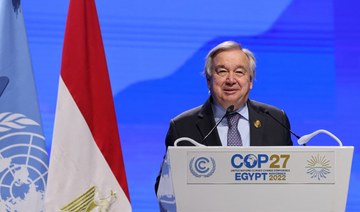
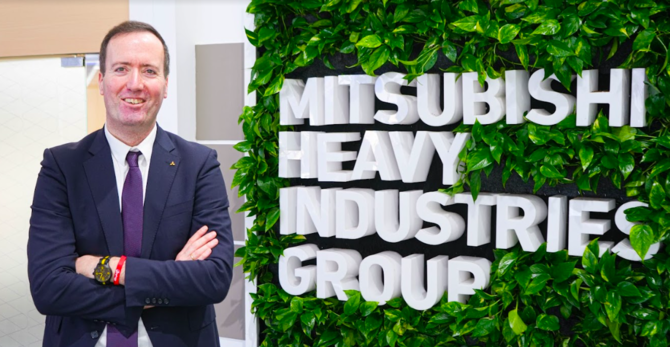
The fact that the 2022 UN Climate Change Conference, or COP 27, is taking place in Egypt and the one to follow — COP 28 — is set to take place in the UAE, showcases the region’s ambitions, potentials, and capabilities altogether to become an energy hub in the near future, according to Javier Cavada, president and CEO at Mitsubishi Power EMEA.
“We are a technology company that has all the solutions for decarbonization and energy transition, and we are coming here to make sure that we build the alliances, we build bridges, and we put everybody joining together for the decarbonization and energy transition,” Cavada said in an exclusive interview.
The CEO said the need to generate power greatly from renewables is dominant worldwide. Accordingly, in order to keep up with this need, he said studies have been conducted to pinpoint renewable sources that are affordable and capable at the same time of providing sufficient energy security.
According to him, hydrogen is one of these sources and a big reason why global firms such as Mitsubishi Power have been shifting focus to the MENA when it comes to the energy transition journey.
While Mitsubishi Power has several global decarbonization projects across Japan, the US, and Europe, Cavada feels they need to scale up enough projects in the MENA region to create critical mass in the region. This will in turn help the energy solution provider reduce costs, become more commercial, and facilitate the energy transition, he highlighted.
A wholly owned subsidiary of Tokyo-headquartered Mitsubishi Heavy Industries, Ltd., Mitsubishi Power aims to transform the firm’s pledges, initiatives, and commitments, into actions that are actually to be implemented.
During COP 26 — which took place last year in Glasgow — a lot of targets and commitments have been set and taken. However, COP 27 calls for more speed and implementation, the CEO stressed.
Zooming into Saudi Arabia, the CEO said they are very much present in the country with an assembly and service center as well as a big team in the Kingdom. Mitsubishi Power is constantly working with local players and investors in the Kingdom’s energy community to ensure that the firm’s technologies are being adequately and professionally utilized in the country, he said.
“Full solar capability and energy-intense industries are already deployed in the country. A lot of skills, technologies, industries, and infrastructure are present to fully decarbonize, therefore leading the supply chains to other parts of the globe like Europe and Africa,” Cavada emphasized.
Mitsubishi Power is also targeting building firm strategies in line with the Kingdom’s goals and ambitions to develop and accelerate energy transition not only for the Kingdom but the whole world, the CEO revealed.