

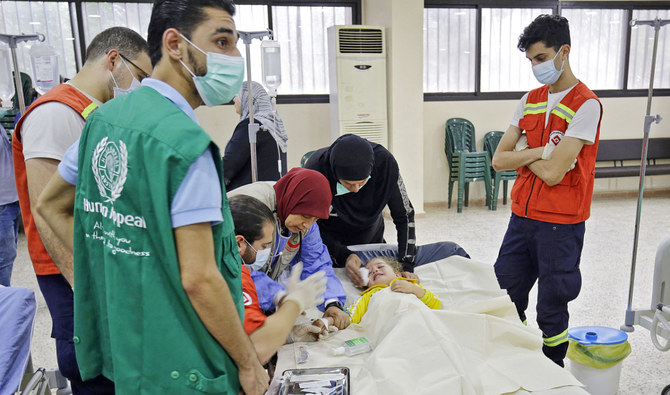

DAMASCUS: Poor access to safe water has exacerbated a cholera outbreak rampaging across Syria’s war-battered provinces, where local authorities are struggling to contain the spread with chlorine tablets and vaccines.
More than 35,000 suspected cases of cholera have been reported across the country, according to the United Nations’ children’s agency. UNICEF said only approximately 2,500 have been tested, of which nearly half were confirmed positive.
“Finding a single case of cholera means you’ve got an outbreak,” said Zuhair Al-Sahwi, the head of communicable and chronic diseases at the Syrian Health Ministry.
He said the curve had largely flattened, with a slowdown in the number of confirmed new cases daily.
Al-Sahwi said the ministry had recorded 46 deaths as a result of delays in accessing medical care and had requested cholera vaccines from the World Health Organization.
According to the WHO, Syria’s cases are linked to a rampaging outbreak that began in Afghanistan in June — then spread to Pakistan, Iran, Iraq, then Syria and Lebanon.
Cholera is typically spread through contaminated water, food or sewage. It can cause severe diarrhea and dehydration — which can kill if left untreated.
Syria’s water pipes and pumping stations have been ravaged by more than a decade of war and a drought this year left levels in its main river, the Euphrates, particularly low.
Nabbough Al-Awwa, an eye, nose, and throat doctor in Damascus, said that dumping solid waste into stagnant waters had contributed to the spread.
“If the river is running, it’s fine. But when the water levels got low because of the rising temperatures in a lot of countries in the world, these bacteria started to proliferate and spread,” said Al-Awwa.
With farmers relying on untreated river water, vegetables quickly became contaminated and the virus spread to the cities, he said. Shops and restaurants in the capital have tweaked their menus to protect their customers.
“We stopped using leafy greens for the sake of public health,” said Maher, who runs a falafel shop in Damascus.
The capital remains relatively shielded, according to WHO data, with the highest case numbers recorded in the vast desert province of Deir Ezzor in the east and Raqqa and Aleppo in the north — which rely on the Euphrates the most.
UN agencies have mostly been trucking water to affected communities and disbursing sterilization tablets.
But to keep up their efforts, the UN children’s agency says it still needs around $9 million in funds to get it to the end of the year.


