

Saudi Agricultural Development Fund signs $409m financing contracts to boost food security 

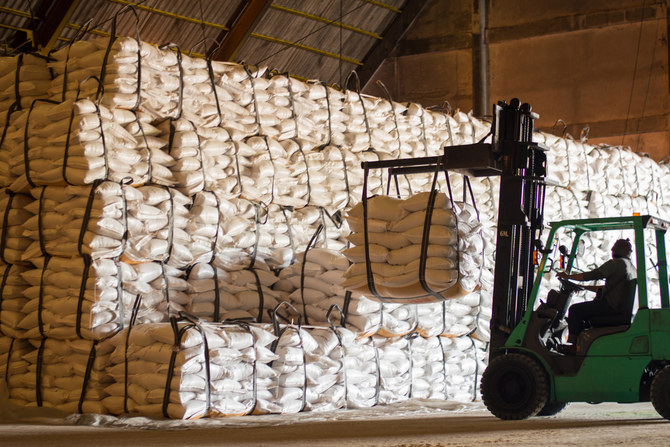
Targeted products include maize, soybeans, and barley (Shutterstock)
Short Url
Updated 10 November 2022
Follow

Saudi Agricultural Development Fund signs $409m financing contracts to boost food security 

RIYADH: Saudi Arabia’s food security drive has received a boost after the Kingdom’s Agricultural Development Fund signed financing contracts worth an accumulated SR1.54 billion ($409 million) to propel the import of some agricultural products. 

Targeted products include maize, soybeans, and barley. 

The financing contracts included Al Ghadeer Feed Factory Co., Nadec Co., Al Nafeh Food Co., Al Bawardi Holding Group, National Poultry Co., Fakih Poultry Co., and Almarai Co. 

In addition to this, the fund also signed a financing contract with the Central Agricultural Cooperative Society. 

The signing of these contracts come in line with the programs and initiatives of the Agricultural Development Fund to boost food security, compensate for any potential shortages in the supply of agricultural commodities and products, and ensure stability in terms of food supply chains. 

The Saudi Agriculture Development Fund has approved a number of loans with an accumulated worth of over SR861 million to finance working capital, according to the Saudi Press Agency.  

The loans will also be utilized in importing some agricultural products targeting the food sector specifically.   

The move comes in accordance with attempts to keep pace with current international developments, the Saudi Press Agency reported, citing general manager of the Fund Munir bin Fahd Al-Sahli. 

The fund has financed 467,000 loans, with a total value of SR55 billion, since its inception in 1962 until the end of 2021. 

The figures were revealed within the Agricultural Exhibition Forum sessions on the sidelines of the Saudi Agriculture Exhibition 2022 and the Saudi Agri-Business Forum, under the title “Securing the Kingdom's diversified food needs in various sub-sectors.” 

The services are represented in financing specialized projects such as poultry, greenhouses, fish farming, and food manufacturing industries, the ADF advisor Alaa Siddiq explained.  

Development loans target farmers, livestock breeders, beekeepers and fishermen, in addition to financing external agricultural investment projects, Siddiq said. 


Saudi regulator proposes new real estate ownership rules for listed firms 

Updated 11 sec ago
Follow

Saudi regulator proposes new real estate ownership rules for listed firms 

RIYADH: Saudi Arabia’s capital markets regulator has proposed new controls governing real estate ownership by listed companies, investment funds and special purpose entities, as part of efforts to strengthen market oversight and investor confidence. 

The Capital Market Authority said the draft framework regulates mechanisms for owning real estate and other in-kind property rights across the Kingdom, with the aim of enhancing capital market efficiency and competitiveness. 

The framework aligns with the Non-Saudi Real Estate Ownership Law, which is expected to take effect in early 2026 and grants the CMA authority to issue controls governing real estate ownership by listed companies, investment funds and special purpose entities. 

“The proposed draft aims to regulate the mechanism for real estate ownership by listed companies in the Saudi capital market, as well as licensed investment funds and special purpose entities, in a manner that contributes to enhancing the efficiency of the capital market, increasing its attractiveness to investors, and strengthening its regional and international competitiveness,” the CMA said in a statement. 

The draft also sets out specific conditions for non-operational real estate ownership in  Makkah and Madinah. Under the proposed rules, a foreign strategic investor must not, at any time, hold shares or convertible debt instruments in the listed company.  

The regulator has opened a 15-day consultation period, ending Jan. 14, 2026, to gather feedback from market participants before finalizing the rules.  

Once approved, the framework is expected to support investment, enhance international participation and strengthen foreign capital inflows, in line with Vision 2030 objectives to develop the financial and real estate sectors. 

The CMA said the proposed controls would not affect existing regulatory obligations for foreign investors, listed companies, investment funds, special purpose entities or capital market institutions, adding that they build on existing frameworks without introducing new provisions.