

Cybercrime damages set to total $10.5tn by 2025 warns SABIC official

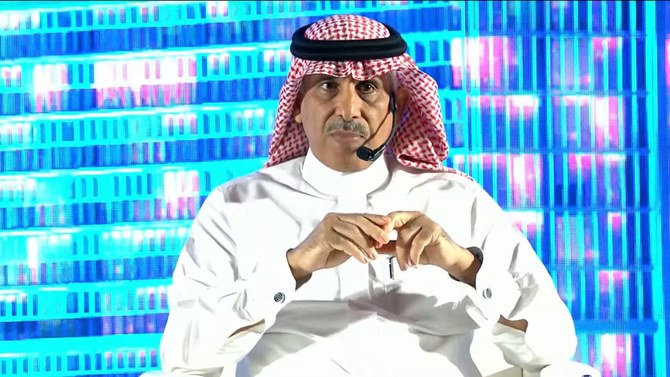
Abdulrahman Al-Fageeh acting CEO of Saudi Basic Industries Corp. (Supplied)
Short Url
Updated 09 November 2022
Follow

Cybercrime damages set to total $10.5tn by 2025 warns SABIC official

JEDDAH: Global cybercrime damages, which are predicted to amount to $10.5 trillion by 2025, will have a detrimental effect to companies' top lines, leading business and financial figures have warned.

The panelists of “The Rising Tide” discussion at the Global Cybersecurity Forum concluded that companies are experiencing exacerbated operational costs because of increases in real-time losses due to theft, network downtime and rising insurance premiums.

“Cybercrime is becoming a global issue that affects individuals, organizations and even nations. The latest estimates of cybercrime-led damages are about $10.5 trillion by 2025,” said Abdulrahman Al-Fageeh acting CEO of Saudi Basic Industries Corp.

Speaking at the event, Al-Fageeh highlighted that the warnings are getting louder and could soon get into a crisis mode as the menace could directly affect companies' toplines.

“At an organizational level, it affects revenue and costs. For example, revenue in organizations has been reduced by 5 to 10 percent due to cyberattacks,” said Al-Fageeh.

“The downtime to resolve cyberattacks can take up to 45 days. In addition, costs are becoming unpredictable as insurance costs are increasing significantly,” he added.

Khaled Al-Dhaher the deputy governor for control and technology at Saudi Arabia Monetary Authority warned companies to invest in technology wisely.

Al-Dhaher said investment in firewalls and security middleware, with the proper governance approach and capability, could go a long way in detecting and troubleshooting this growing menace.  

“It will create the right impact for the cybersecurity strategy. There has to be a continuous investment in innovation to address these evolving landscapes, and it is critical to have some threat intelligence,” said Al-Dhaher.  

Echoing Al-Fageeh’s thoughts, Al-Dhaher reiterated that companies cannot fight in isolation, and collaboration is necessary.

“A collaboration between different entities is a must because this is a war against criminals trying to damage us,” he added.

One of the worst-affected industries in cyberspace is the financial sector, especially the crypto community, which has been at the receiving end of cybersecurity problems.  

According to speakers at the event, there is an increasing need for innovation in the financial sector, which has recently introduced user-friendly measures such as open banking.  

“There is no doubt that innovation is critical to enabling and continuing trust in this sector. Artificial intelligence can help predict, protect and minimize the impact,” pointed out Al-Dhaher.

Saudi Arabia has recognized the threat, and is gearing up to combat cybercrime. 

According to Alex Liu, managing partner and chairman of global management consulting firm Kearney, the Kingdom has made huge progress in its commitment to combating cyberattacks, with Saudi Arabia ranking second on the Global Cybersecurity Index among nations committed to cybersecurity.  

“I’m inspired by the fact that in just two short years, the Kingdom has become number two, and I think that comes from urgency and proactivity,” he added.  

According to Liu, cybersecurity is one of the top three risks facing countries and companies and the urgency to counter it needs to be increased.  

Overall, the event was a wake-up call for companies to invest wisely and collaborate with government entities in combating the menace that could uproot businesses and economies.

The panel’s members were SABIC's acting CEO Abdulrahman Al-Fageeh; Khaled Al-Dhaher, SAMA's Deputy Governor for Control and Technology, Isa Ali Ibrahim, Nigeria’s minister of communications and digital economy, and Alex Liu,Kearney's managing partner and chairman, Kearney.


The Real Estate Registry signs 10 agreements at forum in Riyhad

Updated 10 sec ago
Follow

The Real Estate Registry signs 10 agreements at forum in Riyhad

RIYADH: The Real Estate Registry concluded its participation in the Real Estate Future 2026, as a partner of the forum, with a distinguished presence that included the launch of its business portal, the signing of 10 agreements and memoranda of understanding with entities from the public and private sectors, the organization of specialized workshops, and the awarding of the Gold Award at the Real Estate Excellence Awards.

During his participation in the forum, the CEO of the firm, Mohammed Al-Sulaiman, reviewed the latest developments in real estate registration in the Kingdom in a keynote speech, highlighting the pivotal role of the Real Estate Registry in building a unified and reliable system for data. He also announced the launch of the national blockchain infrastructure, which aims to enable the microcoding of real estate assets, enhance transparency, expand investment opportunities, and support innovative ownership models within a reliable regulatory framework.

On the sidelines of the forum, Al-Sulaiman met with Nigeria’s Minister of Housing and Urban Development, Ahmed Dangiwa. During the meeting, they discussed areas of joint cooperation, exchanged experiences and advice on shaping the future of the real estate sector, and reviewed best practices in implementing real estate registration systems that enhance reliability and improve the efficiency of property registration.
efficiency of property registration systems.

The Real Estate Registry’s participation included organizing three specialized workshops that focused on the role of geospatial technologies in identifying ownership, enhancing transparency, and improving the quality of real estate data. 

The workshop “Empowering the Real Estate Registry for the Business Sector” reviewed digital solutions that enable the business sector to manage its real estate assets more efficiently and enhance governance and technical integration. The workshop “From Off-Plan Sales to Title Deed” focused on the journey of documenting real estate ownership and the role of the registry in linking the stages of development and documentation within an integrated digital system.

On the sidelines of the forum, the Real Estate Registry signed 10 agreements and memorandums of understanding, including a deal with Yasmina Information Technology Co. to utilize real estate data in developing smarter insurance solutions that support the real estate sector and enhance service reliability. 

Partnerships were also signed with Haseel, NewTech, and Sahl, as well as HissaTech and Droub, to develop innovative digital solutions in property ownership, fractional ownership, and asset tokenization, as well as real estate finance and investment within a trusted regulatory framework.

Further collaborations included an MoU with ROSHN Group, an agreement with the Saudi Water Authority to enable data integration and quality enhancement, an agreement with the Saudi National Bank, and a partnership with Saudi Post to link the national address with the property registry as a unified geospatial identifier supporting data accuracy and integration.

The registry’s participation was crowned with the Golden Award at the Real Estate Excellence Awards in the category of Excellence in Property Documentation, in recognition of its role in building a model based on transparency, accuracy, and speed, as well as advanced digital technologies and specialized legal expertise, contributing to rights protection and increasing the sector’s attractiveness.

The Real Estate Registry emphasized that its participation reflects its continued role as a key enabler of the real estate sector, a trusted data source, and an active partner in driving digital transformation, enhancing market efficiency, and building investor and financier confidence, in line with Saudi Arabia’s Vision 2030 objectives for a fully integrated and sustainable digital real estate ecosystem.