How Egypt, host of UN Climate Change Conference COP27, is spurring a domestic ‘green economy’

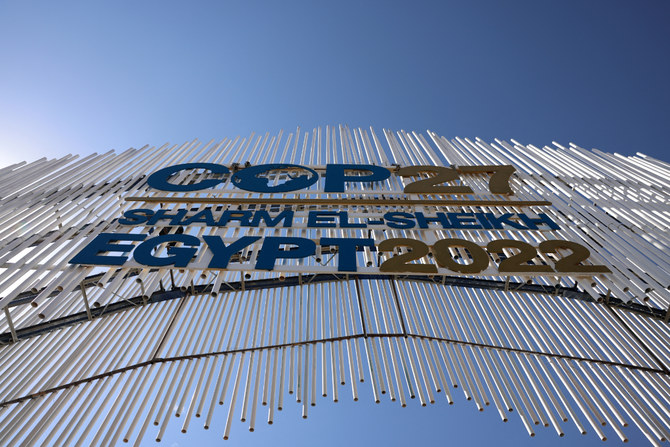
A general view of Sharm El-Sheikh International Convention Center, which is hosting the COP27 climate summit. (AFP)
Short Url
Updated 07 November 2022
Follow

How Egypt, host of UN Climate Change Conference COP27, is spurring a domestic ‘green economy’

  • From sea level monitoring to aeroponics, locally led initiatives are spearheading the ambitious campaign
  • National Initiative for Smart Green Projects shortlisted 18 schemes to be exhibited at Sharm El-Sheikh summit

CAIRO: When the Red Sea resort town of Sharm El-Sheikh hosts the COP27 UN Climate Change Conference between Nov. 6 and Nov. 18, the Egyption government will use the occasion to promote its National Initiative for Smart Green Projects.

The initiative, launched in August, is designed to encourage foreign investment in Egypt’s many environmental and quality of life projects as part of its Vision 2030 social and economic reform agenda and its National Climate Change Strategy 2050.

From an initial 6,280 projects submitted to the platform from across Egypt’s 27 governorates, just 162 made it through to the final round of judging. At a conference in Cairo on Nov. 3, Mostafa Madbouly, the Egyptian prime minister, announced the 18 winning projects.
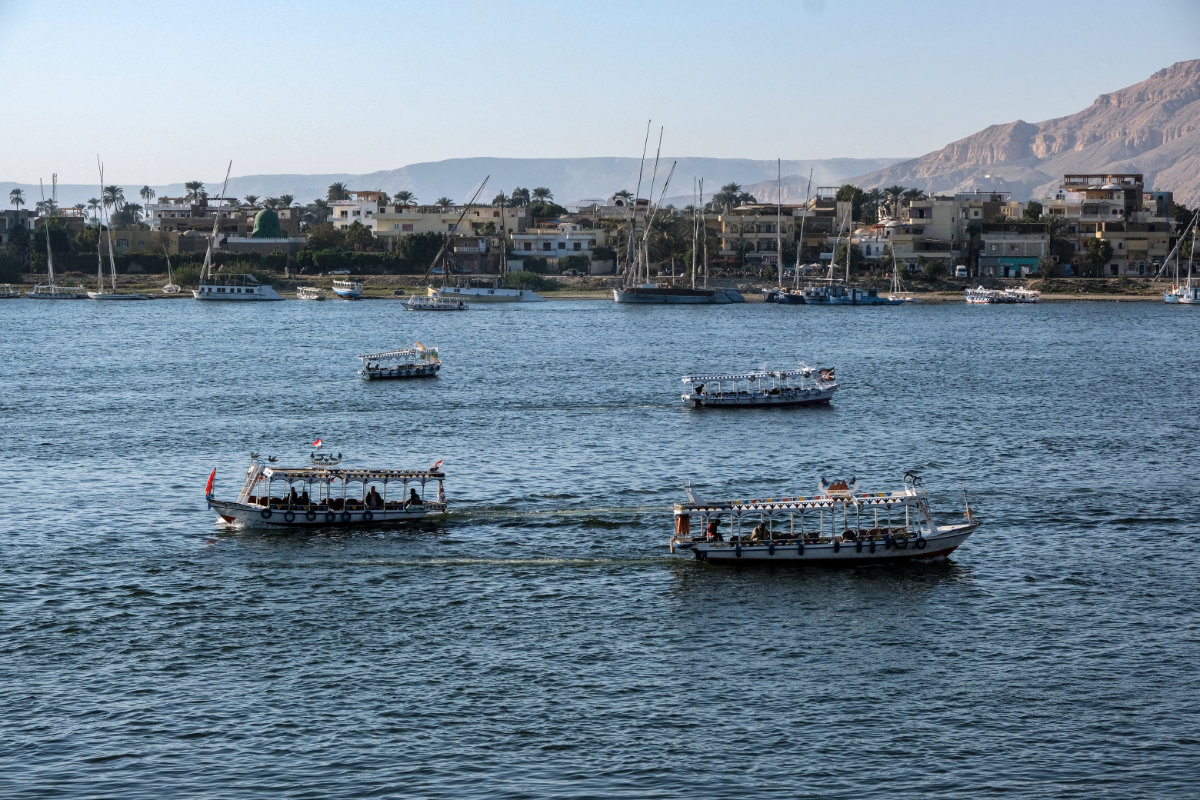


Climate change, pollution and exploitation by man is putting existential unsustainable pressure on the Nile, the world's second longest river on which millions of people depend. (AFP)

These 18 projects will be exhibited for international delegations at COP27 and will benefit from financial and technical support.

The projects were divided into categories, including those related to quality of life, women’s economic empowerment, climate change and sustainability, start-ups, and non-profit community initiatives.

They were also divided into categories based on their size. Projects valued at more than EGP200 million were deemed to be large, from EGP50 million to EGP200 million considered medium, and those below EGP50 million classified as small. 

“The key word for this initiative is localization, since it adopts an all inclusive bottom-up approach targeting all Egyptians,” Hesham Badr, national coordinator for the National Initiative for Smart Green Projects, told Arab News.
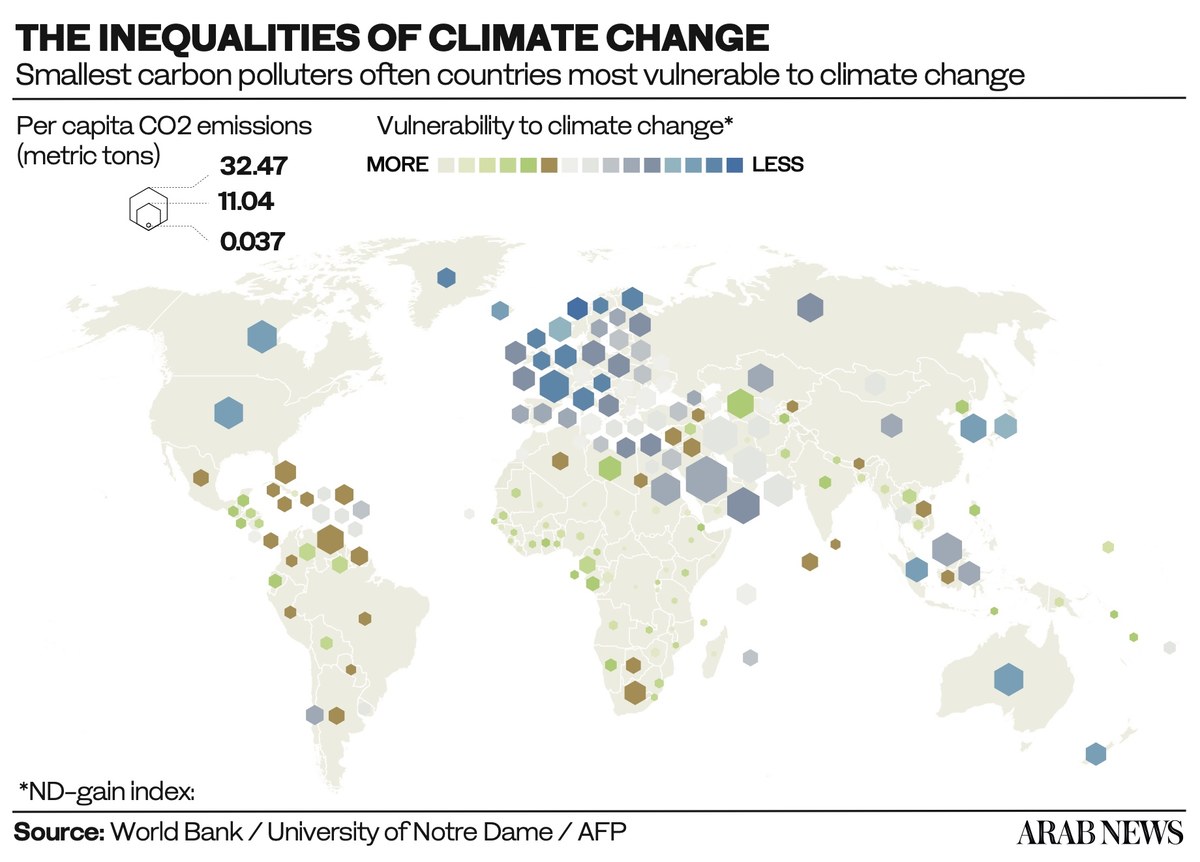
“It attempts to reach every Egyptian citizen, man or woman, to be part of the climate change challenge and to include them in the solutions process.”

The initiative included women-focused development projects designed to empower them socially and economically and give them equal opportunities in the green economy.

The National Council for Women launched its own campaigns to encourage and support women looking to participate in the project. As a result, there were more than 1,000 submissions in this category alone.


To qualify, entries had to fulfill certain green and smart components.

The green component encompassed things such as clean energy, cutting emissions, waste management and recycling, and the ability of participants to provide a climate solution to a particular challenge in their village, province or governorate.

The smart component, meanwhile, included the use of mobile applications, the Internet, artificial intelligence, or any other kind of digital technology. The project, or at least one of its phases, also needed to be at the implementation stage to qualify.

“The whole world is looking for solutions, and these are solutions coming from the heart of the Egyptian community, from different villages, and governorates,” said Badr.

“So these are solutions to problems and challenges facing them. For the first time, we have a database of projects that are green and smart in Egypt. We have a mapping of all these projects and their location, whether they are in Al-Dakahlia, Alexandria or Cairo.”

FASTFACT

The 27th UN Climate Change Conference, more commonly referred to as Conference of the Parties of the UNFCCC, is being held from Nov. 6 to Nov. 18 in Sharm El-Sheikh.

The jury tasked with selecting the winning projects was headed by Mahmoud Mohieldin, the UN Climate Change High-Level Champion for Egypt, alongside key figures in the Egyptian government.

There was also an international jury composed of several UN agencies based in Cairo, including the UN Development Programme, the Food and Agriculture Organization, the World Food Programme, the UN Industrial Development Organization, UN-Habitat and UN Women.

Among the winning entries was a project providing smart facility management systems and modern pumping and irrigation to smallholder farmers to help them use water as efficiently and cost-effectively as possible.

Another winning project focused on soilless farming by promoting the use of aeroponics to manage irrigation, ventilation and cooling systems, saving up to 90 percent of irrigation water while providing safe and healthy food products with just 5 percent waste.

Also among the winning projects was a program that can predict extreme weather events and act as an early warning system for potential climate disasters on the Alexandria coast. The project collects data about sea levels at 24-hour intervals using sensors connected to a collection of floats deployed on the Mediterranean.
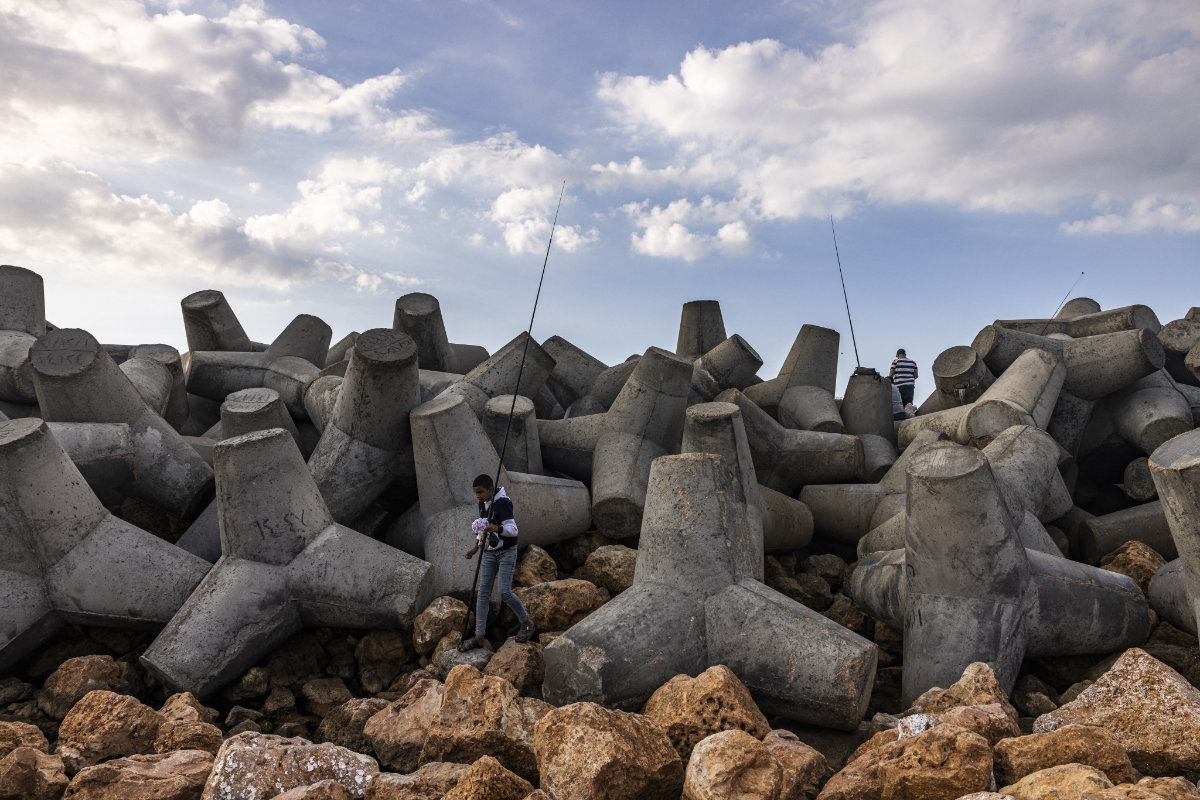


Concrete blocks are installed along the Mediterranean coast of Egypt's northern city of Alexandria to break the sea waves. (AFP)

Alexandria is considered extremely vulnerable to rising sea levels, making any technology that can monitor long-term changes or predict flooding able to help protect infrastructure and even save lives.

One successful project originating from the southern governorate of Luxor, called the Egyptian Bank for Waste, collects discarded materials from rural areas and recycles them for residential and agricultural use.

The National Initiative for Smart Green Projects is just one program launched by the Egyptian government to expand the green economy. It was during the COP26 summit in Glasgow, Scotland, last year that it launched its National Climate Change Strategy 2050.
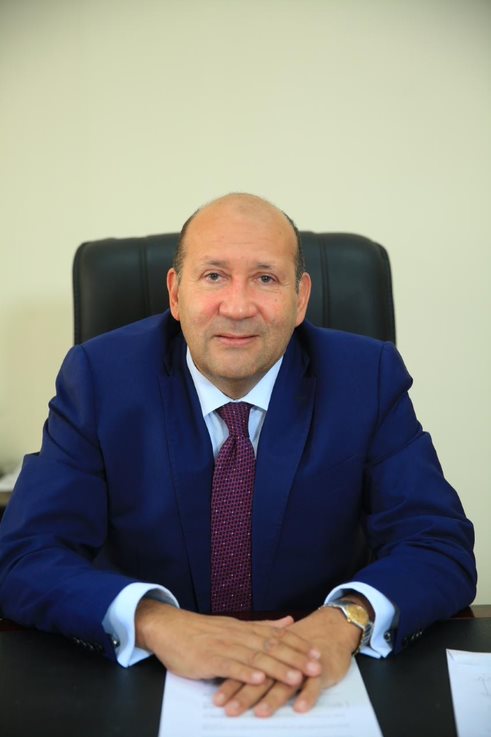


Hesham Badr, national coordinator for the National Initiative for Smart Green Projects, said: “The key word for this initiative is localization, since it adopts an all-inclusive, bottom-up approach targeting all Egyptians.” (Supplied)

The strategy has four main targets. The first is about maintaining sustainable economic growth by reducing carbon emissions and by boosting the adoption of renewable energy sources.

The second target is to eliminate greenhouse gas emissions from non-energy activities, the third is aimed at maximizing energy efficiency, and the fourth encourages local green banking and creative financing methods such as green bonds.

Egypt’s Ministry of Finance issued the first sovereign green bond in the Middle East and North Africa in Sept. 2020, valued at $750 million with a five-year term and an interest rate of 5.25 percent.
Green bonds are defined as debt methods issued to obtain financing for climate or environment-related projects.

Egypt is not the only Arab country that is boosting green initiatives. The UAE and Saudi Arabia have committed themselves to net-zero greenhouse gas emissions by 2050 and 2060, respectively. Bahrain has pledged to meet the same target by 2060.

Since the launch of Saudi Vision 2030 in 2016, the Kingdom has taken significant steps to step up climate action and environmental protection through greater reliance on clean energy and offsetting emissions.

The Kingdom is exploring ways to diversify its economy and decarbonize by producing hydrogen using its vast reserves of fossil fuels, from which carbon capture, or blue hydrogen, is produced.


The Saudi Green Initiative was launched in 2021 with the aim of planting 10 billion trees in the Kingdom over the next few decades. (Supplied) 

Saudi Arabia plans to expand beyond blue hydrogen into other, even cleaner forms, such as green hydrogen, which is made by using renewable energy to split water. The NEOM Green Hydrogen Project, to be commissioned in 2026, will be the world’s largest green hydrogen plant powered entirely by renewables.

The Saudi Green Initiative, launched at the inaugural Green Initiative Forum on Oct. 23, 2021, consists of more than 60 initiatives, the first wave of which entails investments worth SR700 billion ($187 billion) designed to contribute to the growth of a “green economy.”

Crown Prince Mohammed bin Salman launched the first Saudi Green Initiative in 2021 with the aim of planting 10 billion trees in Saudi Arabia over the next few decades to eliminate the greenhouse emissions by 278 metric tons annually by 2030.

The second Middle East Green Initiative Summit and the Saudi Green Initiative Forum will take place in parallel with COP27 this month in Sharm El-Sheikh.



GCC offering investors ‘safe’ PPP deals; Saudi pipeline nears 300: FII

Updated 20 February 2026
Follow

GCC offering investors ‘safe’ PPP deals; Saudi pipeline nears 300: FII

RIYADH: Global investors can find a “safe harbor” in the Gulf Cooperation Council as the bloc’s public-private partnerships pipeline offers “compelling” opportunities, according to a new report.

The latest document from the Future Investment Initiative Institute highlights how economies in the region are currently driving the next wave of PPP growth. 

It cites findings from Partnerships Bulletin, which ranks Saudi Arabia as second in the global emerging markets pipeline for PPP projects up to July 2025, and also places Dubai in the top 10.

While that analysis claims the Kingdom has 98 PPP projects either formally published or announced, FII says Saudi Arabia has a further 200 currently awaiting approval.

The findings align with the goals outlined in the Kingdom’s National Privatization Strategy, launched in January, which aims to raise satisfaction levels with public services across 18 target sectors, create tens of thousands of specialized jobs, and exceed 220 PPP contracts by 2030. 

The strategy also aims to increase private sector capital investments to more than SR240 billion ($63.99 billion) by 2030.

The FII report says that around 90 percent of FDI into Saudi Arabia now flows into non-oil sectors, from advanced manufacturing and tourism to green energy and digital infrastructure. 

“That shift reflects deliberate policy choices to open markets, standardize regulatory frameworks and use public capital to de-risk new value chains,” says the document, adding: “The result is a kind of safe harbor in an otherwise low-growth, high-uncertainty world.”

It continues: “While global FDI has stagnated or declined in many regions, the GCC’s pipeline of planned infrastructure and industrial projects now exceeds $2.5 trillion, according to Boston Consulting Group data, with PPPs playing a central role in structuring and financing them. For global investors searching for yield, diversification and inflation-linked income, this represents a compelling proposition.”

Commenting on the FII Institute report, Sally Menassa, partner at international management consulting firm Arthur D. Little, said PPPs are a strategic necessity for delivering infrastructure at speed and scale, and described Saudi Arabia’s pipeline as a “powerful execution and financing tool.” 

She added: “The Kingdom’s PPP momentum must remain focused on impact, value creation and execution excellence. PPPs should not be viewed merely as a funding mechanism, but as a structural tool to enhance infrastructure performance, attract investment and support sustainable economic growth in line with Vision 2030.” 

Menassa said that Saudi Arabia’s National Privitization Strategy marks a shift from a project-by-project approach to institutionalization of efforts and value creation.

“By clarifying sector priorities, strengthening project selection criteria, and formalizing governance and investor pathways, the Strategy reduces uncertainty. This clarity enhances investor confidence and improves pipeline quality,” said the Arthur D. Little official. 

Sally Menassa, partner at international management consulting firm Arthur D. Little. Supplied.

She added: “PPP and privatization efforts in Saudi Arabia are not about divestment or the state shifting execution to the private sector, it is really about becoming more productive as a nation. It enhances efficiency, raises service standards, mobilizes private and SME participation, and attracts capital.” 

Menassa further said that the strategy could help the Kingdom achieve stronger fiscal sustainability and higher private sector GDP contribution, both of which are critical components to accelerate the Kingdom’s economic transformation under Vision 2030.

Vijay Valecha, chief investment officer at Century Financial, believes input from the private sector across all stages, from design to construction and operations, improves the efficiency of project delivery and long-term operations in Saudi Arabia. 

“Tighter governance through centralized management at the National Center for Privatization and PPP and a more streamlined process, including template contracts, a clearer regulatory environment, and a transparent pipeline, is likely to improve delivery speed,” said Valecha. 

He added: “This means faster delivery of big projects like Red Sea resorts or Neom, with private firms handling operations to drive innovation. Ultimately, the strategy supercharges diversification by making the private sector the main engine of growth, aligning perfectly with Saudi Arabia’s push for a vibrant, non-oil economy.” 

The FII Institute added that the global flow of FDI is increasingly concentrated in the Gulf Cooperation Council region, driven by ambitious national transformation agendas and deep pools of sovereign wealth.

Tony Hallside, CEO of STP Partners, outlined several factors that are boosting the PPP landscape in the region, which include large infrastructure demand from Vision-level programs and urbanization. 

“Government frameworks that standardise PPP procurement are making projects bankable. Strong regional capital pools and sovereign support will mitigate risk and attract global players. In the GCC, Saudi Arabia’s pipeline itself is one of the largest in the Middle East, indicating strong investor interest,” added Hallside. 

Underscoring the role of growing PPP in Saudi Arabia, the FII report said: “A decade ago, the Kingdom’s solar capacity was negligible, despite its vast solar resource. Through early anchor investments, long-term power purchase agreements and support for national champions, the state seeded a competitive renewables market that now attracts global players on purely commercial terms.” 

Valecha said that clearer PPP laws, standardised contracts and dedicated PPP units have reduced execution risks and made projects more bankable for global infrastructure funds and developers in the GCC region. 

He added that rapid urbanization, a young and growing population, rising data center power demand and energy transition projects create predictable, long-duration cash flows in the region. 

“This combination of policy support, fiscal necessity and structural growth is why the GCC is emerging as one of the fastest-growing PPP markets globally,” said Valecha. 

Vijay Valecha, chief investment officer at Century Financial. Supplied

Key Saudi PPP projects

Yanbu 4 Independent Water Project - supplying water to Medina and Makkah

Location Yanbu, Red Sea coast

Companies involved: Engie, Mowah, Nesma, Saudi Water Partnership Co.

Cost: $826.5 million

Expected delivery date: Operational as of 2024

Hadda Independent Sewage Treatment Plant

Location: Makkah Province

Companies involved: Metito Utilities, Etihad Water and Electricity, SkyBridge Limited Co., Saudi Water Partnership Co.

Expected delivery date: 2028 

As Sufun Solar PV Independent Power Project

Location: Hail region

Companies involved: TotalEnergies, Aljomaih Energy & Water, Saudi Power Procurement Co.

Expected delivery date: Expected to connect to the grid in 2027

Construction of greenfield international airports

Location: Taif, Abha, Qassim, and Hail

Companies involved: Currently in the planning stage; investors are being sought

One-Stop Station Project

Location: Intercity road network across the Kingdom

Companies involved: Saudi Arabia’s Roads General Authority and National Center for Privatization & Public-Private Partnership announced a full list of qualified bidders in February.

King Salman Park

Location: Riyadh

Companies involved: King Salman Park Foundation, Ajdan Real Estate, Sedco Capital

Cost: $1 billion

Project: Madinah-3, Buraydah-2, and Tabuk-2 Independent Sewage Treatment Plants

Location: Madinah, Buraydah, and Tabuk

Companies involved: Acciona Agua, Tawzea, Tamasuk, Saudi Water Partnership Co.

Cost: $627 million combined

Riyadh Metro Line 2 Extension

Location: Riyadh

Companies involved: Royal Commission for Riyadh City, Arriyadh New Mobility Consortium, led by Webuild. Riyadh Metro Transit Consultants (JV between US Parsons and France’s Egis and Systra) as project management and construction supervision consultant.

Cost: Up to $900 million

Expected delivery date: 2032


The crucial role of emerging markets

According to the FII Institute report, the ability to deliver resilient infrastructure, expand digital connectivity and accelerate the energy transition will increasingly depend on the strength and legitimacy of PPPs, as fiscal space tightens and investment needs rise. 

FII estimates a $5 trillion global infrastructure financing gap by 2040. It also points to significant regional shortfalls, including an estimated $3.7 trillion gap in the US and an annual $130 billion to $170 billion gap across Africa. In this context, PPPs are moving from a transactional procurement route to a central model for financing and delivery.

The report highlighted that emerging markets, including Saudi Arabia, are currently driving the next wave of PPP growth, with spending across low-and middle-income countries reaching $100.7 billion in 2024, up 16 percent year on year, according to figures from the World Bank. 

Moreover, emerging markets now represent around 61 percent of global PPP activity by gross domestic product share.

According to Partnerships Bulletin’s findings up to July 31 2025, the Philippines leads the emerging-market pipeline with 230 projects, followed by Saudi Arabia with 98, Kyrgyzstan with 80, Bangladesh with 71, and Peru with 54 projects.

Greece has 42 projects in the pipeline, followed by Dubai at 28, Kenya at 25, Colombia at 24, and Pakistan at 14. 

PPP: An engine of growth

When capital was cheap, PPPs were often treated as an optional extra – a way to shift specific projects off the public balance sheet, or to import private-sector efficiency into construction and operations, the FII report said. 

However, now, nations consider PPPs as a central hub of their economic strategy, as they enable the state to stretch every dollar of public investment using private capital, while retaining strategic control over what gets built, where and to what standard.

“The real differentiator is complexity. When a project presents significant financial uncertainty or unpredictable demand, or if there’s a high level of climate exposure or technological risk, a PPP can give leaders the tools to manage those issues without slowing things down,” said Bob Willen, global managing partner and chairman of Kearney, said in the FII report. 

Erik Ringvold, chief business development officer at Regional Voluntary Carbon Market Co., was quoted in the report as saying that carbon markets will benefit through PPPs, as deepened public-private partnerships could help achieve progress toward national emissions targets, while simultaneously creating economic opportunity and catalyzing new green industries. 

“Saudi Arabia has made large strides toward an emissions compliance system, with an operational carbon standard in place, and an emissions trading system announced to be launched over the coming few years,” said Ringvold. 

He added: “At VCM, we see a clear future carbon vision for Saudi Arabia. One ecosystem. One marketplace. One iconic collaboration – with the PPP model at the heart of its success.” 

PPPs for investors and citizens 

For investors, infrastructure-backed PPPs offer long-duration, often inflation-linked cash flows at a time when public markets are volatile and dominated by a narrow set of mega-cap technology stocks. 

For citizens, well-designed PPPs can mean better services, more resilient infrastructure and faster progress toward climate and development goals, without unsustainable tax rises or austerity. 

FII, however, cautioned that public consent is becoming decisive. Across seven countries, only 23 percent of citizens agree that PPPs “equally benefit everyone”, compared with 41 percent of business and government leaders.

Tony Hallside, CEO of STP Partners. Supplied

Hallside said that public consent hinges on transparency, accountability, and visible service outcomes. 

He added that governments should publish clear procurement frameworks, communicate cost-benefit and performance expectations in plain language, and measure user satisfaction and service quality over time — “reinforcing that PPPs deliver tangible improvements in infrastructure and services.” 

Menassa echoed similar views and said that communication with the public is not sufficient, but the performance and execution phase holds the key to PPP projects. 

“Winning public opinion for PPPs is rather a marathon not a race. It starts with building awareness and trust by providing transparency and demonstrating value for money, ensuring affordability and service quality of public services is maintained through strong regulatory oversight, and ensuring competitive, transparent procurement processes,” added Menassa. 

According to the Arthur D. Little official, the public must see tangible improvements in service reliability, efficiency and accountability, and acceptance will follow.

“The world can’t afford to delay the infrastructure and energy transition investments that will determine prosperity – and planetary stability – for decades to come. Nor can it fund them through public budgets alone. Financing the future is, by definition, a joint endeavour,” added the FII report.