DUBAI: Iran on Friday marked the 1979 takeover of the US Embassy in Tehran as its theocracy faces nationwide protests after the death of a 22-year-old woman earlier arrested by the country’s morality police.
Iranian state-run television aired live feeds of various counterprotests around the country, with some in Tehran waving placards of the triangle-shaped Iranian drones Russia now uses to strike targets in its war on Ukraine. But while crowds in Tehran looked large with chador-wearing women waving the Islamic Republic’s flag, other protests in the country appeared smaller, with only a few dozen people taking part.
The demonstrations that have convulsed Iran for more than six weeks after the death of Mahsa Amini mark one of the biggest challenges to the country’s clerical rulers since they seized power in the 1979 Islamic Revolution. At least 300 protesters have been killed and 14,000 arrested since the unrest began, according to a Human RIghts Activists in Iran, a group that’s been monitoring the crackdown on demonstrators.
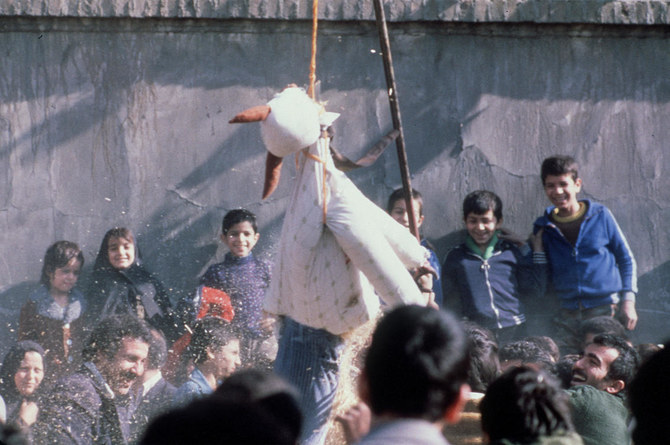
Hard-liners within Iran long have bussed government workers and others into such Nov. 4 demonstrations, which have a carnival-like feel for the students and others taking part on Taleqani Street in downtown Tehran.
This year, however, it remained clear Iran’s theocracy hopes to energize its hard-line base. Some signs read “We Are Obedient To The Leader,” referring to 83-year-old Supreme Leader Ayatollah Ali Khamenei, who has final say over all matters of state in the country. The weekslong demonstrations have included cries calling for Khamenei’s death and the overthrow of the government.
The annual commemoration marks when student demonstrators climbed over the fence at the embassy on Nov. 4, 1979, angered by then-President Jimmy Carter allowing the fatally ill Shah Mohammad Reza Pahlavi to receive cancer treatment in the United States.
The students soon took over the entire, leafy compound. A few staffers fled and hid in the home of the Canadian ambassador to Iran before escaping the country with the help of the CIA, a story dramatized in the 2012 film “Argo.”
The 444-day crisis transfixed America, as nightly images of blindfolded hostages played on television sets across the nation. Iran finally let all the captives go the day Carter left office on Ronald Reagan’s inauguration day in 1981.
That enmity between Iran and the US has ebbed and surged over the decades since. The US and world powers reached a nuclear deal with Iran in 2015 that drastically curtailed its program in exchange for the lifting of international sanctions. However, then-President Donald Trump unilaterally withdrew from the deal in 2018, sparking years of tensions since.
Late Thursday in California at a rally before the US midterm elections, President Joe Biden also stopped his speech to address a crowd that held up cellphones displaying the message “FREE IRAN.”
“Don’t worry, we’re gonna free Iran,” Biden said in an aside during a campaign rally for Democratic Rep. Mike Levin. He added, “They’re gonna free themselves pretty soon.”
Speaking to a crowd in front of the former US Embassy, Iran’s hard-line President Ebrahim Raisi referenced Biden’s comments.
“Maybe he said this because of a lack of concentration...He said we aim to liberate Iran,” Raisi said. “Mr. President! Iran was liberated 43 years ago, and it’s determined not to become your captive again. We will never become a milk cow.”
Biden had said he was willing to have the US rejoin the nuclear deal, but talks have broken down. Since the protests began in mid-September, the American position appears to have hardened with officials saying restoring the deal isn’t a priority amid the demonstrations.
On Friday, some protesters waved giant placards of atoms as a reminder that Iran now enriches uranium to its closer than ever to weapons-grade levels. Nonproliferation experts warn Iran now has enough enriched uranium to make at least one nuclear weapon if it chose, though Tehran insists its program is peaceful.


![]()

Iran marks 1979 US Embassy takeover amid nationwide protests
Short Url
https://arab.news/rzsay
Iran marks 1979 US Embassy takeover amid nationwide protests
- Annual commemoration marks when student demonstrators climbed over the fence of the US embassy in Tehran on Nov. 4, 1979


Latest updates


© 2026 SAUDI RESEARCH & PUBLISHING COMPANY, All Rights Reserved And subject to Terms of Use Agreement.