US imposes new sanctions on oil smuggling network backing Iran’s Quds Force

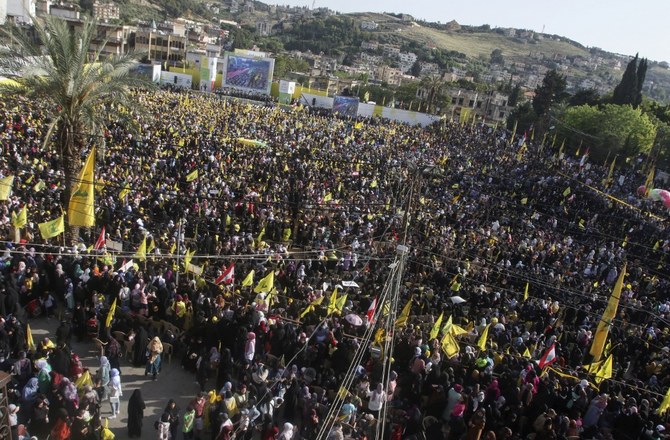
The US Treasury Department in a statement said it designated members of the network that facilitated oil trades and generated revenue for Lebanon’s Iran-backed Hezbollah and the Quds Force. (File/AFP)
Short Url
Updated 03 November 2022
Follow

US imposes new sanctions on oil smuggling network backing Iran’s Quds Force

  • The latest US move against Iranian oil smuggling comes as efforts to revive Iran’s 2015 nuclear deal have stalled
  • The Treasury said the network designated on Thursday included key individuals, front companies and vessels

WASHINGTON: The United States on Thursday issued sanctions against an international oil smuggling network it accused of supporting Hezbollah and Iran’s Quds Force, as Washington seeks to increase pressure on Tehran.
The US Treasury Department in a statement said it designated members of the network that facilitated oil trades and generated revenue for Lebanon’s Iran-backed Hezbollah and the Quds Force, an arm of Iran’s Revolutionary Guards that operates abroad, both of which are under US sanctions.
The latest US move against Iranian oil smuggling comes as efforts to revive Iran’s 2015 nuclear deal have stalled and ties between the Islamic Republic and the West are increasingly strained as Iranians keep up anti-government protests.
The Treasury said the network designated on Thursday included key individuals, front companies and vessels it accused of being involved in blending oil to conceal the Iranian origins of the shipments and exporting it around the world in support of the Quds Force and Hezbollah.
“Market participants should be vigilant of Hezbollah and the IRGC-QF’s attempts to generate revenue from oil smuggling to enable their terrorist activities around the world,” said Brian Nelson, the Treasury’s Under Secretary for Terrorism and Financial Intelligence, in the statement.
Iran’s mission to the United Nations in New York did not immediately respond to a Reuters request for comment.
The sanctions against dozens of people, companies and tankers freezes any of their US assets and generally bars Americans from dealing with them. Those that engage in certain transactions with those designated also risk being hit with sanctions.
The move targeted a network of individuals and companies that the Treasury said as of mid-2022 were blending and exporting Iranian oil. The network blended products of Indian origin with Iranian oil to obfuscate the origin, Washington said.
The companies modified or created counterfeit certificates of origin and quality for the oil, which was then transferred for sale abroad, the Treasury said. Some oil sales were planned to Asia buyers as of late 2021.


Refugees, migrants in Lebanon find rare sanctuary from Israeli strikes in Beirut church 

Updated 3 sec ago
Follow

Refugees, migrants in Lebanon find rare sanctuary from Israeli strikes in Beirut church 

  • Beirut church offers safe haven for displaced migrants, refugees
  • Many refugees lived through 2024 war, but are now more vulnerable
BEIRUT: When Israeli strikes began pummelling Beirut’s southern suburbs early on Monday, Sudanese refugee Ridina Muhammad and her family ​had no choice but to flee home on foot, eventually reaching the only shelter that would accept them: a church.
Eight months pregnant, Muhammad, 32, walked with her husband and three children for hours in the dark streets until they found a car to take them to the St. Joseph Tabaris Parish, which has opened its doors to refugees and migrants.
They are among 300,000 people displaced across Lebanon this week by heavy Israeli strikes, launched in response to a rocket and drone attackinto Israel by the Lebanese armed group Hezbollah.
Just 100,000 of the displaced are in government shelters. Others are staying ‌with relatives ‌or sleeping in the streets. But migrants and refugees say government ​shelters ‌were ⁠never an option ​for ⁠them, saying they were turned away during the last war between Hezbollah and Israel.
Muhammad’s oldest daughter, now seven, stopped speaking after the 2024 war.
This time, they are even more vulnerable: their home was destroyed in this week’s strikes and Muhammad is due to give birth at the end of the month.
“I don’t know if there’s a doctor or not, but I’m really scared about it because I haven’t prepared any clothes for the baby, nor arranged a hospital, and I don’t know where to go,” she told ⁠Reuters as her younger daughter leaned against her pregnant belly.
Muhammad ‌said she was registered with the United Nations’ refugee agency (UNHCR) ‌but had not received support.
“Us, as refugees, why did we ​register with the UN, if they are not ‌helping us in the most difficult times?” she said.
Dalal Harb, a spokesperson for UNHCR ‌Lebanon, said the agency had mobilized but reaching everyone immediately was extremely challenging given the scale and speed of displacement. The UNHCR operation in Lebanon is currently only around 14 percent funded, she said.
The Jesuit Refugee Service (JRS), which helped the church host displaced in 2024, is doing so again.
Michael Petro, JRS’ Emergency Shelter Director, said the church was ‌full within the first day of strikes, with 140 people from South Sudan, Ethiopia, Bangladesh, and other countries sheltering there.
“There are many, many more ⁠people coming than there ⁠were in 2024, and we have fewer and fewer places to put them,” he said.
Petro said he was told weeks ago that government shelters would be open to migrants if war erupted.
But when the strikes began and even Lebanese struggled to find shelter, the policy seemed to change, he said.
“We’re hearing from hotlines up to government officials and ministries that migrants are not welcome,” Petro said.
Lebanon’s Minister for Social Affairs Haneen Sayyed did not respond to a request for comment. On Thursday, Sayyed said Beirut shelters were full.
When Israeli strikes began, Othman Yahyeh Dawood, a 41-year-old Sudanese man, put his two young sons on his motorcycle.
They drove 75 kilometers (46 miles) from the southern Lebanese town of Nabatieh to St. Joseph’s, where they had sheltered in 2024.
“I know the area ​is safe and there are people who ​will welcome us,” he said.
“We don’t know where to go; there’s war there (in the south), war here (in Beirut), war in Sudan, and nowhere else to go,” he said.