

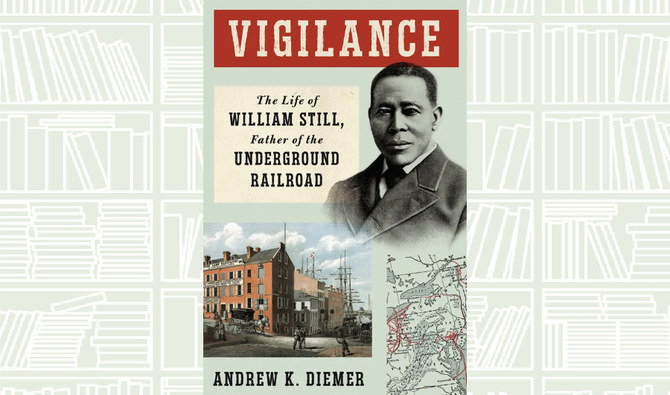

Author: Andrew K. Diemer
This is a fascinating, in-depth account of the life of William Still.
Andrew Diemer does a magnificent job presenting Still’s life to the reader.
Through meticulous research and engaging writing, Vigilance establishes Still in his rightful place in American history as a major figure of the abolitionist movement.
Born free in 1821 to two parents who had been enslaved, Still was drawn to antislavery work from a young age. Hired as a clerk at the Anti-Slavery office in Philadelphia after teaching himself to read and write, he began directly assisting enslaved people who were crossing over from the South into freedom.
Andrew Diemer captures the full range and accomplishments of Still’s life, from his resistance to Fugitive Slave Laws and his relationship with John Brown before the war, to his long career fighting for citizenship rights and desegregation until the early twentieth century.
Despite Still’s disappearance from history books, during his lifetime he was known as “the Father of the Underground Railroad.”
This is a great history read and also gives more insight into black culture and their own history, said a review on goodreads.com.


