

Egypt’s non-oil economy remains under strain as PMI stands at 47.6 in October: S&P Global

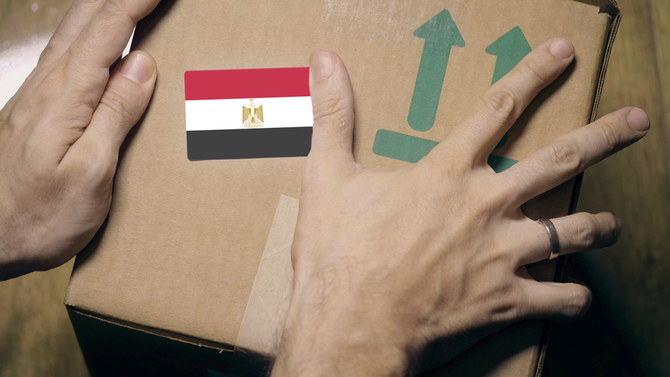
This comes as Egypt’s business optimism among non-oil firms slid to its lowest in over a decade of survey data in October, as only 4 percent of firms gave a positive outlook for the next 12 months. (Shutterstock)
Short Url
Updated 03 November 2022
Follow

Egypt’s non-oil economy remains under strain as PMI stands at 47.6 in October: S&P Global

RIYADH: Egypt’s non-oil economy continues to be under strain amid sliding business sentiment as the country’s Purchasing Managers’ Index stood at 47.7 in October, slightly up from 47.6 in September, according to the latest report from S&P Global.

The rating agency considers a PMI score above 50 marks as growth, while those below 50 signal contraction.

The trend stretches the current sequence of deterioration to just under two years as the headline index was still below its long-run average despite ticking up to the highest since February, the report added.

This comes as Egypt’s business optimism among non-oil firms slid to its lowest in over a decade of survey data in October, as only 4 percent of firms gave a positive outlook for the next 12 months.

S&P Global noted that rising prices, supply problems and weak global demand also served to drive new business and activity lower.

“Egypt remains heavily impacted by the war in Ukraine, particularly in the tourism sector, as well as industries constricted by the government’s import ban in place since March in a bid to conserve US dollar reserves,” said David Owen, an economist at S&P Global Market Intelligence.

He added: “Several businesses reported that import restrictions had pushed material prices even higher, adding to upticks in energy and food commodity prices recorded since the war began.”

The inability of firms to acquire inputs, in addition to the rise of the costs of raw materials and the lack of new orders, contributed to the decrease in output and the contraction in purchasing activity in October, despite it being a softer drop than the month before.  

On the other hand, suppliers’ delivery times witnessed an improvement for the first time in a year showing the economy’s modest recovery since the start of the Russia-Ukraine war.  

As for Egypt’s foreign reserves, the country’s saw an increase by $214 million month-on-month at the start of the third quarter compared to a $56 million increase the month before, according to the Central Bank of Egypt. 

Egypt’s foreign reserves reached $33.4 billion in October up from $33.197 billion in September marking the first increase since the beginning of the war in Ukraine, noted the CBE.



Closing Bell: Saudi main market ends week in red at 11,189

Updated 9 sec ago
Follow

Closing Bell: Saudi main market ends week in red at 11,189

RIYADH: Saudi Arabia’s Tadawul All Share Index closed lower at the end of the trading week on Thursday, falling 1.34 percent, or 152.54 points, to finish at 11,188.73. 

The benchmark index opened at 11,320.52 and trended lower throughout the session, finishing well below its previous close of 11,341.27.  

Market breadth was sharply negative, with only 28 gainers compared with 236 decliners. Trading activity saw a volume of 239 million shares exchanged, with total turnover reaching SR5.5 billion ($1.47 billion). 

In the parallel market, Nomu closed higher, rising 0.23 percent to 23,865.95, although decliners continued to outnumber advancers. The MT30 index closed at 1,508.60, down 1.46 percent, shedding 22.38 points by the end of the session. 

Among the session’s top gainers, Dar Al Majed Real Estate Co. led advances, rising 5.43 percent to close at SR9.91. 

Al Aziziah REIT Fund added 4.67 percent to SR4.48, while Al Majed Oud Co. gained 2.81 percent to SR161.20. AFG International Co. advanced 2.45 percent to SR17.17, and Al Mawarid Manpower Co. rose 1.37 percent to SR125.70.

On the losing side, Saudi Research and Media Group posted the steepest decline, falling 6.88 percent to SR107. Cherry Trading Co. dropped 6.23 percent to SR28.88, while Saudi Arabian Mining Co. slipped 5.41 percent to SR72.55.  

Almasane Alkobra Mining Co. declined 5.38 percent to SR102, and Power and Water Utility Co. for Jubail and Yanbu ended 4.56 percent lower at SR31.36. 

On the announcements front, Saudi Industrial Investment Group released its interim financial results for the twelve-month period ended Dec. 31, 2025, reporting a return to profitability on an annual basis despite posting a quarterly loss.  

The company recorded a net loss of SR104 million in the fourth quarter, compared with a net profit of SR201 million in the same quarter of the previous year, which it attributed mainly to lower selling prices, higher operating costs, and increased general and administrative expenses.  

For the full year, however, the group posted a net profit attributable to shareholders of SR197 million, compared with SR161 million a year earlier, supported by higher sales volumes and improved operational performance at several subsidiaries. The stock last traded at SR14.77, down 3.59 percent. 

Separately, Saudi Exchange Co. announced the approval of a request by Merrill Lynch Kingdom of Saudi Arabia to terminate its market-making activities for Saudi Arabian Oil Co., effective Feb. 8.

The exchange said the termination relates specifically to the market-making agreement for Saudi Aramco shares and was approved in line with applicable market-making regulations.