ISLAMABAD: Pakistan said Tuesday that most victims of the unprecedented floods that struck the country last summer have now returned to their homes, with only a small portion still living in makeshift camps in the worst-hit, southern Sindh province.
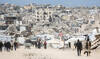
The country’s disaster management agency said the latest data shows that slightly less than 50,000 people are currently staying in camps in Sindh, compared to half a million who were living in tents there in September.
The record-breaking floods — which were worsened by climate change, that hit Pakistan last summer — killed 1,735 people and displaced 33 million. In Sindh alone, the floods affected 12 million people and killed 796.
Pakistan has asked the international community to scale up aid for flood survivors, now threatened by the upcoming winter. Last month, the World Bank estimated that the floods caused $40 billion in damages.
Harsh winter weather could worsen the misery of flood victims — if food and other supplies were not delivered quickly.
Cash-strapped Pakistan was already facing a serious financial crisis before the abnormally heavy monsoon rains hit in mid-June, triggering the floods that at one point left a third of the country’s territory submerged.
The UN Office for the Coordination of Humanitarian Affairs said in a report Tuesday that there is still standing water in the provinces of Balochistan and Sindh.
And though the floods badly affected the country’s crops, Tuesday’s report said 98 percent of the area for wheat cultivation remains available for the next planting season — a positive sign as Pakistan has already started importing wheat to avoid any food shortage.


![]()

Most Pakistani flood victims back home, few remain in camps

Short Url
https://arab.news/byyma
Most Pakistani flood victims back home, few remain in camps
- Official statistics reveal slightly less than 50,000 people are currently staying in camps in Sindh
- A UN report says 98 percent of the area for wheat cultivation is available for the next planting season
Latest updates




© 2026 SAUDI RESEARCH & PUBLISHING COMPANY, All Rights Reserved And subject to Terms of Use Agreement.