



ISLAMABAD: Pakistanis say their Hajj and Umrah pilgrimage experience has been made “very easy” after Saudi Arabia introduced Urdu-language sign boards at the two Holy Mosques in Makkah and Madinah, saying it had reduced the dependency on tour guides.
The Saudi Ministry of Hajj and Umrah has launched several initiatives under the Vision 2030 scheme to facilitate pilgrims from around the world. This year, Saudi authorities included directional, identification, and cautionary informational instructions in the Urdu language on a majority of sign boards at the Holy Mosques in Makkah and Madinah at the start of Hajj and Umrah season for the ease of pilgrims from Pakistan and India.
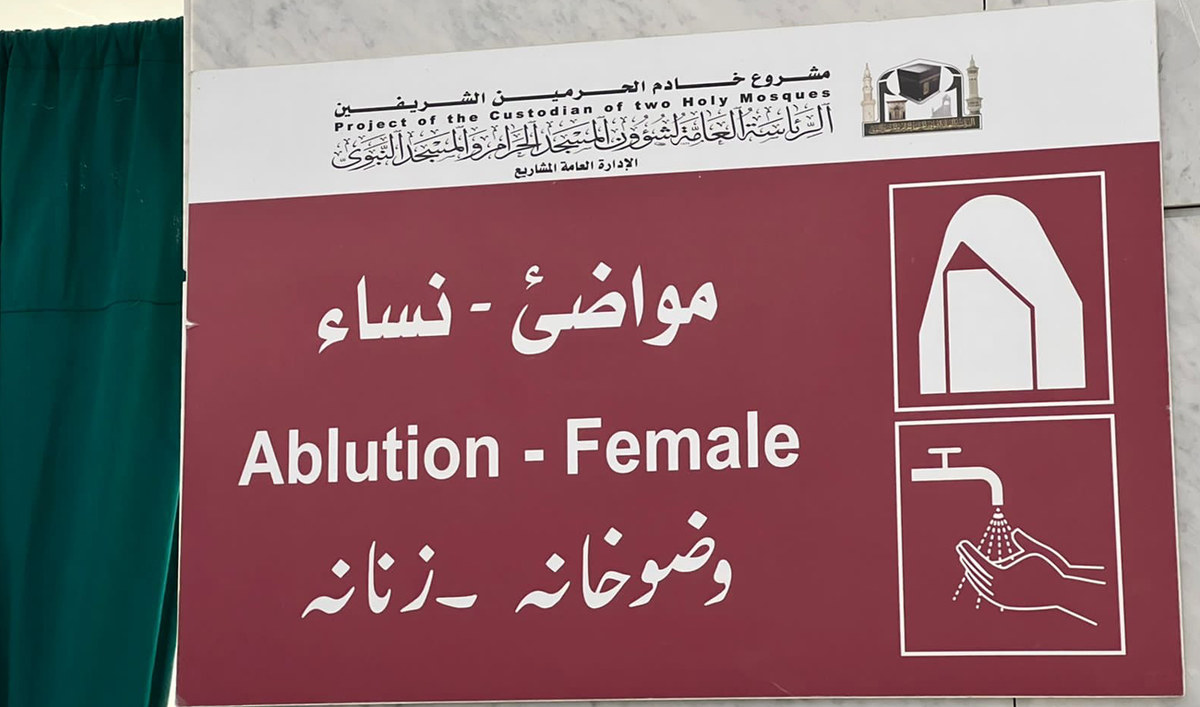
A photo of an information signboard which include instructions in Urdu along with Arabic and English seen at the Grand Mosque in Makkah, Saudi Arabia on October 31, 2022. (Photo Courtesy: Ayesha Gul)
Indonesia and Pakistan, the largest Muslim-majority countries by population, send the most pilgrims to Saudi Arabia.
According to statistics compiled by the Saudi authorities, about 200,000 Pakistanis performed Umrah between July 30 to October 4, 2022, the second highest number of pilgrims from a single country after Indonesia.
Hamzah Gilani, a spokesperson for the Pakistani consulate in Jeddah, said the Saudi government’s decision to start using Urdu on formal signage at the Holy Mosques was a “fantastic boon” for Pakistani and Indian pilgrims.
“This is a great indication of the Saudi government’s commitment to extend facilities to its expatriate population,” Gilani said.
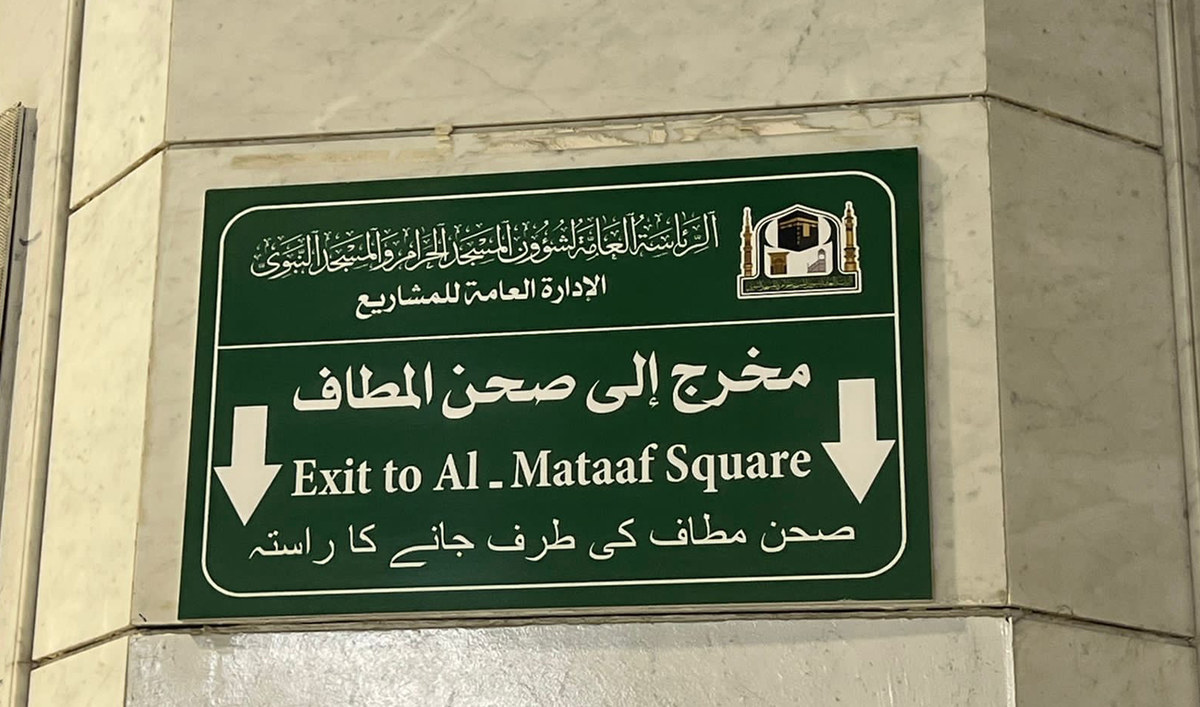
A photo of an information signboard which include instructions in Urdu along with Arabic and English seen at the Grand Mosque in Makkah, Saudi Arabia on October 31, 2022. (Photo Courtesy: Ayesha Gul)
Ayesha Gul from Rawalpindi told Arab News she came for Umrah alone and had been “worried.”
“But these instruction boards in the Urdu language made the pilgrimage very easy as we even don’t need to ask someone for directions,” she said on the phone from Makkah.
Saudi authorities announced last month women no longer require a male guardian to travel to Saudi Arabia to perform the Umrah pilgrimage.
Gul said Saudi authorities had always been “very cooperative” at the airport and everywhere she went on previous trips to the Kingdom but language had remained a problem, which had now been solved by new Urdu instruction boards installed at every step at the Grand Mosque.
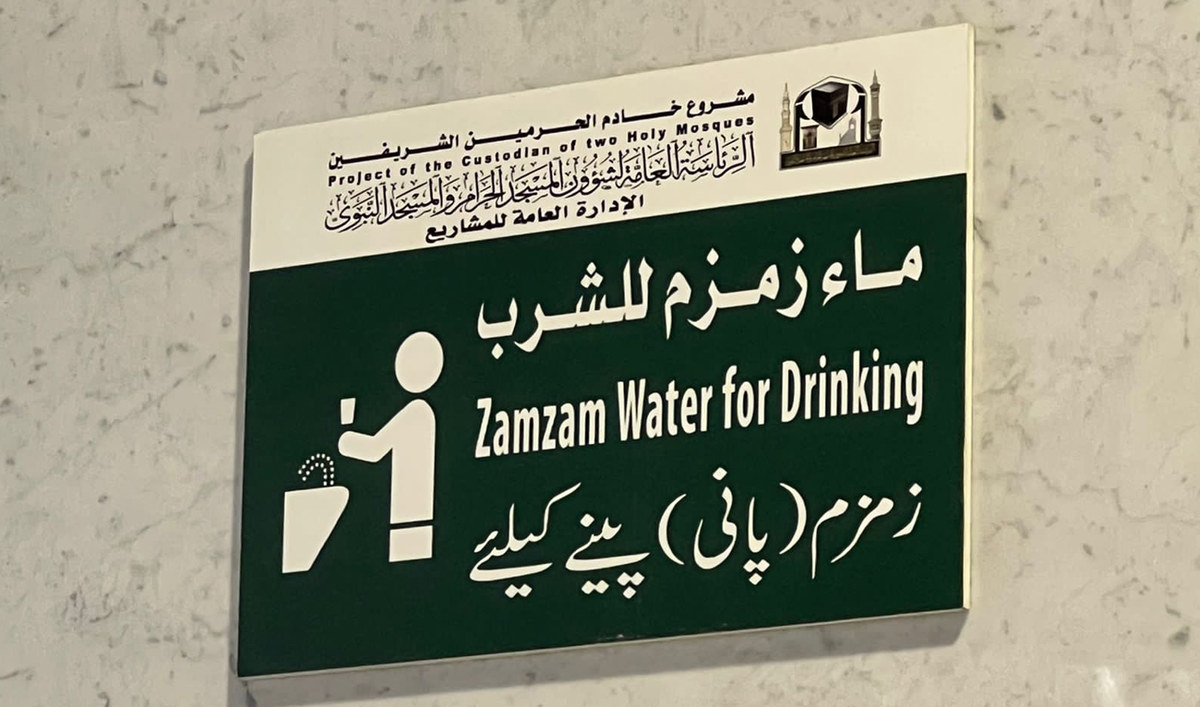
A photo of an information signboard which include instructions in Urdu along with Arabic and English seen at the Grand Mosque in Makkah, Saudi Arabia on October 31, 2022. (Photo Courtesy: Ayesha Gul)
Another pilgrim from Gujrat, Javed Ahmed, who performed Umrah this year after a gap of five years, said he had seen a lot of changes and facilities had been increased “manyfold,” including digital mobile apps and instruction boards in the Urdu language to facilitate pilgrims.
“A lot of facilities have been introduced this time which have made the pilgrimage easy for us,” he told Arab News. “This time there are also mobile applications that supported the Urdu language and guide pilgrims and these instructions in Urdu are also very helpful.”
Jamal Khan from Peshawar said it was a pleasant surprise for him to find instructions in Urdu at the Grand Mosque in Makkah.
“I was not expecting this as mostly it used to be in Arabic and English but it was a surprise for me to find Urdu on every board all across the Haram,” he told Arab News.
“We are thankful to Saudi Arabia for including Urdu in the instruction boards as it not only makes our movement easy in The Grand Mosque but also gives us a sense of pride to find our national language at this holy place.”
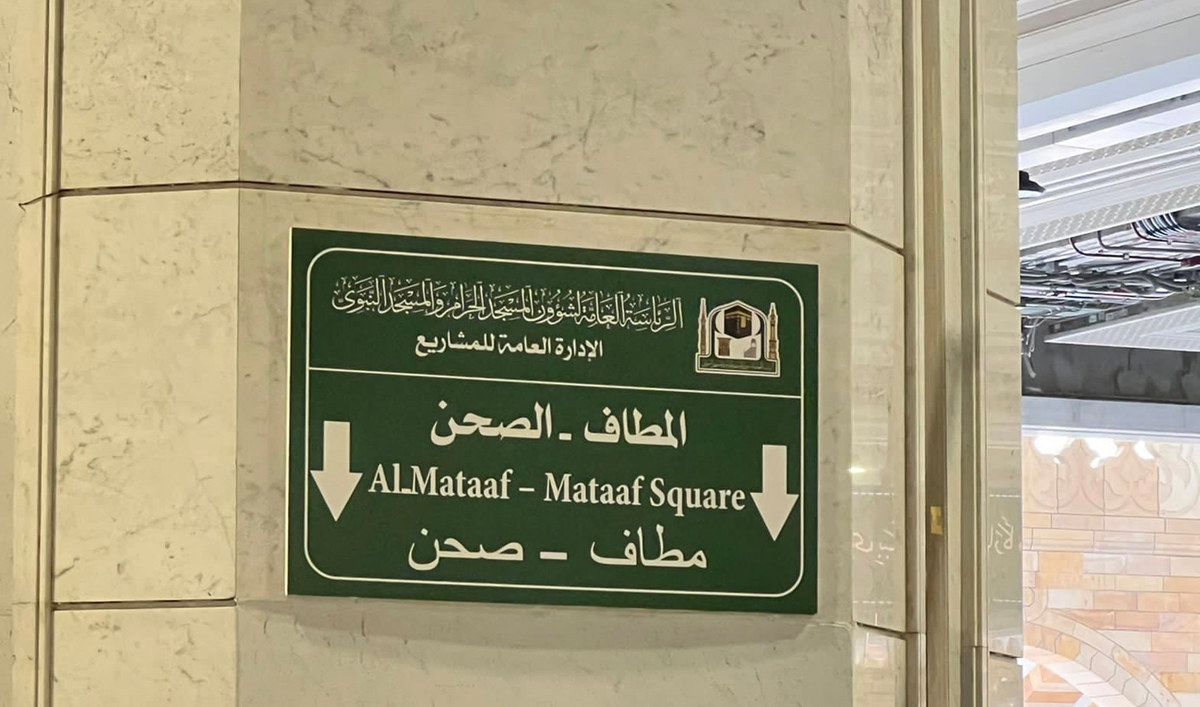
A photo of an information signboard which include instructions in Urdu along with Arabic and English seen at the Grand Mosque in Makkah, Saudi Arabia on October 31, 2022. (Photo Courtesy: Ayesha Gul)
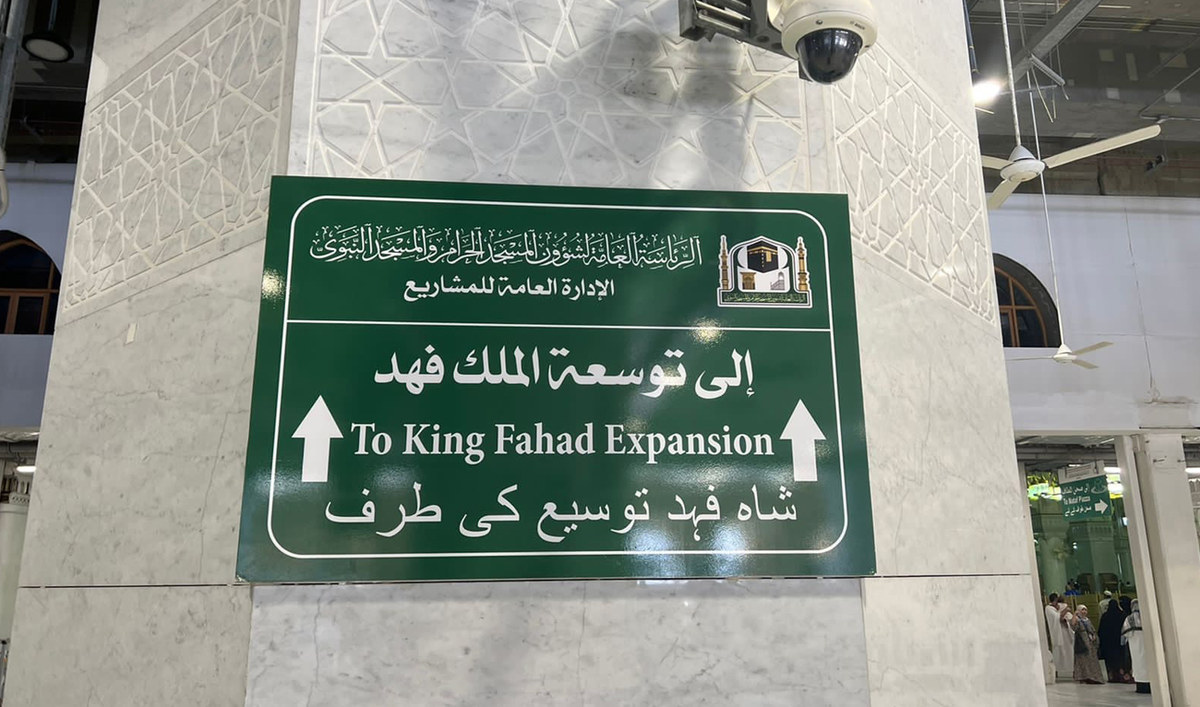
A photo of an information signboard which include instructions in Urdu along with Arabic and English seen at the Grand Mosque in Makkah, Saudi Arabia on October 31, 2022. (Photo Courtesy: Ayesha Gul)


