

Apple first major investor in Riyadh’s new integrated logistics airport zone 

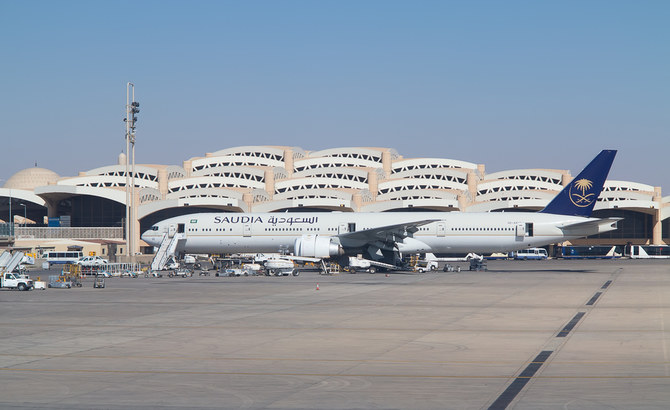
The new integrated logistics zone will contribute to raising Saudi Arabia’s cargo volume from 0.5 million tons today to 4.5 million tons by 2030. (Shutterstock)
Short Url
Updated 01 November 2022
Follow

Apple first major investor in Riyadh’s new integrated logistics airport zone 

RIYADH: The new integrated logistics zone at Riyadh’s King Khalid International Airport which will serve Asia, Africa and Europe, has welcomed Apple as its first major investor.

The integrated logistics zone was launched on Oct. 31 by Saleh Al-Jasser, Saudi Arabia’s transport minister and chairman of the General Authority for Civil Aviation. 

“We are pleased to inaugurate the Kingdom’s first integrated logistics zone, a step that will be followed by the inauguration of logistics zones across the homeland, turning it into a logistics hub connecting three continents. This step goes in line with the objectives of the National Transport and Logistics Strategy,” said Al-Jasser during the event.  

The minister said that the agreement with Apple was concluded when Crown Prince Mohammed bin Salman visited California in 2018 and met Apple’s CEO Tim Cook.  

Al-Jasser pointed out that the opening of this facility comes as a part of the investment ministry’s previously announced plan to launch multiple economic zones.  

According to a press release, the new integrated logistics zone will contribute to raising Saudi Arabia’s cargo volume from 0.5 million tons today to 4.5 million tons by 2030, in alignment with the Kingdom’s Vision 2030.  

“This zone itself is unique. It encompasses best-in-class elements, enabling an optimal logistics and supply chain and environment. The integrated element of the zone means that all stakeholders, their systems, and transactions speak to each other in a seamless and transparent way,” Apple’s vice president of operations for Europe, the Middle East, India, and Africa Cathy Kearny said.

Asharq TV, quoting Al-Jasser, reported that the special integrated logistics zone will offer several privileges which include major tax advantages, including exemption from corporate tax to “zero tax” for a period of 50 years, exemption from VAT, deferment of customs duties, in addition to initiatives related to employment.

He added that these privileges will be provided to all investors, and it will add up to SR66 billion ($17.56 billion) to the national economy by 2030.

Apart from Apple, another 20 companies are also in talks to invest in the zone, Al-Jasser noted. 


Global Markets: Asian stocks fall as Iran war keeps oil at $100, upends rate outlook

Updated 10 sec ago
Follow

Global Markets: Asian stocks fall as Iran war keeps oil at $100, upends rate outlook

  • Asian stocks set for consecutive weeks in the red
  • Traders rapidly cut Fed rate cut ‌wagers for the year
  • Investors focus on oil prices, inflation risks

SINGAPORE: Asian stocks slumped on Friday, poised for a second straight weekly decline as fast-dwindling hopes of a resolution to the US ​and Israel’s war with Iran kept oil prices aloft, casting a shadow over global markets and spurring inflation fears.

The US dollar has become the safe-haven of choice during the tumult, putting most other currencies under pressure. The dollar was set for a second consecutive week of gains and is up 2 percent since the war broke out at the end of February.

The yen hit its weakest level since July 2024 at 159.69 per US dollar on Friday as Japan warned that it was ready to take action to protect against yen declines. It was last at 159.41.

Analysts said the bar for intervention is higher this time around as any intervention now could prove futile in the face of the relentless dollar buying.

In ‌Asia, MSCI’s broadest ‌index of Asia-Pacific shares slipped 1 percent, on course for a 2.2 percent decline for ​the week. ‌Japan’s ⁠Nikkei fell ​1.4 percent, ⁠while tech-heavy South Korean stocks slid nearly 2 percent.

European futures point to a slightly higher open but may struggle to hold those gains on weak sentiment.

Oil prices remained close to $100 per barrel level, although they eased a bit on Friday after US issued a 30-day license for countries to buy Russian oil and petroleum products currently stranded at sea.

Brent futures were at $100.70 a barrel at 9:47 a.m. Saudi time, while West Texas Intermediate crude was at $95.59. They were both hovering around $60 levels at the start of 2026.

“Headlines are coming at the market like water from a fire hose, which is impacting the price of oil, and consequently, financial markets,” said Mitch ⁠Reznick, group head of fixed income at Federated Hermes.

“The question remains to what extent ‌we are caught in the $80-plus range even as the headlines become ‌banal with their frequency and contradictions.”

With Iran stepping up attacks across the Middle ​East as its new Supreme Leader Mojtaba Khamenei vowed to ‌keep the Strait of Hormuz shipping lane closed, investors are bracing for a prolonged conflict and higher oil prices.

The ‌spectre of rising inflation has led markets to rapidly reprice what they expect from central banks this year, with traders now anticipating just 20 basis points of easing from the Federal Reserve compared to 50 bps of cuts priced in last month.

The selloff in global stocks and bonds shows no signs of easing. US stocks fell sharply overnight and the two-year Treasury yields, which typically move in ‌step with Fed interest rate expectations, scaled a six-month high on Thursday.

“With the possibility of higher oil prices still elevated, investors should be prepared for continued volatility and potentially further ⁠downside in the near ⁠term,” said Vasu Menon, managing director of investment strategy at OCBC in Singapore.

Shifting rates outlook

Jose Torres, senior economist at Interactive Brokers, said the impact of rising oil prices on corporate margins, inflation expectations, rate-cut prospects and yields is sparking volatility, leaving participants with few places to hide.

“Indeed, sinking optimism about Fed rate reductions amid strengthening cost pressures is weighing on traditional safe havens such as silver, gold, and government debt.”

The two-year note yield eased 3 bps to 3.730 percent after hitting its highest level since August 22 on Thursday. The yield has gained 35 bps in the two weeks since the war started.

The yield on the longer-dated 30-year bond has risen 24 bps this month.

Investor focus will switch to a slate of policy meetings next week with the Fed, the Bank of Japan, the European Central Bank and the Bank of England all due to meet, with most expected to keep rates unchanged. The Reserve Bank of Australia is broadly expected to hike ​rates next week.

In currencies, the euro was steady ​at $1.15035, on course for a weekly decline of nearly 1 percent. The dollar index was at 99.816, set for about a 1 percent weekly advance.
Gold was 0.4 percent higher at $5,101 per ounce on Friday but set for a 1 percent drop for the week.