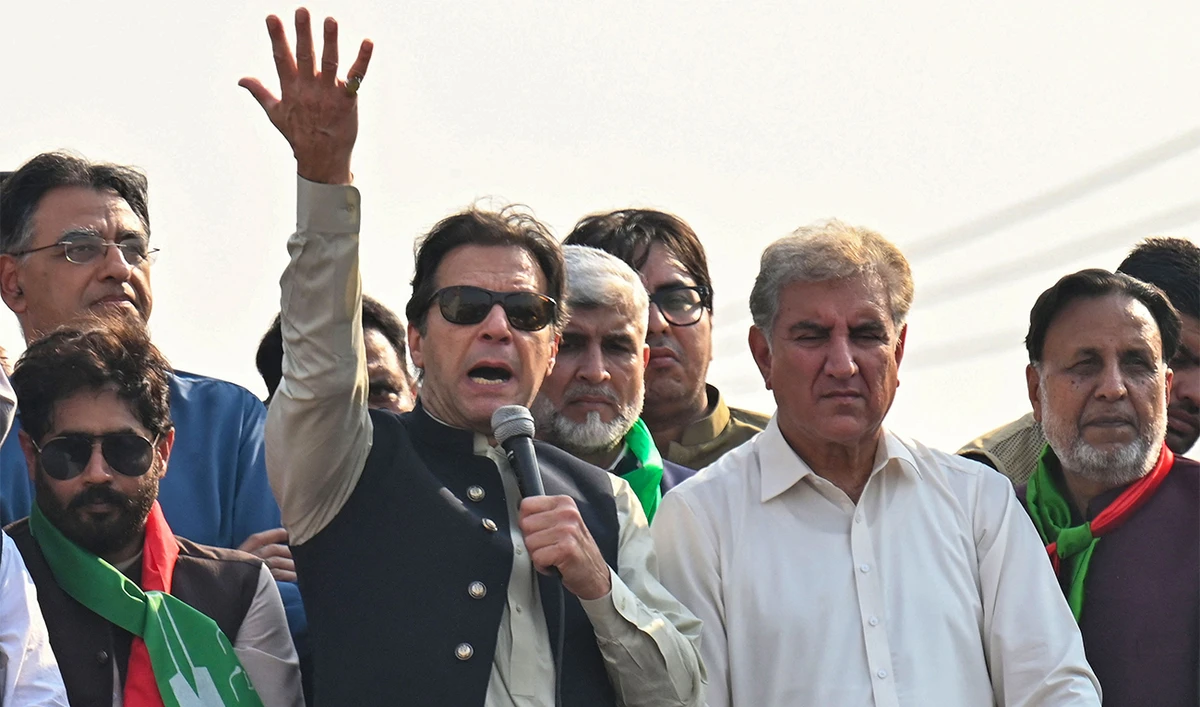
- The development comes as former premier marches toward Islamabad seeking fresh elections
- Khan and his supporters are set to cover 70-kilometer distance to reach Kamoke Saturday night
ISLAMABAD: Former prime minister Imran Khan on Saturday demanded Army Chief General Qamar Javed Bajwa take action against officials of Pakistan’s Inter-Services Intelligence (ISI) agency, who he says were allegedly involved in custodial torture of his aide, Senator Azam Swati.
Swati was arrested earlier this month by Pakistan’s Federal Investigation Agency in a case registered against him for a tweet against Army Chief General Qamar Javed Bajwa. The opposition senator is currently out on bail.
Khan, who has set out on a march on the capital from eastern city of Lahore, has been demanding snap elections in the country since his ouster in a parliamentary no-trust vote in April.
The former premier says he was ousted as part of a United States-backed conspiracy for pursuing an independent foreign policy for Pakistan — an allegation denied by Washington and Khan’s opponents, including PM Shehbaz Sharif.
Addressing supporters on in Lahore’s Shahdara area, Khan said custodial torture was banned and prosecuted worldwide.
“When I spoke against custodial torture on Shahbaz Gill then a contempt of court case was initiated against me. Had action been taken at the time, Senator Azam Swati would not have been subjected to custodial torture,” he told a charged crowd.
“Azam Swati was tortured in front of his family members. General Bajwa should take action against those two officers, Major General Faisal and Brig. Fahim.”

Khan’s comment was a reference to ISI director-general for counter intelligence, Major General Faisal Naseer, and the agency’s Islamabad sector commander, Brig. Fahim Raza, who Swati has said were behind his custodial torture.
The ISI or the army have not commented on the statement by Swati or Khan’s remarks at the rally.
Khan, once widely believed to have been supported by Pakistan’s powerful military establishment, is now considered to have fallen out with the army since his ouster.
The former premier and supporters of his Pakistan Tehreek-e-Insaf (PTI) party have lately been criticizing the Pakistani military, which has ruled the South Asian country for almost half of its 75-year history, and the army chief, for not intervening to block his ouster.
“I came out on road at the age of 70 years for a cause,” Khan told his supporters. “I want to tell them that we are humans not a herd of sheep or goats.”
Khan made similar comments about the two ISI officials in his address with supporters at Lahore’s Liberty Chowk on Friday.
“When I talk of injustice... I today want to name Azam Swati,” he said.
“Azam Swati has named two people. One is Fahim and the other is Faisal. Faisal, since this Dirty Harry has come to Islamabad, he is subjecting people to brutality.”
The comments came a day after ISI chief Lt. Gen. Nadeem Anjum criticized Khan for anti-military remarks and portraying General Bajwa as a “traitor” among his followers. This was the first time in the history of Pakistan that a sitting ISI chief addressed a press talk.
Khan, while kicking off his anti-government march to the capital from Lahore’s Liberty Chowk Friday afternoon, slammed the spy master for addressing what he called a “political” press conference.
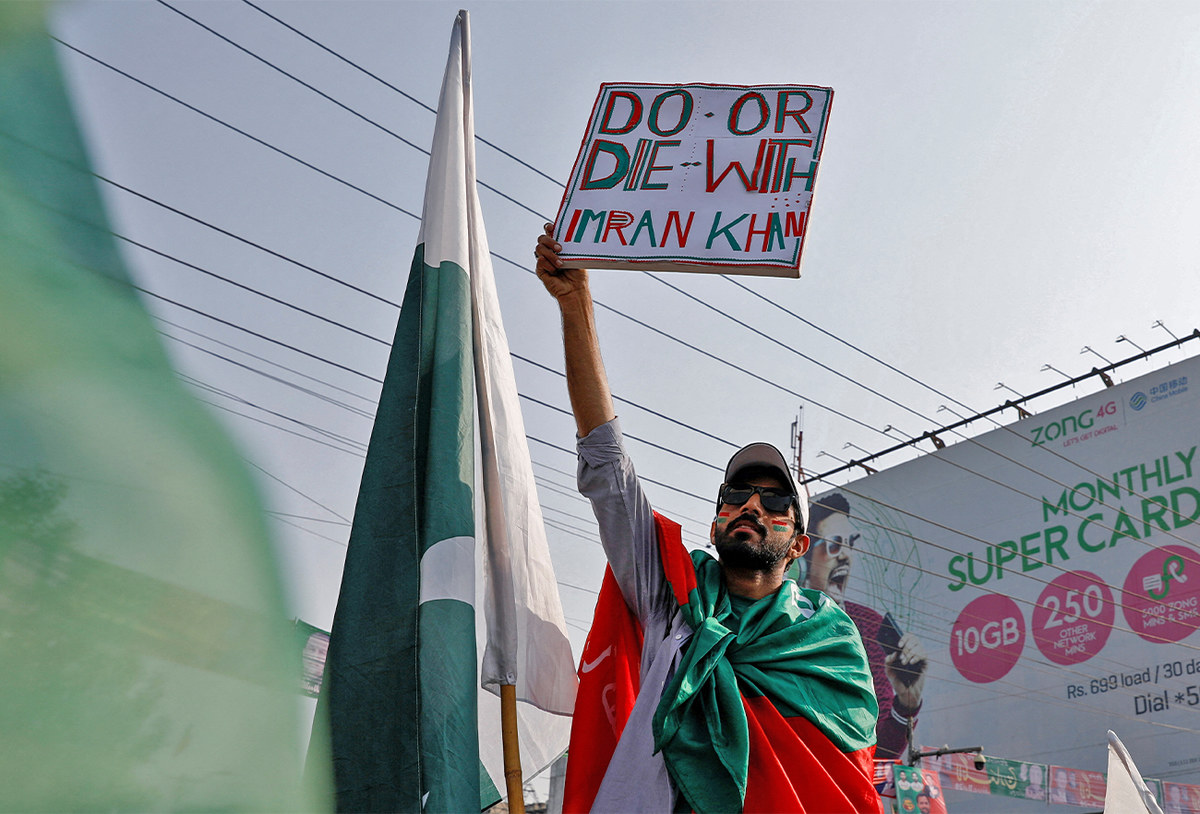
Since his ouster, Khan has been holding rallies across the country to force the government into holding fresh polls. Now, he says he is headed to the capital for a final showdown.
According to Khan’s Pakistan Tehreek-e-Insaf (PTI) party, the long march will reach Islamabad on November 4 after a weeklong journey through the Grand Trunk Road, which many fear could lead to violence in the South Asian country already reeling from a dwindling economy and devastating floods.
Pakistan PM Sharif has also constituted a nine-member committee, headed by Interior Minister Rana Sanaullah, to deal with Khan’s long march to Islamabad, the country’s information ministry said on Saturday.
Other members of the committee are Maryam Aurangzeb, Ayaz Sadiq, Khawaja Saad Rafique and Maulana Asad Mahmood, Qamar Zaman Kaira, Khalid Maqbool Siddiqui, Hanif Abbasi and Mian Iftikhar Husain.
“The committee is established to maintain peace and order and hold political discussions regarding the long march,” the interior ministry said.
Khan’s supporters will begin marching toward Islamabad from Lahore’s Shahdara area and cover a distance on 70 kilometers to reach Kamoke city on the second day of the march on Saturday, Farrukh Habib, the central information secretary of Khan’s party, told Arab News over the phone.
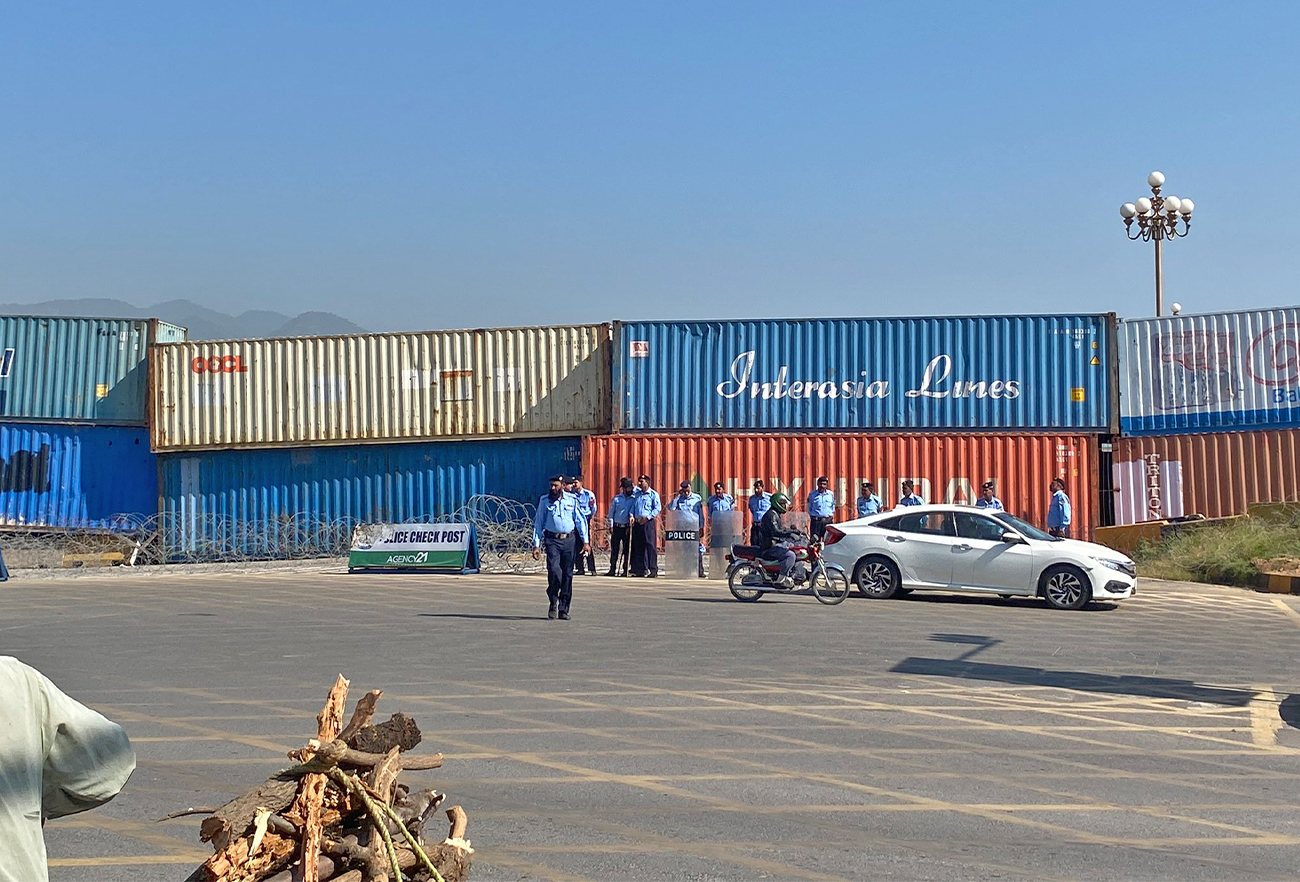
During a Twitter space Friday night, Interior Minister Sanaullah said the government would allow and provide security for the PTI gathering in Islamabad at a place designated by courts, but it would not allow the marchers to enter the capital’s Red Zone, home to several government and diplomatic offices.