

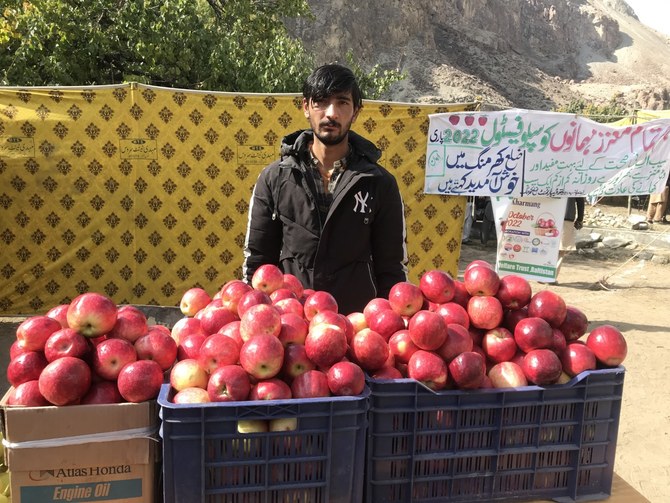

KHARMANG, Gilgit-Baltistan: Hundreds of people gathered in the northern Pakistani district of Kharmang on Thursday for the 3rd annual Suspolo Festival, which celebrates a native variety of apples deemed superior to others because of its color, taste and particularly the aroma.
Pakistan's northern Gilgit-Baltistan (GB) region produces 14 different kinds of apples and has an annual production of around 24,000 tonnes, according to officials and growers.
But the Suspolo variety is found only in Kharmang's Pari valley, where 90 percent of its more than 6,000 populace is associated with apple-farming.
Ghulam Muhammad Saqib, a deputy director at the GB agriculture department, said his department, together with the Kharmang district administration, had been organizing Suspolo Festival to promote the indigenous variety.
“The Suspolo variety is a special, indigenous variety found only in the Kharmang district,” he told Arab News.
"The taste, aroma and the color [of Suspolo apple] is exquisite."
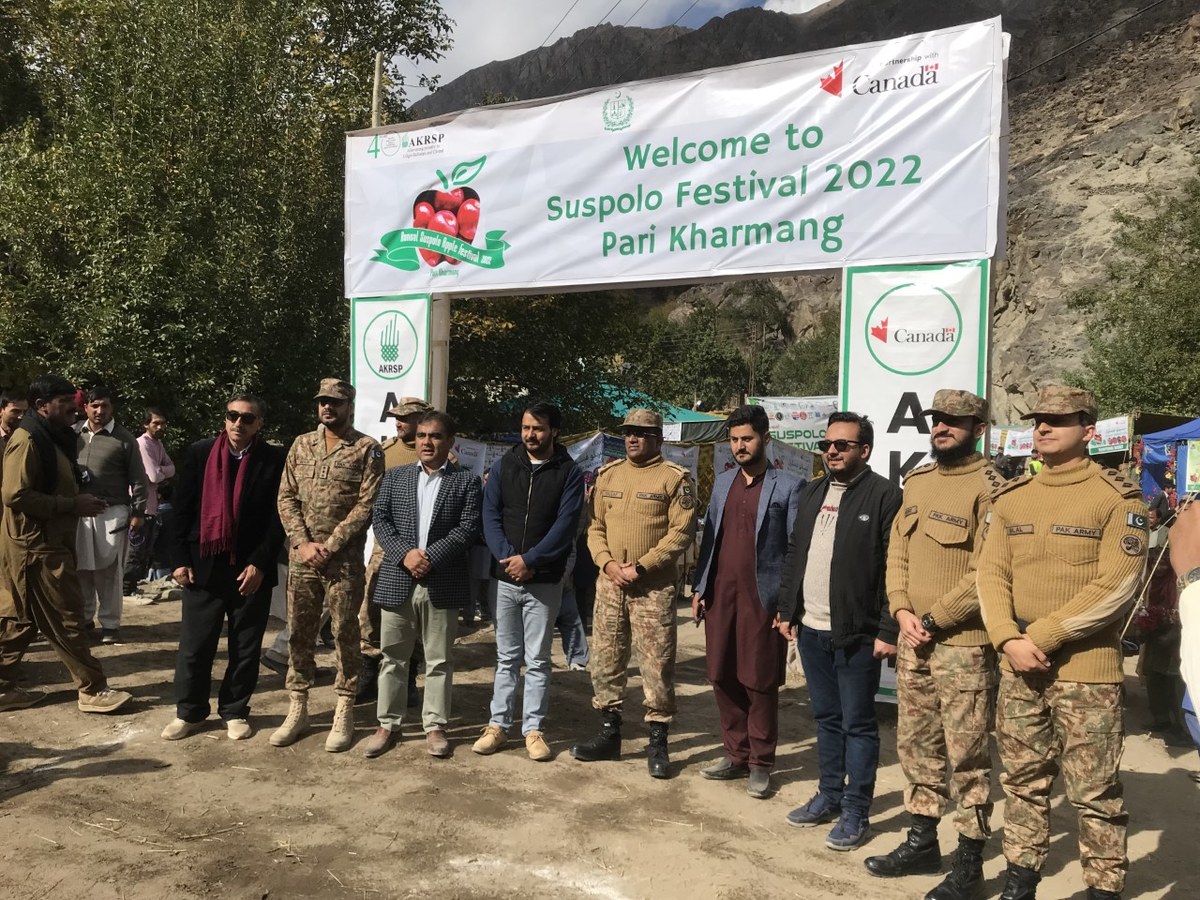
Pakistan Army officials and visitors pose for a group photograph at Suspolo Festival in Kharmang district of Gilgit-Baltistan, Pakistan on October 27, 2022. (AN Photo)
Growers in the valley are happy as the festival, which was held only for a day this year, has been promoting their apple produce and helping them earn more money.
“We have been setting stalls of apples for three years. Because of the festival, our apple [Suspolo] is getting popularity,” Lubna Batool, a woman farmer in her late 30s from the Pari valley, told Arab News.
“Because of the festival, we are earning more; our income is increasing due to high demand.”
Batool said the reason behind the popularity of this unique variety of apple was its aroma.
“If you keep the apple in a room, the whole room is filled with fragrance. And this is also very tasty,” she said.
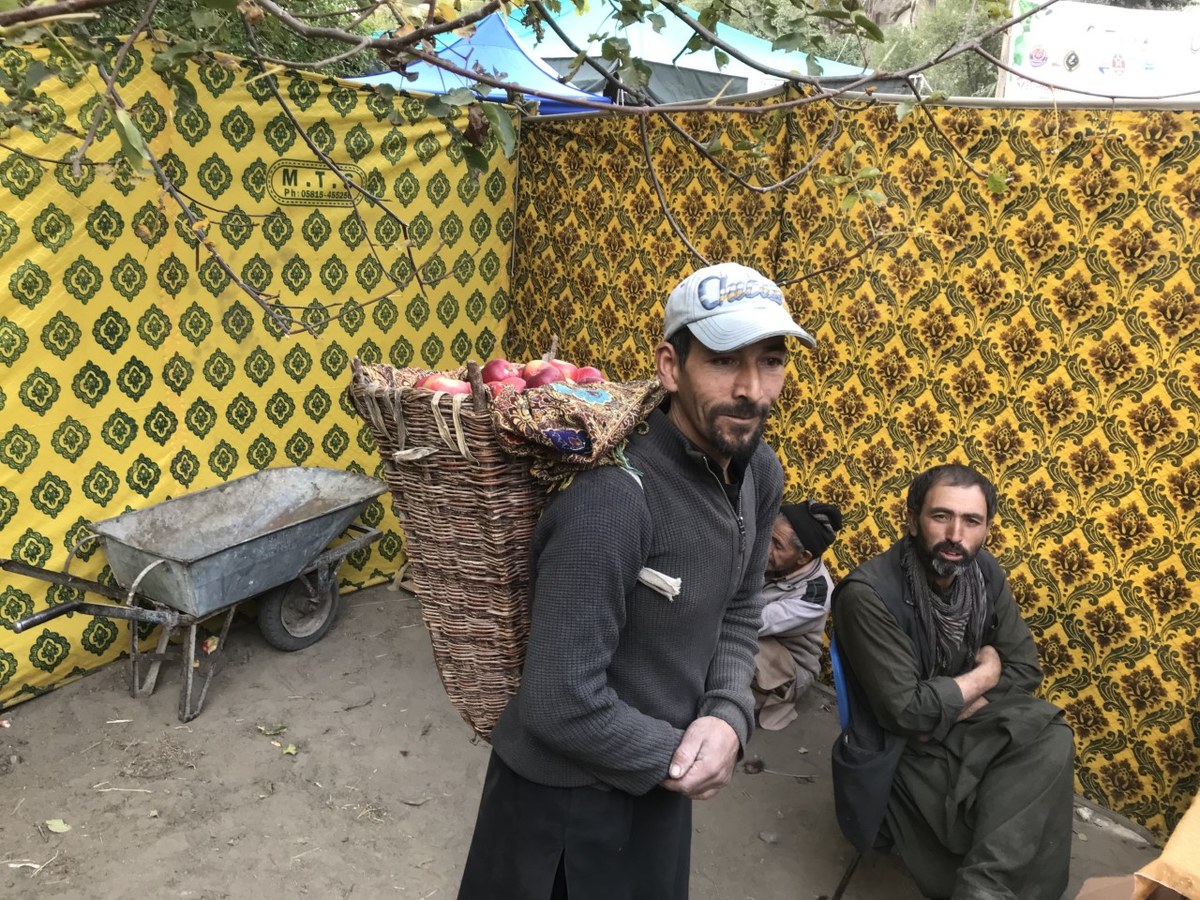
A farmer carrying apples on his back poses for a photograph at Suspolo Festival in Kharmang district of Gilgit-Baltistan, Pakistan on October 27, 2022. (AN Photo)
The taste of the variety compelled many visitors at the festival to purchase the fruit in large quantities.
“I am from Karachi; this is my first trip to Skardu. I have been to Gilgit-Baltistan many times but not to Skardu. This is my first trip to this particular valley. I [found] the festival good,” a 35-year-old man from Karachi, who wished not to be named, told Arab News.
“We have purchased around 60 kilograms from here. We wanted to purchase more, but unfortunately, there are luggage requirements as [we] are going back by air that’s why we purchased 60kg only. But we had a word with a few people and they are going to deliver to Karachi.”
Growers say the festival was had been playing a major role in promoting the local produce.
“The top objective of setting a stall here is marketing the Suspolo [variety]. Secondly, to make the Suspolo accessible to people,” Yasir Parvi, a young farmer told Arab News.
"We have been taking part in Suspolo Festival and because of it, the marketing is going [at its] best."
Musa Ali Hashmi, a senior agriculture officer, said growers had tried to grow this specific variety of apple in other areas too, but they could not succeed.
"Because of three, four things, this apple is considered unique in this region. The first thing is the apple needs daylong [warm] temperatures so that it could absorb maximum heat for color and aroma," Hashmi told Arab News.
"It also needs cold temperatures at night and these qualities are only present on this soil. The quantity of potash in this soil is a little high, because of this, the apple [is different]."
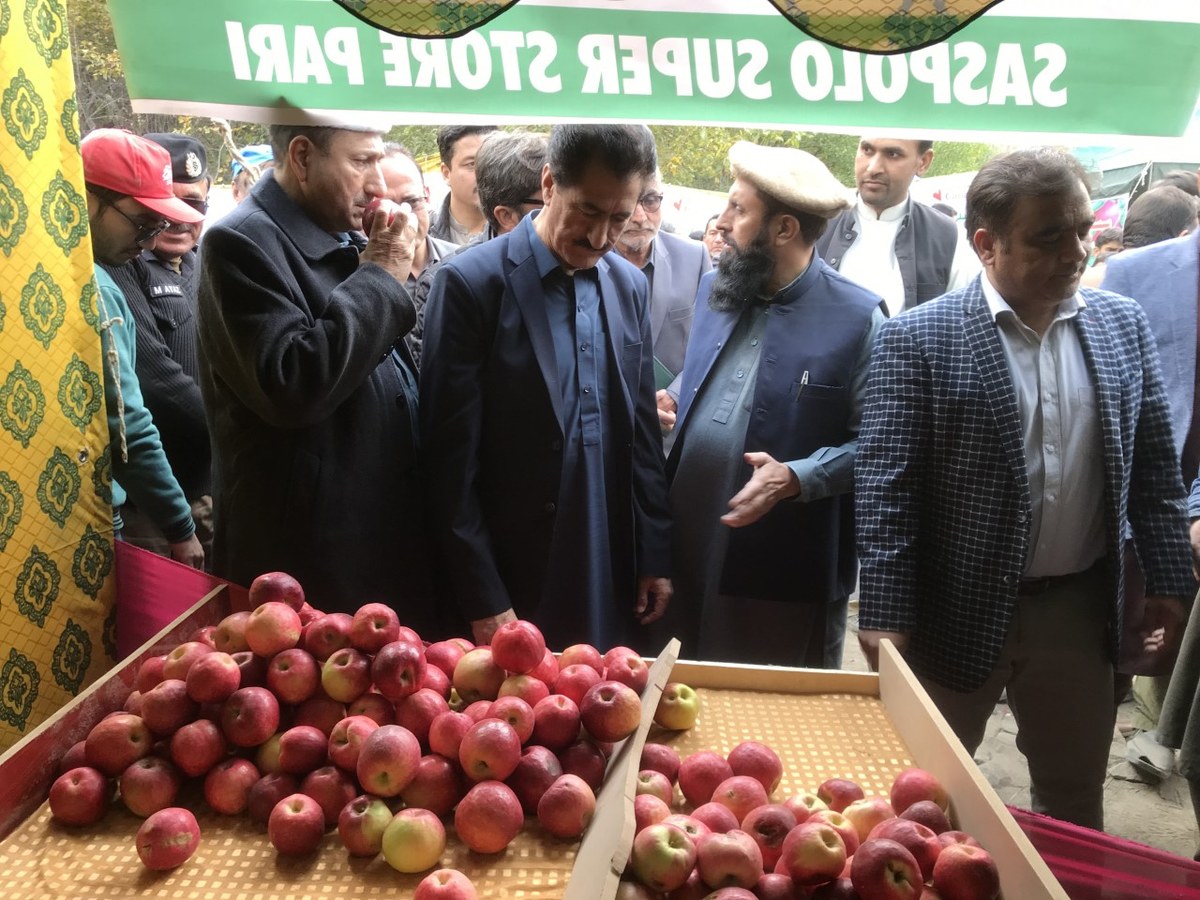
Gilgit-Baltistan Assembly Speaker Syed Amjad Zaidi and others visit different stalls at Suspolo Festival in Kharmang district of Gilgit-Baltistan, Pakistan on October 27, 2022. (AN Photo)
Wazir Ghulam Abbas, a 55-year-old farmer, said the first tree of the Suspolo variety had been sourced from a village in the larger Kashmir region, which now lies in the Indian-controlled part of the Himalayan territory.
The Kashmir region, which GB is a part of, is divided between India and Pakistan since their independence from the British rule in 1947. Both rule part of the region but claim it in full and have fought two of their four wars over it.
“According to our ancestors, there is a village in the Kargil region of India, whose name is Suspolo and the first tree was brought from the Suspolo village and planted here,” he said.
“So, 90 percent of apple trees in the valley are of Suspolo's.”
Initially, Abbas said, members of the Pakistan Army based in the disputed region were their only customers. Others were introduced to the unique variety after the construction of bridges and road infrastructure in the district, he added.


