

UK rules grooming gang members can be deported to Pakistan

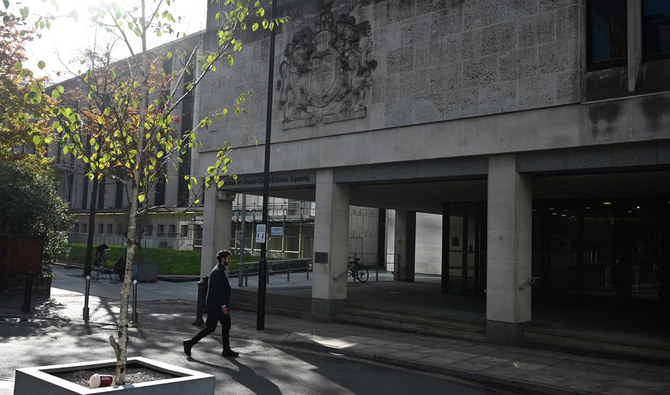
A picture shows the entrance to Manchester Crown Court in Manchester, northwest England, on October 13, 2022. (AFP)
Short Url
Updated 27 October 2022
Follow

UK rules grooming gang members can be deported to Pakistan

  • Court rejected appeal against deportation by two members of a gang jailed a decade ago for grooming young girls for sex
  • Adil Khan and Qari Abdul Rauf were jailed in 2012 as part of a gang of nine men of Pakistani and Afghan origin living in Rochdale

LONDON: A UK court Wednesday rejected an appeal against deportation to Pakistan by two members of a gang jailed a decade ago for grooming young girls for sex in northern England.

In a ruling by an immigration tribunal, judges said there was a "very strong public interest" in removing the men -- Adil Khan, 51, and Qari Abdul Rauf, 52 -- from the UK after they mounted a long legal battle against deportation.

They were jailed in 2012 as part of a gang of nine men of Pakistani and Afghan origin living in the town of Rochdale in northern England.

The gang members received sentences of up to 19 years for conspiracy to engage in sexual activity with children under the age of 16 and other offences.

The gang targeted white British girls as young as 13, repeatedly raping them and passing them to other men for sex.

This case was part of a series of trials of similar grooming gangs in other English cities including Oxford.

Both Khan and Rauf had been Pakistani citizens and acquired British citizenship through naturalisation. They were finally deprived of British citizenship in 2018, along with another gang member.

In a long-running test case, the men contested their deportation on human rights grounds, citing the right to a private and family life and the fact that both had renounced Pakistani citizenship.

Both men were released several years ago, after serving a portion of their sentences, and were reportedly living in Rochdale, close to their victims.

Khan, who got a 13-year-old girl pregnant, told the tribunal he wanted to be a "role model" for his son -- prompting judges to say he showed a "breathtaking lack of remorse".


Pakistan launches double-decker buses in Karachi after 65 years to tackle transport woes

Updated 31 December 2025
Follow

Pakistan launches double-decker buses in Karachi after 65 years to tackle transport woes

  • Karachi citizens will be able to travel in double-decker buses from Jan. 1, says Sindh government
  • City faces mounting transport challenges such as lack of buses, traffic congestion, poorly built roads

ISLAMABAD: The government in Sindh province on Wednesday launched double-decker buses in the provincial capital of Karachi after a gap of 65 years, vowing to improve public transport facilities in the metropolis. 

Double-decker buses are designed to carry more passengers than single-deck vehicles without taking up extra road space. The development takes place amid increasing criticism against the Sindh government regarding Karachi’s mounting public transport challenges and poor infrastructural problems. 

Pakistan’s largest city by population faces severe transportation challenges due to overcrowding in buses, traffic congestion and limited bus options. Commuters, as a result, rely on private vehicles or unregulated transport options that are often unsafe and expensive.

“Double-decker buses have once again been introduced for the people of Karachi after 65 years,” a statement issued by the Sindh information ministry said. 

Sindh Transportation Minister Sharjeel Inam Memon and Local Government Minister Syed Nasir Hussain Shah inaugurated the bus service. The ministry said the facility will be available to the public starting Jan. 1. 

The statement highlighted that new electric bus routes will also be launched across the entire province starting next week. It added that the aim of introducing air-conditioned buses, low-fare services, and fare subsidies is to make public transport more accessible to the people.

The ministry noted that approximately 1.5 million people travel daily in Karachi using the People’s Bus Service, while around 75,000 passengers use the Orange Line and Green Line BRT services.

“With the integration of these routes, efforts are being made to benefit up to 100,000 additional people,” the ministry said.