NEW YORK CITY: Members of the UN Security Council on Tuesday expressed dismay at the ongoing hostilities in northwestern Syria that in the past two months alone have caused the deaths of more than 90 civilians, including 35 children.
This, a cholera outbreak across all of the country’s governorates, and rising fuel prices that are forcing families “to choose between keeping warm or eating” have further increased the humanitarian needs in the war-ravaged country to the point where they have reached their highest-ever levels, according to the latest UN report.
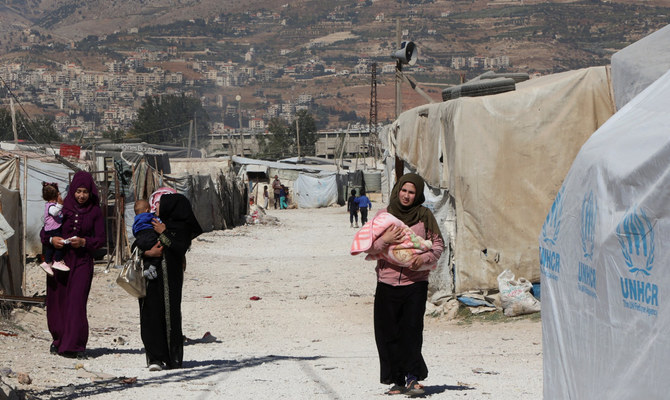
As Syrians once again prepare for a bitterly cold winter, 6 million people need assistance to survive, a figure that has grown by 30 percent since last year.
Levels of severe food insecurity are “staggering,” according to UN Secretary- General Antonio Guterres, who said Syrians can now only afford one-sixth of the amount of food they could buy in 2019.
During a Security Council meeting to discuss the report on the latest developments in Syria, members also said they were “appalled” by the number of detainees in Syrian prisons who are “tortured and killed on a daily basis,” and by the number of enforced disappearances in the country.
They called on warring parties to stop politicizing the UN-facilitated Constitutional Committee and return to serious negotiations in line with Resolution 2254, which includes calls for the release of all those who have been arbitrarily detained, a nationwide ceasefire, unhindered humanitarian access to all areas and people in need, the voluntary return of refugees to their homes, and free elections in accordance with a new constitution.
Geir Pedersen, the secretary-general’s special envoy for Syria, lamented the fact that the political process so far has not “delivered for the Syrian people, and they continue to suffer not least from acute violence.”
He said that although a “strategic stalemate” persists across the country the conflict remains very active, with infighting between armed opposition groups, including Security Council-listed terrorist group Hayat Tahrir Al-Sham and Daesh, along with continuing pro-government airstrikes in Idlib and Azaz in the northwest, and violence in the northeast where there are frequent drone strikes and mutual shelling by the Syrian Democratic Forces, supported by Turkey, and armed opposition groups. In addition, Israeli strikes have hit targets in Syria, including at Damascus and Aleppo international airports.
This violence persists at a time when Syrians are enduring what Pedersen described as “the worst economic crisis since the war began.” He warned that “it will only get worse this winter for the vast majority.”
The envoy called for efforts to provide lifesaving assistance to be ramped up and urged all parties to grant humanitarian workers unfettered access to areas and people in need.
The issue of detainees also figured prominently in the secretary-general’s report, and Pedersen said the UN continues to receive reports of arbitrary arrests throughout Syria.
“Meanwhile, six months after the presidential amnesty decree, there is nothing new to report,” he added. “Despite our continued engagement, official information is not forthcoming, nor has independent monitoring been facilitated.
“On this, and more generally, families stress the concerns that arise from a lack of transparent communication and the vulnerabilities and lack of confidence that this gives rise to.”
Pedersen previously described engagement on issues of abductees, detainees and missing persons as important “confidence-building measures” that are essential for any serious return to diplomacy.
He has also discussed the efforts of his office to facilitate contacts between the parties to the Constitutional Committee — from the government, the opposition and civil society — with the aim of reconvening the committee in Geneva before the end of the year.
The Syrian government recently refused to take part in a new round of talks, apparently because Russia objected to Geneva as the choice of venue. Moscow has said the Swiss capital cannot be said to be an impartial actor. Switzerland has supported EU sanctions on Russia since its invasion of Ukraine on Feb. 24. The UK and the US accuse Russia of stalling the work of the committee.
Notwithstanding the disagreements over the venue for the meetings, Pedersen observed that the real problem in reconvening the committee is a lack of progress on issues of substance.
During previous sessions of the Constitutional Committee, the members have not been able to engage in any meaningful discussions about their amendments to proposals on constitutional principles.
Pedersen said he is seeking to reconvene the committee’s co-chairs and elicit their political will to “engage in a spirit of compromise, with a faster pace, better working methods and more substance.”
US Ambassador Robert Wood, who is the alternative representative for special political affairs at the American mission to the UN, said his country supports the establishment of a standalone entity to address the issue of Syrian detainees and missing persons “with a humanitarian mandate focused entirely on clarifying the fate of all of Syria’s missing persons; people that have gone missing at the hands of the Assad regime, (Daesh) or other parties to the conflict.”
He added: “Confirming the whereabouts and status of the thousands of missing Syrians and releasing the arbitrarily detained are essential to achieving a stable, just and enduring peace in Syria. And we believe this new entity will be vital to this work.”


![]()

Syrians braced for their worst winter since the war began, UN says
Short Url
https://arab.news/vt5ff
Syrians braced for their worst winter since the war began, UN says
- Latest report warns humanitarian needs are higher than ever due to cholera outbreak and rising fuel prices forcing people to choose between food or heat
- US ambassador calls for establishment of a new standalone entity to address issues of detainees and missing persons


Latest updates





© 2026 SAUDI RESEARCH & PUBLISHING COMPANY, All Rights Reserved And subject to Terms of Use Agreement.