


DUBAI: The American people deserve to know the truth about the Biden administration’s reported request for OPEC+ oil production cuts to be deferred by a month, says Jason Greenblatt, a former White House Middle East peace envoy.
“The American public deserves to know exactly what happened,” he said on “Frankly Speaking,” Arab News’ flagship weekly current affairs talk show.
But based on his experience, Greenblatt added, he does not expect to see much about the topic in the mainstream media. As for the Democrats, he said they “will move on to a different issue. I don’t think they’re interested in learning the truth. They’re interested in holding on to power at all costs.”
Every week “Frankly Speaking” dives deep into regional headlines when host Katie Jensen interviews leading policymakers and business leaders. As the guest this week, Greenblatt, a designer of President Donald Trump’s Middle East peace plan, discussed who is to blame for the spat between Washington and its longtime allies in the Middle East, whether his former boss could have stopped Russia from invading Ukraine, and the past, present and future of the Abraham Accords.

Jason Greenblatt, who served in the Trump administration, played a key role in the signing of the Abraham Accords. Elections in Israel offer the Palestinian leadership an opportunity to ‘get their house in order,’ he told ‘Frankly Speaking.’ (AN Photo)
Asked whether, as some reports suggested, President Joe Biden’s main priority was to delay potential OPEC+ production cuts until after the US midterm elections, he said: “If the Republicans do end up controlling Congress, I think we’re going to have a thorough investigation. And they’re going to probably try to throw the book at the Biden administration.”
Alluding to an administration official’s evasive responses at a news conference, he said: “When I see answers like that, it really drives home the point to me of, hey, what really happened here? And if they did ask Saudi Arabia to delay, which of course probably they did because of the midterms, that’s an investigation I hope Congress seizes on.”
Greenblatt added: “I’m not a legal expert in this field, so I don’t know what might happen. But having lived through or read about all the things they tried to attack President Trump with, none of which actually stuck, there could be legal ramifications, but I don’t know what they may be.”
Greenblatt finds it hardly surprising that calls for such an investigation are “not coming out of the mouths of those who are trying to downgrade the relationship” with the UAE and Saudi Arabia. “All you’re seeing is political nonsense, which is going to be very detrimental to the United States if it gets any traction whatsoever,” he said.
Taking issue with Congress members who have been calling for new measures to be taken against Saudi Arabia, including a total ban on the sale of arms, Greenblatt said all that these efforts achieve is “pure political points.”
Referring to what he felt was a deterioration in Saudi-US relations since Biden’s visit to the Kingdom in July, he said: “The primary reason is that he’s put himself into a corner where he’s listening to left-leaning radicals who don’t understand the region at all.
“They certainly don’t understand the importance and value of the strategic relationship that the US has with the UAE and Saudi Arabia, and others. And I think they’re trying to push him to do things that make no sense for the United States.”
Debunking the theory that Saudi Arabia sided with Russia by agreeing to the OPEC+ production cuts, he said: “You have, for example, the president of Ukraine thanking Saudi Arabia for a massive donation to Ukraine. You have other evidence that shows that this was not about Ukraine and Russia — this was purely about economics for the region, for OPEC+, for Saudi Arabia. (Still) you have these people in Congress who don’t know what they’re talking about when they say they’re going to remove US personnel and military equipment.
“What they don’t tell the American public is that the US needs those military personnel and the equipment in Saudi Arabia, in the UAE, in Qatar, and in all these other places. Imagine what would happen to the region, imagine what would happen to oil prices, imagine how it would blow back in the face of the US if we did what they were saying.”
Greenblatt dismissed the notion “that the US and the Saudis are not allies, that we don’t have the same strategic interests” as “utter nonsense,” adding: “We may have differences of opinion, we may have disagreements, we may have concerns, but that doesn’t mean we’re not friends and allies. Friends and allies can disagree.”
Another issue that does not seem to be getting much attention in the US news media is the heavy-handed Iranian regime response to the ongoing anti-government protests. Greenblatt minced no words on the topic. “We are choosing, for example, this new or rehash of the old Iran (nuclear) deal above the freedom of the Iranian people,” he said.
“The mainstream media has not been interested, really, in covering the protests. They’re just started picking up the protests a little bit more this past weekend when you had the fire at the infamous (Evin) prison.”

The US is looking to regimes such as those in Iran and Venezuela to get oil instead of doing business properly with countries like Saudi Arabia, Greenblatt told Frankly Speaking. (AN Photo)
Likewise, Greenblatt was blunt in stating his opinion on the Biden administration’s negotiations with Iran and cozying up to Venezuela. “The Iranian regime is sitting there laughing at the Biden administration and saying, you know, you want this deal so desperately that you’re going to cover up everything that we’re doing in order to get this deal,” he said.
“We are looking to Iran and Venezuela of all places to get oil instead of our own backyard instead of doing business properly with Saudi Arabia, UAE and others in OPEC+ generally, to try to solve the oil problem. But we have no problem going to murderous regimes like Iran and Venezuela for oil. This is what the message is from the White House.”
Moving on to the Middle East conflict, Greenblatt disputed the argument that by brokering the peace agreements between Israel and four Arab countries, the Trump administration addressed the easy bits and left the most important part, the occupation of Palestine, unresolved.
“They’re two very different issues,” he countered. “First of all, we did focus on the Palestinians, but like every administration before us, (the) Palestinians cut us off. They didn’t like President Trump following US law, recognizing Jerusalem as the capital of Israel, moving the embassy, which is US law. All President Trump did was follow US law. They cut us off. We are not the first administration they cut off.”
Nevertheless, Greenblatt expressed hope that “one day they’ll bridge that gap and come up with new leadership that’s realistic, that’s willing to sit down with Israel, maybe with the Arab countries to sign the Abraham Accords, maybe even others, and try to figure out how to resolve the problem.
“But it certainly shouldn’t come at the expense of Israel and the UAE’s ties, Morocco’s ties, Bahrain’s ties and maybe eventually other countries in the region.”
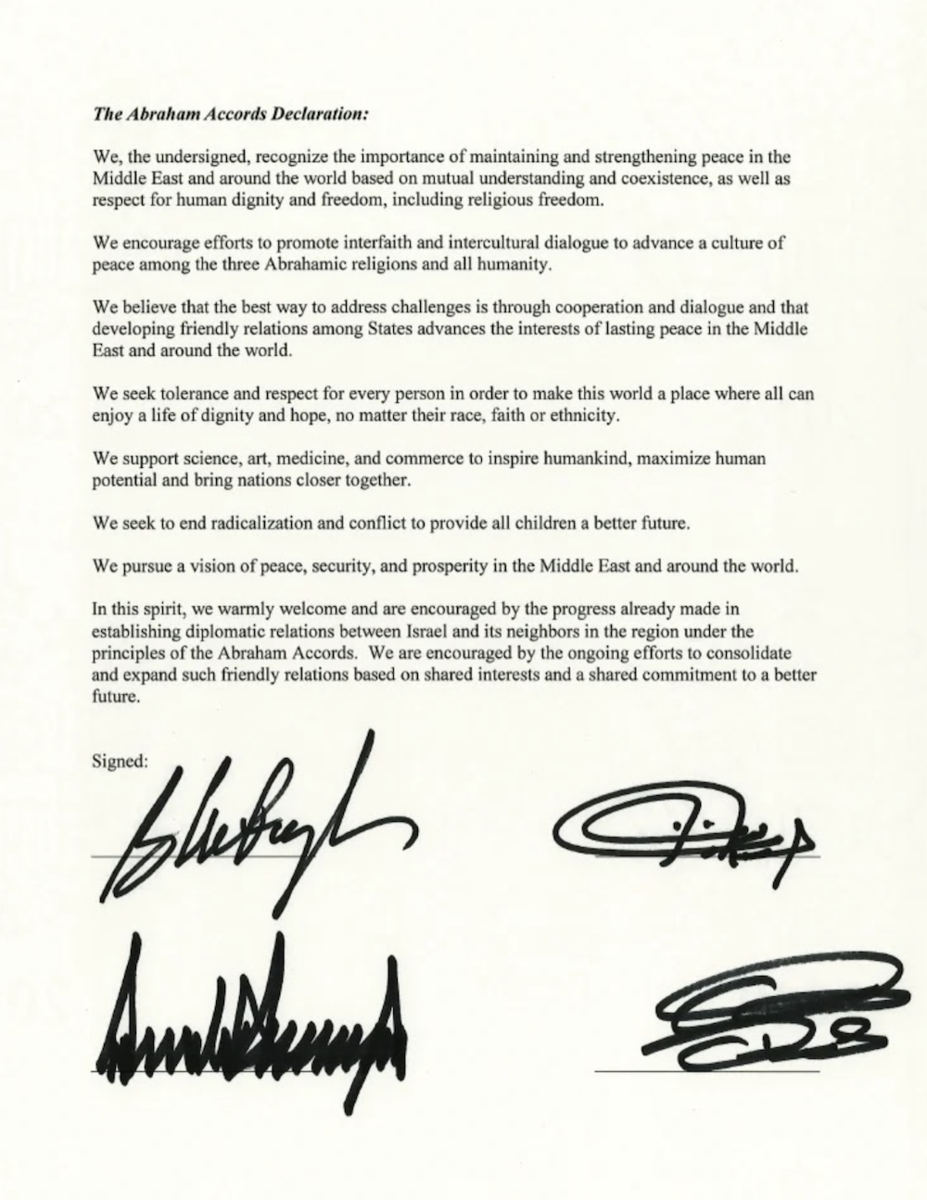
Having made his point, how much blame does Greenblatt put on the Palestinians versus his own (Trump) administration, his own team, for this lack of progress?
“If the Palestinian leadership wants better lives for Palestinians, they’re welcome,” he said. “I am sure President Trump, if he was still in the Oval Office or goes there again, would welcome them with open arms. And I think President Biden welcomed them with open arms. But they refused to be helped.”
He cited a comment by Biden, before fresh elections in Israel were called, that now is not the time to try to negotiate peace between the Israelis and Palestinians.
“There’s lots of reasons for that. We have to wait till the Israeli election happens in November. We have to see what kind of election it is — who gets into power, whether they have a strong coalition,” Greenblatt said.
“The (Naftali Bennett) coalition tried its best to get the government going again, but they certainly were staying away from any peace negotiations. But this is the time for the Palestinians to try to get their house in order so that when Israel finally has a strong government in place, the Palestinians can be ready to negotiate. If they wait until it happens, they may find themselves having missed the opportunity yet again.”


